Square root

Definition and stakes

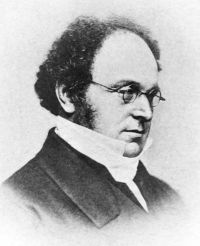
William Fleetwood Sheppard,  1911 Encyclopedia Britannica (1911)

“ Calculation of Square Root.—The calculation of the square root of a number depends on the formula (iii) of § 60. To find the square root of N, we first find some number a whose square is less than N, and subtract a2 from N. If the complete square root is a + b, the remainder after subtracting a2 is (2a + b) b. We therefore guess b by dividing the remainder by 2a, and form the product (2a + b) b. If this is equal to the remainder, we have found the square root. If it exceeds the square root, we must alter the value of b, so as to get a product which does not exceed the remainder. ”
Source: Wikisource

Portrait of Bertrand Russell Bertrand Russell,  Introduction to Mathematical Philosophy

“ If we set to work to extract the square root of 2 by the usual arithmetical rule, we shall obtain an unending decimal which, taken to so-and-so many places, exactly fulfils the above conditions. We can equally well form a descending series of fractions whose squares are all greater than 2, but greater by continually smaller amounts as we come to later terms of the series, and differing, sooner or later, by less than any assigned amount. ”
Source: Gutenberg

W. Stanley,  Instruction for Using a Slide Rule

“ We know that
square ( 25.4 ) must be a little larger than square ( 25 ) = 625 so that
it must be 646.0.
To extract a square root, we set the indicator over the number on the A
scale and read the result under the hair-line on the D scale. When we
examine the A scale we see that there are two places where any given
number may be set, so we must have some way of deciding in a given case
which half of the A scale to use. The rule is as follows:
(a) If the number is greater than one. For an odd number of digits to
the left of the decimal point, use the left-hand half of the A scale.
”
Source: Gutenberg

Get perspective with Kwize: daily news enlightened by great literature