“ It is at this point in art that symbolism reveals itself as the interrelating principle between the life of the soul and objective life; that is to say that just as the symbol of the word is the interchanging coin between ancient and modern concepts, so in art, the symbolic meaning is the interchanging medium between the modern and the antique. ”
Symbolism (art)
Definition and stakes
The theme of “symbolism (art)” has been addressed by authors such as Clive Bell, John Ruskin, Lascelles Abercrombie, Oscar Wilde and Carleton Eldredge Noyes. It is often associated with terms like symbol, emotion, painting, imagination and nature.
Quotes about “symbolism (art)”
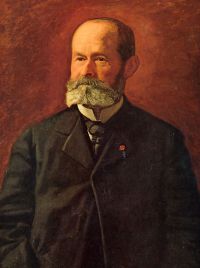 Daniel G. Brinton,
The Religious Sentiment
Daniel G. Brinton,
The Religious Sentiment
“ The one, esthetic symbolism, has its field in musical and architectural art, in the study and portraiture of the beautiful; the other, scientific symbolism, claims to discover in the morphology of organisms, in the harmonic laws of physics, and in the processes of the dialectic, the proof that symbolism, if not a revelation, is at least an unconscious inspiration of universal truth. ”
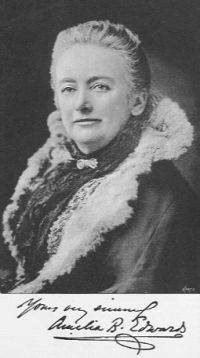 Amelia B. Edwards,
In the Days of My Youth: A Novel
Amelia B. Edwards,
In the Days of My Youth: A Novel
“ The symbolism of art evolved itself, as it were, from below the surface; and instead of beholding in paintings and statues mere studies of outward beauty, I came to know them as exponents of thought--as efforts after ideal truth--as aspirations which, because of their divineness, can never be wholly expressed ”
 Georg Wilhelm Friedrich Hegel,
The Philosophy of Fine Art, volume 2…
Georg Wilhelm Friedrich Hegel,
The Philosophy of Fine Art, volume 2…
“ Now that we pass to the consideration of the several distinctions of symbolical art in more detail, we have to make a beginning with the identical beginning of art as it proceeds out of the notion of art itself. This commencement, as we have seen, is the symbolical form of art in its still immediate form wherein the appearance, as purely image or likeness, is neither brought to consciousness nor presupposed—unconscious symbolism, that is to say. ”
Geneva Armstrong, Woman in Art (1900)
“ Out of symbolism of the first and second centuries of our era was developed so-called Christian art, which in later years evolved from symbolism the ideal. The Ideal, from those early times to our present, has pictured for the eye the Faith, Hope, and Charity that make life sweet and worth living. The ideal gives us in forms of female loveliness, graces of mind and spirit, till memory, truth, and love become symbols of God-given attributes. ”
Various, The Atlantic Monthly, Volume 14…
“ There is a science older than anything but shadowy traditions, and immemorially linked with religion, poetry, and art. It is the almost forgotten science of symbolism. Symbols, as compared with letters, are a higher and more potent style of expression. They are the earthly shadows of eternal truth. It is the language of the fine arts, of painting, sculpture, the stage,—it will be the language of life, when, rising in the scale of being, we shall return from the dead sea of literature to the more energetic algebra of symbolical meanings. ”
Lascelles Abercrombie, An Essay Towards a Theory of Art (1922)
“ But art must be a symbolism which, at any rate, gives all the important factors or representative aspects of an experience: my contribution and the world's contribution must equally be there. And this inclusive symbolism of art will consist not only of arbitrary symbols, such as words, but of empirical symbols also, such as rhythm and harmony, colour and line, which hvae been found to carry with them certain psychological effects. Art will use anything it can use, on the principle that whatever effects a thing will be expressive of that thing. ”
Georg Wilhelm Friedrich Hegel,
The Philosophy of Fine Art, volume 2…
“ Such an extension of symbolism over every province of mythology and art is by no means that which we have in view in our present consideration of the symbolical form of art. It is not any part of our labours to ascertain to what extent a symbolical or allegorical significance, in this enlarged use of the term, is applicable to the forms of art. On the contrary we shall restrict ourselves entirely to the question how far symbolism itself is entitled to rank as a form of art ”
Lascelles Abercrombie, An Essay Towards a Theory of Art (1922)
“ But what has been argued of the symbolic efficacy of Representative art is obvious when we turn to poetry, music and architecture. In fact, all the arts have the same problem of expression to solve. All must find a technique of symbolism, whether arbitrary or empirical, which the recipient can take in with pleasure, and which can be relied on to translate itself in his mind into an ultimate æsthetic experience equivalent to that which inspired the artist. ”
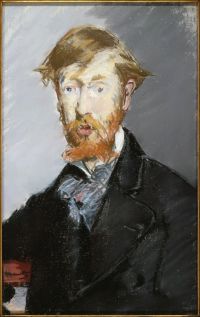 George Moore,
Confessions of a Young Man
George Moore,
Confessions of a Young Man
“ But what is symbolism? Vulgarly speaking, saying the opposite to what you mean. For example, you want to say that music which is the new art, is replacing the old art, which is poetry. First symbol: a house in which there is a funeral, the pall extends over the furniture. The house is poetry, poetry is dead. Second symbol: "notre vieux grimoire," grimoire is the parchment, parchment is used for writing, therefore, grimoire is the symbol for literature, "d'où s'exaltent les milliers," thousands of what? ”
Georg Wilhelm Friedrich Hegel,
The Philosophy of Fine Art, volume 2…
“ And for the reason that in the stage of our process where we now find ourselves, this task is capable of only a symbolic solution, we may easily fall under the impression that we stand already in the sphere of genuine symbolism. ”
 John Ruskin,
Modern Painters, Volume 3 (of 5…
John Ruskin,
Modern Painters, Volume 3 (of 5…
“ No element of imagination has a wider range, a more magnificent use, or so colossal a grasp of sacred truth.§ 6. How, then, is this noble power best to be employed in the art of painting?We hear it not unfrequently asserted that symbolism or personification should not be introduced in painting at all. Such assertions are in their grounds unintelligible, and in their substance absurd. ”
The Dial (July 1 - December 16, 1893)
“ In poetry, too, symbolism—efforts to express what young theorists call 'the mystery of things'—is a sign of the general state of men's minds. It is the same with the historian in the choice of subject, and with the character and part some assign to critics. 'L'art pour l'art,' 'le désintéressement littéraire,' are phrases that have had their day, as well as descriptions of gross realities. ”
Georg Wilhelm Friedrich Hegel,
The Philosophy of Fine Art, volume 4…
“ In symbolism generally, as we have already established in the first part of this enquiry, the conjunction of general significance and the actual phenomenon, in association with which Art embodies its content, is of a less coherent character: as a result of this we find that what is particular in one direction preserves a greater consistency ”
 John Wesley Powell,
On Limitations to the Use of Some Anthropologic Data
John Wesley Powell,
On Limitations to the Use of Some Anthropologic Data
“ There is a symbolism inherent in language and found in all philosophy, true or false, and such symbolism was cultivated as an occult art in the early history of civilization when picture-writing developed into conventional writing, and symbolism is an interesting subject for study, but it has been made a beast of burden to carry packs of metaphysic nonsense. ”
 Alfred North Whitehead,
Symbolism, Its Meaning and Effect
(1927)
Alfred North Whitehead,
Symbolism, Its Meaning and Effect
(1927)
“ This whole question of the symbolic transfer of emotion lies at the base of any theory of the esthetics of art. For example, it gives the reason for the importance of a rigid suppression of irrelevant detail. For emotions inhibit each other, or intensify each other. Harmonious emotion means a complex of emotions mutually intensifying ”
Carleton Eldredge Noyes, The Enjoyment of Art
“ The appreciator need simply ask, What is the beauty, what the idea, which the artist is striving to reveal by these symbols of color and form? He understands that the import of the work is the idea, and that the work itself is beautiful because it symbolizes a beautiful idea; its significance is spiritual. The function of art, then, is through the medium of concrete, material symbols to reveal to men whatever of beauty has been disclosed to the artist's more penetrating vision. ”
 Charles William Wallace,
Spider-webs in Verse: A Collection of Lyrics for Leisure Moments…
Charles William Wallace,
Spider-webs in Verse: A Collection of Lyrics for Leisure Moments…
“ Would the soul create a statue, it must see “an angel in that marble” ere it give the angel form; would it paint a picture, it must behold within itself the transfiguration ere it live transfigured on the canvas; would it write a poem, it must be a paradise of eternal love and beauty ere it breathe immortal glory into words.It is this soul within that comes out of the maker of the statue, the maker of the picture, the maker of the [87] melody, the maker of the poem, and enters his creations, that distinguishes true art from mere mechanism of art. ”
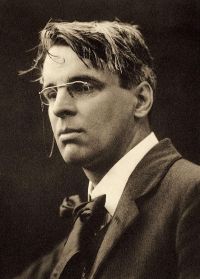 W. B. Yeats,
The Collected Works in Verse and Prose of William Butler Yeats…
W. B. Yeats,
The Collected Works in Verse and Prose of William Butler Yeats…
“ It is only by ancient symbols, by symbols that have numberless meanings beside the one or two the writer lays an emphasis upon, or the half-score he knows of, that any highly subjective art can escape from the barrenness and shallowness of a too conscious arrangement, into the abundance and depth of nature. The poet of essences and pure ideas must seek in the half-lights that glimmer from symbol to symbol as if to the ends of the earth, all that the epic and dramatic poet finds of mystery and shadow in the accidental circumstance of life. ”
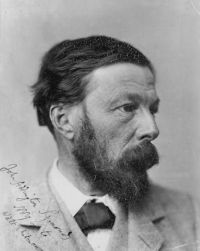 John Addington Symonds,
Sketches and Studies in Italy and Greece…
John Addington Symonds,
Sketches and Studies in Italy and Greece…
“ Even thus the spirit, immersed in things of sense presented to us by the figurative arts, is still spirit, though diminished in its intellectual clearness and invested with hues not its own. To fashion that alabaster form of art with utmost skill, to make it beautiful, to render it transparent, is the artist's function. ”
 Charles Wesley Emerson,
Evolution of Expression, Volume 2…
Charles Wesley Emerson,
Evolution of Expression, Volume 2…
“ The old philosopher we read of might not have been dreaming when he discovered that the order of the sky was like a scroll of written music, and that two stars (which are said to have appeared centuries after his death, in the very places he mentioned) were wanting to complete the harmony. We know how wonderful are the phenomena of color, how strangely like consummate art the strongest dyes are blended in the plumage of birds, and in the cups of flowers; so that, to the practiced eye of the painter, the harmony is inimitably perfect. ”
 Evelyn Underhill,
Mysticism: A Study in Nature and Development of Spiritual Consciousness
(1911)
Evelyn Underhill,
Mysticism: A Study in Nature and Development of Spiritual Consciousness
(1911)
“ In another respect, however, there is a great deal to choose between them: and here the visionary, not the philosopher, receives the palm. The greater the suggestive quality of the symbol used, the more answering emotion it evokes in those to whom it is addressed, the more truth it will convey. A good symbolism, therefore, will be more than mere diagram or mere allegory: it will use to the utmost the resources of beauty and of passion, will bring with it hints of mystery and wonder, bewitch with dreamy periods the mind to which it is addressed. ”
Various, The Continental Monthly, Vol. 1…
“ The poet or the thinker, yearning for a new basis of art, may find in the immense mass of legends and symbols an identification between all the forms of nature in a vast harmony and mutual reflection of every beautiful object ”
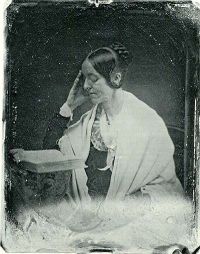 Sarah Margaret Fuller,
Papers on Literature and Art
(1846)
Sarah Margaret Fuller,
Papers on Literature and Art
(1846)
“ That the poet should have supposed the symbol would be understood at once, marks the nature of his mind, a mind which soars in the creative element, and can only be understood by those who are in a state of congenial activity. ”
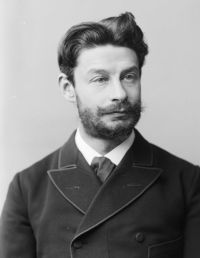 Georg Brandes,
Main Currents in Nineteenth Century Literature - 6…
Georg Brandes,
Main Currents in Nineteenth Century Literature - 6…
“ By the originality and vigour of the spiritual life and of the emotion of which the work is an expression, together with its power of impressing these characteristics on the reader. All art is the expression of some emotion, and has for its object the production of emotions. The deeper a signet gem is cut, the sharper, the clearer are the outlines in wax. The deeper the impression in the soul of the artist, the clearer, the more forcible is its artistic expression. ”
English Critical Essays: Nineteenth Century
“ Whatever in painting or sculpture expresses human feeling—or character, which is only a certain state of feeling grown habitual—may be called, according to circumstances, the poetry, or the eloquence, of the painter’s or the sculptor’s art: the poetry, if the feeling declares itself by such signs as escape from us when we are unconscious of being seen ”
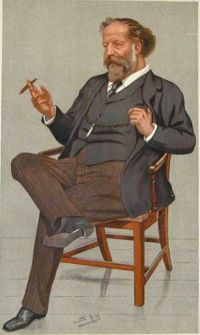 J. Comyns Carr,
Coasting Bohemia
J. Comyns Carr,
Coasting Bohemia
“ To wring from nature its countless harmonies of tone and colour, to seize and interpret the endless subtleties of individual form and character—these are the ideals that have inspired and have satisfied many of the greatest painters the world has produced. Who then shall say that Art has need of any other, any wider ambition? ”
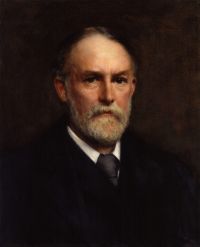 F. W. H. Myers,
Human Personality and Its Survival of Bodily Death
F. W. H. Myers,
Human Personality and Its Survival of Bodily Death
“ I am not speaking, of course, of symbolism of a forced and mechanical kind—symbolism designed and elaborated as such—but rather of that pre-existent but hidden concordance between visible and invisible things, between matter and thought, between thought and emotion, which the plastic arts, and music, and poetry, do each in their own special field discover and manifest for human wisdom and joy. ”
 Sarah Knowles Bolton,
Famous European Artists
Sarah Knowles Bolton,
Famous European Artists
“ There are gleams of gold and silver, moonlight, colored reflections, fiery lights; personages which, like the girl with blond tresses, seem to shine by a light of their own; faces that seem lighted by the fire of a conflagration; dazzling scintillations, shadows, twilight, and deep darkness, all are there, harmonized and contrasted with marvellous boldness and insuperable art.... ”
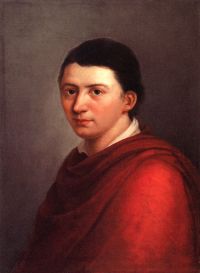 Friedrich von Schlegel,
The philosophy of life, and philosophy of language…
Friedrich von Schlegel,
The philosophy of life, and philosophy of language…
“ Always and universally it is a thought, the idea of some subject or form as the inner sense and significance thereof, that constitutes the essence of a work of art, and with which art in general is concerned. In other words, art is symbolical. And this may be predicated with equal truth of every higher art, as well as of sculpture, whatever may be the medium of its manifestations, whether a statue, or tone as in music, or words as in poetry. ”
Carleton Eldredge Noyes, The Enjoyment of Art
“ To be sure, the painter or sculptor or dramatist draws his symbols from already existing material forms, and these symbols are like objects in a sense in which music is not But line and color and the life of man, apart from this resemblance to external reality, are representative or symbolic of the artist's idea precisely as the craftsman's key, the designer's pattern, or the musician's symphony. ”
 Benedetto Croce,
Aesthetic as Science of Expression and General Linguistic
Benedetto Croce,
Aesthetic as Science of Expression and General Linguistic
“ Critique of the symbol and of the allegory.Continuing to correct these errors, or to make clear equivoques, we will note that the symbol has sometimes been given as essence of art. Now, if the symbol be given as inseparable from the artistic intuition, it is the synonym of the intuition itself, which always has an ideal character. There is no double-bottom to art, but one only; in art all is symbolical, because all is ideal. ”
 Samuel Taylor Coleridge,
Shakespeare, Ben Jonson, Beaumont and Fletcher
Samuel Taylor Coleridge,
Shakespeare, Ben Jonson, Beaumont and Fletcher
“ And this we have represented to us most clearly in the plastic art, or statuary; where the perfection of outward form is a symbol of the perfection of an inward idea; where the body is wholly penetrated by the soul, and spiritualized even to a state of glory, and like a transparent substance, the matter, in its own nature darkness, becomes altogether a vehicle and fixture of light, a means of developing its beauties, and unfolding its wealth of various colours without disturbing its unity, or causing a division of the parts. ”
Georg Wilhelm Friedrich Hegel,
The Philosophy of Fine Art, volume 1…
“ The use of words of vital significance, an imagination which can associate itself with all the world, can restore the Past to the Present, can transform the entire external environment of man's life to a symbolical expression of his spirit, can bravely adventure into the depths of comprehensive thought, and, while doing so, reveal an exuberant, capacious, clear, exalted, and noble nature—a wealth of character such as this, freely expressing such a world, is a prize indeed for the Lyric Muse. ”
W. B. Yeats,
A book of images
(1898)
“ All Art that is not mere story-telling, or mere portraiture, is symbolic, and has the purpose of those symbolic talismans which mediæval magicians made with complex colours and forms, and bade their patients ponder over daily, and guard with holy secrecy ”
 Ralph Waldo Emerson,
Essays: Second Series — The Poet
(1844)
Ralph Waldo Emerson,
Essays: Second Series — The Poet
(1844)
“ Things admit of being used as symbols, because nature is a symbol, in the whole, and in every part. Every line we can draw in the sand, has expression; and there is no body without its spirit or genius. All form is an effect of character; all condition, of the quality of the life; all harmony, of health; (and, for this reason, a perception of beauty should be sympathetic, or proper only to the good.) The beautiful rests on the foundations of the necessary. ”
A. J. Finberg, Turner's Sketches and Drawings
“ But as ideas in this sense—which we must be careful to remember includes emotion—are not gifted with the property of visibility, it seems on the whole better not to say that a work of art imitates or portrays them. Strictly speaking, a work of art is a symbol, and a symbol is not a copy or imitation of the meaning it stands for. ”
Related terms
Authors who wrote about “symbolism (art)”
 Clive BellJohn RuskinLascelles Abercrombie
 Oscar WildeCarleton Eldredge NoyesBenedetto CroceGeneva Armstrong
 Vernon LeeErnest GovettA. J. FinbergD. M. StrongGeorg Wilhelm Friedrich HegelW. B. YeatsAlfred North WhiteheadVariousSamuel Taylor ColeridgeRalph Waldo Emerson
 James Joyce
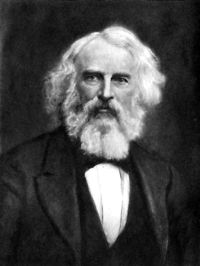 Henry Wadsworth Longfellow
 Walter Pater