Taps

Definition and stakes

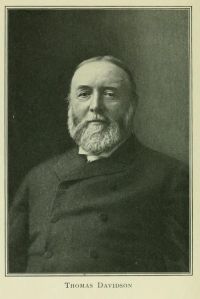
Portrait of Thomas Davidson Thomas Davidson,  Chambers's Twentieth Century Dictionary 1908… (1908)

“ Tap′room, a room where beer is served from the tap or cask; Tap′root, a root of a plant or tree striking directly downward without dividing, and tapering towards the end, as that of the carrot; Tap′ster, one who taps or draws off liquor, a publican, barman.—On tap, kept in cask—opp. to bottled: ready to be drawn upon. [A.S. tæppe, seen in tæppere, one who taps casks; Dut. tap, Ger. zapfen, a tap.] ”
Source: Wikisource

Elisha Noyce,  The Boy's Book of Industrial Information

“ Taps are used for the purpose of letting off or stopping at pleasure the flow of liquids from vessels or through pipes. The forms of stop-cocks are very various, but the form shown at fig. 1 is by far the most general; it consists of a short curved tube, having an upright cylinder in the centre in which a plug with a handle turns; this plug is perforated in the direction of the length of the handle, so that when this is turned crosswise the communication is shut off (figs. 2, 3, and 4) . The “nose” or end of the tap is sometimes prolonged into a spout, for filling bottles, &c., as in fig. ”
Source: Gutenberg

Portrait of A. P. Herbert A. P. Herbert,  Little rays of moonshine (1921)

“ The sea-water was mythical. Many of the taps refused to function at the same time as any other, and the only two which were really effective were WAVE and FLOOD. Wave shot out a thin jet of boiling water which caught me in the chest, and FLOOD filled the bath with cold water long before it could be identified and turned off.
No, taps are not of the first importance, though, properly polished, they look well. But no bath is complete without one of these attractive bridges [Pg 64] or trays where one puts the sponges and the soap. Conveniences like that are a direct stimulus to washing.
”
Source: Gutenberg

Get perspective with Kwize: daily news enlightened by great literature