Benjamin M. Anderson, The Value of Money
“ My own theory of value, which finds the roots of economic value ramifying through the total social psychological situation, rather than in utility or labor-pain alone, involves possibilities like these. ”
Benjamin M. Anderson, The Value of Money
“ My own theory of value, which finds the roots of economic value ramifying through the total social psychological situation, rather than in utility or labor-pain alone, involves possibilities like these. ”
Benjamin M. Anderson, The Value of Money
“ The theory of value, in its concrete fulness, is the special interest of the active business man, and especially of the business man who wishes, not merely to adapt himself to changes in values, but also in part, to control and manipulate those values. ”
 John Stuart Mill,
Principles of Political Economy
(1871)
John Stuart Mill,
Principles of Political Economy
(1871)
“ In a state of society, however, in which the industrial system is entirely founded on purchase and sale, each individual, for the most part, living not on things in the production of which he himself bears a part, but on things obtained by a double exchange, a sale followed by a purchase—the question of Value is fundamental. Almost every speculation respecting the economical interests of a society thus constituted, implies some theory of Value: the smallest error on that subject infects with corresponding error all our other conclusions ”
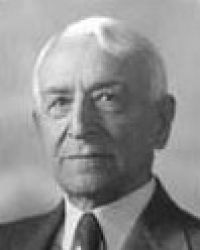 Frank A. Fetter,
The Principles of Economics, with Applications to Practical Problems
Frank A. Fetter,
The Principles of Economics, with Applications to Practical Problems
“ The logical starting-point in the theory of value is in those goods that are in closest touch with feeling, and on this basis may be built up an explanation of values in which reason and forethought have a greater part. Starting from the proposition that psychic income is the foundation of all values, we shall go on, however, to trace causes that give value to all the physical agents, and to the most indirect of want-gratifiers. ”
Warren H. Wilson, The Evolution of the Country Community
“ The final utility theory of value rests on the same principle as does the theory of diminishing returns from agriculture; and this principle has a far wider range of new applications.""We have undertaken to generalize the law that is at the basis of the theory of value. In reality, it is all-comprehensive. The first generalization to be made consists in applying the law, not to single articles, but to consumers' wealth in all its forms. The richer man becomes, the less can his wealth do for him. ”
John Stuart Mill,
Principles of Political Economy
(1871)
“ It will come out in greater fulness and force when, having taken into consideration the theory of Value and Price, we shall be enabled to exhibit the law of profits in the concrete—in the complex entanglement of circumstances in which it actually works. ”
Benjamin M. Anderson, The Value of Money
“ It is the belief of the present writer—not shared by all his critics!—that the definition of value which follows, and the conception of the function of value in economic theory involved in it, conform to the actual use of the term in the main body of economic literature. The theory of the causes of value here advanced is new, but the definition of value, and the conception of the relation of value to wealth, to price, to exchange, and to other economic ideas, seem to the present writer to conform to what is implied, and often expressed, in the general usage of economists. ”
Arthur Isaac Fonda, Honest Money
“ It is not essential to the purpose of this3 work to enter into an abstract discussion of the theory of value further than is necessary to make clear the fact that the present analysis in no way lessens or invalidates the distinction between the two conceptions of value noted by the earlier economists,—a fact which has been overlooked by some who have accepted the marginal utility theory. ”
Benjamin M. Anderson, The Value of Money
“ I have given an extended analysis of the psychology of confidence, and of the psychological nature of credit, in my chapters on that topic. It is enough to say here that we have in credit phenomena things which are of the very stuff of economic values in general. Beliefs and hopes are factors in economic values, and values wax and wane with them. There is little indeed in the psychological and institutional aspects of the theory of prosperity which an adequate theory of value would not contain. ”
Benjamin M. Anderson, The Value of Money
“ Its problems are problems of human nature and social relationships, its laws are psychological laws, particularly the laws of suggestion, [Pg 578] imitation, and the like, its tools are the newspaper, the sign-board, the whispered word, the cigar and the dinner with wine, sound logic, money and credit instruments, the prestiges of men and institutions. For men whose work lies in controlling and making values, rather than in making passive technical adjustments to existing values, the theory of value, as I have defined it, is of supreme importance. ”
Benjamin M. Anderson, The Value of Money
“ It makes two abstractions, neither of which is legitimate: first, it abstracts the individual from his vital and organic connections with his fellows, and then, second, it takes from the individual, thus abstracted, only a small part, that part immediately concerned with the consumption or production of wealth. In this process of abstraction, very much of the explanation of value is left out. The whole man, in his social relations, must be taken into account before we can get an adequate theory of value. ”
 Antoine Augustin Cournot,
Researches into the Mathematical Principles of the Theory of Wealth
(1897)
Antoine Augustin Cournot,
Researches into the Mathematical Principles of the Theory of Wealth
(1897)
“ The things, then, to which the state of commercial relations and civil institutions permits a value in exchange to be attached, are those which in the language of to-day are characterized by the word wealth; and to form an intelligible theory we ought to absolutely identify the sense of the word wealth with that which is presented to us by the words exchangeable values. ”
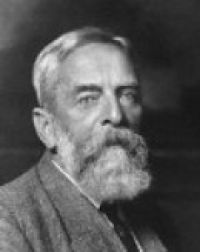 Friedrich von Wieser,
The Austrian School and the Theory of Value
(1891)
Friedrich von Wieser,
The Austrian School and the Theory of Value
(1891)
“ Taken thus, products present themselves not merely according to their sources, but according to their value as well, as the syntheses of their productive elements. That product which requires them in greater quantity has the greater value. ”
Antoine Augustin Cournot,
Researches into the Mathematical Principles of the Theory of Wealth
(1897)
“ The abstract idea of wealth or of value in exchange, a definite idea, and consequently susceptible of rigorous treatment in combinations, must be carefully distinguished from the accessory ideas of utility, scarcity, and suitability to the needs and enjoyments of mankind, which the word wealth still suggests in common speech. ”
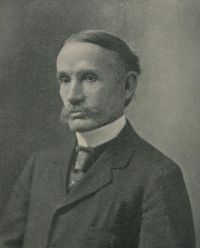 John Bates Clark,
Essentials of Economic Theory
John Bates Clark,
Essentials of Economic Theory
“ The values of these goods may be measured and compared by means of the quantity of labor that the man has thought it worth while to perform in order to get them. If he values one of them highly enough to think it worth while to work for an extra period of twenty minutes at the end of a day in order to get it, it may be said to have one unit of value ”
Benjamin M. Anderson, The Value of Money
“ It would be easy to elaborate the points in which morals, laws, and economic values are alike, and to show in detail that the theory of economic value is merely a special case of the general theory of social value. ”
Benjamin M. Anderson, The Value of Money
“ We may show that all static prices presuppose values whose explanation is in terms of the same phenomena with which dynamics, the theory of prosperity, etc., have busied themselves, namely, considerations drawn from the study of social psychology, including the psychology of suggestion, imitation, mob-mind, the functional organization of minds into a social mind, social beliefs, social values of other than economic nature, and social institutions. ”
 John Ruskin,
The Crown of Wild Olive
John Ruskin,
The Crown of Wild Olive
“ In the assertion that value is primarily intrinsic, it opposes the idea that anything which is an object of desire to numbers, and is limited in quantity, so as to have rated worth in exchange, may be called, or virtually become, wealth. And in the assertion that value is, secondarily, dependent upon power in the possessor, it opposes the idea that the worth of things depends on the demand for them, instead of on the use of them. ”
Sir James Steuart, An Inquiry into the Principles of Political Oeconomy…
“ By MONEY, I understand any commodity, which purely in itself is of no material use to man for the purposes above-mentioned, but which acquires such an estimation from his opinion of it, as to become the universal measure of what is called value, and an adequate equivalent for any thing alienable. ”
 George Edward Moore,
Principia Ethica — Chapter VI
(1903)
George Edward Moore,
Principia Ethica — Chapter VI
(1903)
“ It is, in fact, obvious that in order to decide correctly at what state of things we ought to aim, we must not only consider what results it is possible for us to obtain, but also which, among equally possible results, will have the greatest value. And upon this second enquiry the comparative valuation of known goods has a no less important bearing than upon the investigation of the Absolute Good. ”
 Timothy Thomas Fortune,
Black and White: Land, Labor, and Politics in the South
(1884)
Timothy Thomas Fortune,
Black and White: Land, Labor, and Politics in the South
(1884)
“ To have value, it must become an object of barter, of circulation, in short, of exchange. As its value depends upon its utility, so when it can no longer be used it again becomes a useless mass of perishable wealth. ”
Boyd Henry Bode, Creative Intelligence: Essays in the Pragmatic Attitude
“ Economic values are dubiously objective. We use both forms of expression. We say on the one hand, "I want wheat," "There is a demand for wheat," or, on the other, "Wheat is worth one dollar a bushel." Conversely, "There is no demand for the old-fashioned high-framed bicycle" or "It is worthless." The Middle Ages regarded economic value as completely objective. A thing had a real value. ”
John Ruskin,
The Crown of Wild Olive
“ The view which has here been taken of the nature of wealth, namely, that it consists in an intrinsic value developed by a vital power, is directly opposed to two nearly universal conceptions of wealth. ”
John Ruskin,
Fors Clavigera (Volume 1 of 8)
“ And you will find that the essence of the mis-teaching, of your day, concerning wealth of any kind, is in this denial of intrinsic value. What anything is worth, or not worth, it cannot tell you: all that it can tell is the exchange value. What Judas, in the present state of Demand and Supply, can get for the article he has to sell, in a given market, that is the value of his article:—Yet you do not find that Judas had joy of his bargain. ”
 Alfred North Whitehead,
Science and the modern world
(1925)
Alfred North Whitehead,
Science and the modern world
(1925)
“ Remembering the poetic rendering of our concrete experience, we see at once that the element of value, of being valuable, of having value, of being an end in itself, of being something which is for its own sake, must not be omitted in any account of an event as the most concrete actual something. ‘Value’ is the word I use for the intrinsic reality of an event. ”
 Karl Marx,
Das Kapital
(1906)
Karl Marx,
Das Kapital
(1906)
“ It is no part of us as objects. What, however, does belong to us as objects, is our value. Our natural intercourse as commodities proves it. In the eyes of each other we are nothing but exchange values. Now listen how those commodities speak through the mouth of the economist. "Value"— (i.e., exchange value) "is a property of things, riches"— (i.e., use-value) "of man. Value, in this sense, necessarily implies exchanges, riches do not." [34] "Riches" (use-value) "are the attribute of men, value is the attribute of commodities. A man or a community is rich, a pearl or a diamond is valuable ... ”
William Pare, Equitable Villages in America
“ It follows, therefore, that to say that "a thing should bring what it is worth," which is the same as to say that "its price should be measured by its value," is quite the opposite of affirming that it should bring as much as it cost the producer to produce it. ”
John Ruskin,
Unto This Last, and Other Essays on Political Economy
“ Wealth, it has been said, consists of things essentially valuable. We now, therefore, need a definition of "value."Value signifies the strength or "availing" of anything towards the sustaining of life, and is always twofold; that is to say, primarily, Intrinsic, and, secondarily, Effectual.The reader must, by anticipation, be warned against confusing value with cost, or with price. Value is the life-giving power of anything; cost, the quantity of labour required to produce it; price, the quantity of labour which its possessor will take in exchange for it. ”
The World's Great Sermons, Volume 09…
“ Or suppose, in the second place, that we take the commercial view of life. We shall then say that all things must be measured by their money value, and that it is neither profitable nor necessary to inquire into their real nature or their essential worth. ”
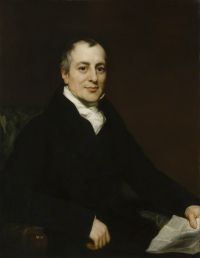 David Ricardo,
On The Principles of Political Economy…
David Ricardo,
On The Principles of Political Economy…
“ If we then ask him what he means by value, he tells us that things are valuable in proportion as they possess utility. If again we ask him to explain to us by what means we are to judge of the utility of objects, he answers, by their value. Thus then the measure of value is utility, and the measure of utility is value. ”
 John Atkinson Hobson,
Confessions of an Economic Heretic
(1938)
John Atkinson Hobson,
Confessions of an Economic Heretic
(1938)
“ I expressed this important need in the following passage of my book. “The true ‘value’ of a thing is neither the price paid for it, nor the amount of present satisfaction it yields to the consumer, but the intrinsic service it is capable of yielding by its right use. ”
Geo. T. Fairchild, Rural Wealth and Welfare: Economic Principles Illustrated and Applied in Farm Life
“ Chapter IX. Value The Basis Of Exchange. The nature of value.—Perhaps no question in the discussion of wealth is of greater importance than the nature of value. Certainly the measurement of value in all our property is the basis of all exchanges, of all book accounts, and of all inventories. The worth of any piece of property in such estimates always involves some comparison, either of things possessed or of exertion required or of satisfaction yielded. In comparing an apple and a peach, both equally attainable, we may value the peach most highly because it gratifies desires in higher degree. ”
Arthur Isaac Fonda, Honest Money
“ Modern economists—chiefly those of the Austrian school—have analyzed the subject more thoroughly, especially the relation between the two conceptions, and have shown that utility or subjective value, as it is generally termed by them, is an expression both of human desire and of the quantity of the necessary commodity available to satisfy such desire. ”
 Friedrich Wilhelm Nietzsche,
The Dawn of Day
Friedrich Wilhelm Nietzsche,
The Dawn of Day
“ Hence, he instinctively and incessantly employs this mode of valuation and applies it to everything, including the productions of art and science, and of thinkers, scholars, artists, statesmen, nations, political parties, and even entire ages: with respect to everything produced or created he inquires into the supply and demand in order to estimate for himself the value of a thing. ”
Karl Marx,
Das Kapital
(1906)
“ Our analysis has shown, that the form or expression of the value of a commodity originates in the nature of value, and not that value and its magnitude originate in the mode of their expression as exchange value. ”
Benjamin M. Anderson, The Value of Money
“ To the writers of this school, it is incredible that anything which has no utility should become money. Money must be either valuable itself, or else a representative of some valuable thing. The value of money comes from the value of the standard of value, and that value may, so far as the logic of the situation is concerned, be as well explained by marginal utility as the value of anything else. ”
Geo. T. Fairchild, Rural Wealth and Welfare: Economic Principles Illustrated and Applied in Farm Life
“ In this way a single individual, who has wants to be gratified only by exertion, forms an idea of value as founded upon some relation between his [pg 064] wants and his powers, between the desires to be gratified and the qualities of the object expected to give satisfaction. Since wealth always implies an accumulated store of good things, every one comes to think of the worth of his accumulation as estimated by what it will do at any time, in any place, in satisfying any need. So, most naturally, we associate our ideas of value with trade. ”
David Ricardo,
Letters of David Ricardo to Thomas Robert Malthus…
“ Your 'Catéchisme' (of which Francis Place has just given me the 2nd edition) says that a man's wealth is in proportion to the value and not to the quantity of the things he possesses, but, as you add that that same value is estimated by the quantity of other things these same things will buy, wealth turns out to be in proportion to quantity of goods after all. If wealth is value, then to lessen all costs, so as to produce all things with less labour, would be to make the wealth of the world no greater. ”
George O'Brien, An Essay on Mediæval Economic Teaching
“ Value is not objective—intrinsic in the object—but subjective, varying with the desire and intentions of the possessors or would-be possessors; and, because it is thus subjective, there cannot be a definite ideal value which every article ought to possess, and still more a just price as the measure of that ideal value.' In these and similar observations to be found in the Growth of English History and Commerce, Dr. ”
Antoine Augustin CournotKarl MarxArthur Isaac FondaDavid RicardoJohn Stuart MillFriedrich von Wieser G. E. MooreBoyd Henry BodeFrank A. FetterP.-J. Proudhon
 John Law
 Arthur Latham PerryGeorge Edward MooreAlfred North Whitehead
 John Dewey
 George Howard Earle, Jr.George O'Brien
 John P. JonesJohn Ruskin