Unit (measurement)

Definition and stakes

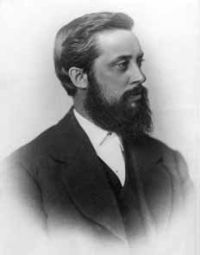
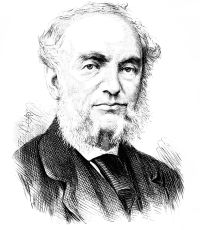
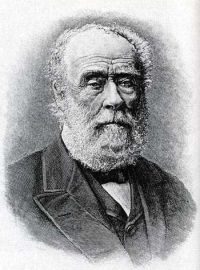
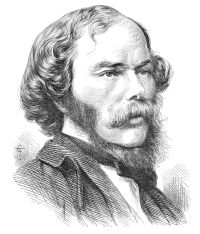
Portrait of William Stanley Jevons William Stanley Jevons,  The principles of science

“ The result of every measurement is to make known the purely numerical ratio existing between the magnitude to be measured, and a certain other magnitude, which should, when possible, be a fixed unit or standard magnitude, or at least an intermediate unit of which the value can be ascertained in terms of the ultimate standard. But though a ratio is the required result, an equation is the mode in which the ratio is determined and expressed. ”
Source: Gutenberg

Portrait of William Stanley Jevons William Stanley Jevons,  The principles of science

“ Ordinary measurement by a foot rule, a surveyor’s chain, or the excessively careful measurements of the base line of a trigonometrical survey by standard bars, are sufficient instances of this procedure.
In the second case, where p y/x = q, we multiply or divide a magnitude until we get what is equal to the unit, or to some magnitude easily comparable with it. As a general rule the quantities which we desire to measure in physical science are too small rather than too great for easy determination, and the problem consists in multiplying them without introducing error.
”
Source: Gutenberg

Edwin W. Foster,  Carpentry and Woodwork

“ A measurement is a comparison. We measure the length of a lot by comparing it with the standard of length, the yard or foot. We measure a farm by comparing its area with the standard unit of surface measure, the acre, square rod, or square yard.
In every measurement we must first have an accepted standard unit. The history of units of measurement is a very interesting one, and its difficulty arises from the fact that no two things in nature are the same.
”
Source: Gutenberg

Get perspective with Kwize: daily news enlightened by great literature