Visual arts

Definition and stakes

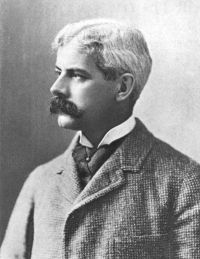
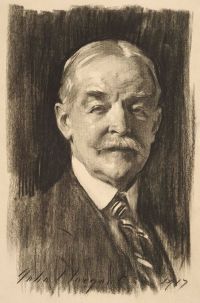
Portrait of I. A. Richards I. A. Richards,  Principles of literary criticism (1928)

“ With such an analysis, comparison and the elaboration of analogies involve no attempt to make one art legislate for another, no attempt to blur their differences or to destroy their autonomy.
In analysing the experiences of the visual arts the first essential is to avoid the word ‘see’, a term which is treacherous in its ambiguity. If we say that we see a picture we may mean either that we see the pigment-covered surface, or that we see the image on the retina cast by this surface, or that we see certain planes or volumes in what is called the ‘picture-space’.
”
Source: Gutenberg

De Witt H. Parker,  The Principles of Aesthetics

“ In literature alone of the arts, images from all departments of sense can be aroused. Visual images play a greater role there than in painting and sculpture, for the reason that, in the latter, visual sensations take their place—we do not image what we can see. In sculpture, the greater part of the imagery is of touch and motion—in the imagination, we feel the surfaces and move with the represented motions; the whiteness or blackness of the materials prevents the arousal of the image of the color of the body. ”
Source: Gutenberg

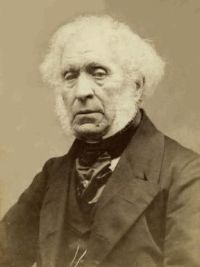
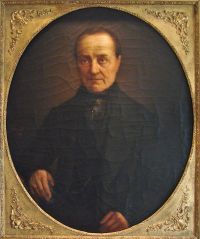
Portrait of Auguste Comte Auguste Comte,  A General View of Positivism

“ Of the three arts which appeal to the voluntary sense of sight, and which present simultaneous impressions, Painting, on the same principle of arrangement, holds the first rank, and Architecture the last; Sculpture being placed between them. Painting alone employs all the methods of visual expression, combining the effects of colour with those of form. Whether in public or private life, its sphere is wider than that of the other two. More technical skill is required in it than in music, and it is harder to obtain ”
Source: Gutenberg

Get perspective with Kwize: daily news enlightened by great literature