Water moccasin

Definition and stakes

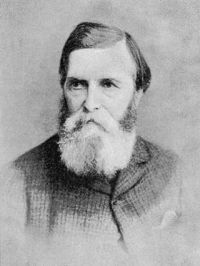
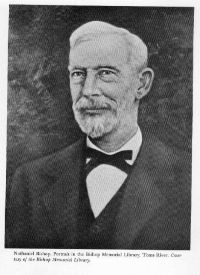
Portrait of Nathaniel H. Bishop Nathaniel H. Bishop,  Voyage of the Paper Canoe

“ The bright day animated our spirits, as we swept swiftly down the river. The party in the shad-boat, now called "Adventurer," rowed merrily on with song and laughter, while I made an attempt to examine more closely the character of the water-moccasin — the Trigono cephaluspiscivorus of Lacepede, — which I had more cause to fear than the alligators of the river. The water-moccasin is about two feet in length, and has a circumference of five or six inches. ”
Source: Gutenberg

Ray D. Burkett,  Natural History of Cottonmouth Moccasin…

“ When pools of water begin to dry up toward the end of summer, cottonmouths often congregate and feed on dying fish. In these instances the fish are usually taken as they come to the surface. In laboratory observations moccasins seize live fish and some moccasins carry the fish until they have received lethal doses of venom; afterward the fish are swallowed. But grasping and manipulation of the prey occurs without the fangs' being employed, especially in the case of dead fish. ”
Source: Gutenberg

Ray D. Burkett,  Natural History of Cottonmouth Moccasin…

“ An infestation of that mite was thought to be partly responsible for the death of one captive moccasin. Other moccasins spent increasing amounts of time in their water dish after they became infected with mites. Under natural conditions frequent swimming probably keeps cottonmouths nearly free of mites.
Endoparasites found included lung flukes, stomach nematodes, and tapeworms. Lung flukes (Ochetosoma sp.) were found in 16 of 20 captive cottonmouths. [466] Snails and frogs serve as intermediate hosts for various stages in the life cycle of these flukes.
”
Source: Gutenberg

Get perspective with Kwize: daily news enlightened by great literature