European languages

Definition and stakes

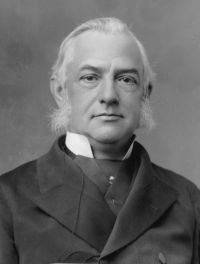
Harry Perry Robinson,  The Twentieth Century American

“ But so far as European languages go, the Englishman, in more or less constant and intimate relation with each of the peoples of Europe, has been so well satisfied of his own superiority to each that it has seemed vastly more fitting that they should learn his language than that he should trouble to learn theirs. Under any circumstances, is it not obviously easier for each one of the European peoples to learn to talk English than for the Englishman to learn eight European tongues with eighty miscellaneous dialects? ”
Source: Gutenberg

Rumanian Bird and Beast Stories Rendered into English

“ Most of the European languages, as we now see, are derived from one common stock, more archaic than any of them. No one would now trace a French word directly to that old Indo-European root, without going first to the Latin; and so with every other language belonging to the same group. Each nation has put the seal of its own individuality on its language, which it has moulded and shaped according to its own physiological and psychical faculties. ”
Source: Gutenberg

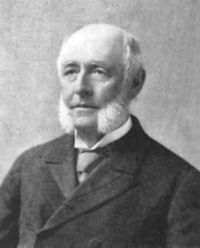
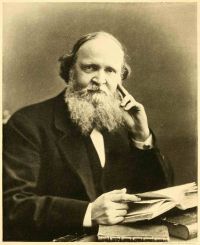
Portrait of William Dwight Whitney William Dwight Whitney,  Language and the Study of Language (1867)

“ Others, who know the European languages too well to maintain respecting their relations any so shallow and untenable theory, yet try to persuade themselves that the analogy of the Latin will sufficiently account for their extension over so wide a region; that, as Etruscans, Celts, Iberians, Germans, learned to speak a tongue of Roman origin, so the populations of Europe and Asia, of diverse lineage, learned to speak a common Indo-European dialect; and that, accordingly, the differences of Greek, Sanskrit, Celtic, and Slavonic are parallel to those of Italian, French, and Spanish. ”
Source: Wikisource

Get perspective with Kwize: daily news enlightened by great literature