“ It is through the medium of the intensive and special coloring of each tribal civilization, that the common elements of Indian culture are brought out most truthfully, even though somewhat indirectly. ”
Indian culture
Definition and stakes
The theme of “Indian culture” has been addressed by authors such as Henry Rowe Schoolcraft, Anna C. Johnson, George Wharton James, Francis Amasa Walker and George E. Ellis. It is often associated with terms like indigenous, peoples, American, Americas and India.
Quotes about “Indian culture”
J. D. Anderson, The Peoples of India
“ In spite of the spread of the stronger languages, the five great families of Indian speech remain and testify to more varied origins than those of Europe. One of the first results of familiarity with Indian peoples is a sense of their remarkable variety of aspect and culture. ”
Anna C. Johnson, The Iroquois; or, the bright side of Indian character (1855)
“ There is no danger of painting Indians, so that they will become attractive to civilized people; and there is no need of painting them more hideously than they paint themselves. There is a bright and pleasing side to Indian character; and thinking that there has been enough written of their wars and their cruelties, of the hunter’s and the fisherman’s life, I have sat down by their firesides, and listened to their legends, and tried to become acquainted with their domestic habits, and to understand their finer feelings, and the truly noble traits of their character. ”
Various, Graham's Magazine, Vol. XXXVI, No…
“ How quickly their sound arrests the attention of the traveler and stranger? How softly their syllables fall from the lips of beauty. There seems a magic spell about them. May it be their protection from any change. It is but just that the streams that first knew the Indians in their pride and glory should retain the melody of their language.In many instances, the Indian character has been found capable of great refinement from education, and of the few who have been placed in our colleges, some have evinced superior talents. ”
Louise Manly, Southern Literature From 1579-1895
“ I would encourage the Indians to cultivate them. Let them see how much it adds to their comfort, how it insures to their wives and children abundant subsistence; and then you win the Indian over to civilization; you charm him, and he becomes a civilized man. ”
 Flora Annie Webster Steel,
In the Permanent Way
Flora Annie Webster Steel,
In the Permanent Way
“ Such things have been, nay, are, in India, seeming in truth more fantastic when set down in pen and ink than they do when seen in the warm clasp of that Indian sunlight which shines down indifferently on so many a strange anomaly of caste, and creed, and custom. ”
Mosaic of New Mexico's Scenery…
“ As impressive as his achievements in domesticating plants, in building massive structures, and in developing symbolism and aesthetic values to match his material advances, the Indian’s greatest heights were reached in his philosophy on nature and life. He conceived himself to be, not master of creation, but a single factor in the scheme of things. ”
 Henry Rowe Schoolcraft,
Personal Memoirs of a Residence of Thirty Years with the Indian Tribes on the American Frontiers
Henry Rowe Schoolcraft,
Personal Memoirs of a Residence of Thirty Years with the Indian Tribes on the American Frontiers
“ The Indians are prolix, and attach value to many minutiae in the relation which not only does not help forward the denouement, but is tedious and witless to the last degree. The gems of the legends--the essential points--the invention and thought-work are all preserved.Their chief value I have ever thought to consist in the insight they give into the dark cave of the Indian mind--its beliefs, dogmas, and opinions--its secret modes of turning over thought--its real philosophy; and it is for this trait that I believe posterity will sustain the book. ”
C. C. Andrews, Minnesota and Dacotah
“ There is no reason why the Indians should not speedily become civilized. Those who have longest lived amongst them, and who best understand their character, tell me so. I fully believe it. The Indian follows his wild habits because he has been educated to do so. The education of habit, familiar from infancy, and the influence of tradition, lead him to the hunt, and as much to despise manual labor. He does what he has been taught to consider as noble and honorable, and that is what the most enlightened do. ”
 Cincinnatus Heine Miller,
Life Amongst the Modocs: Unwritten History
(1873)
Cincinnatus Heine Miller,
Life Amongst the Modocs: Unwritten History
(1873)
“ I had read some flaming picture books of Indian life, and I had mixed all my life more or less with the Indians, that is, such as are willing to mix with us on the border, but the real Indian, the brave, simple, silent and thoughtful Indian who retreats from the white man when he can, and fights when he must, I had never before seen or read a line about. ”
J. G. Wood, The uncivilized races of men in all countries of the world… (1875)
“ There was poetry in their faith, in their customs, in their language, at once laconic and picturesque—and even in the names they bestowed on each tribe, each chief and warrior, on mountain and river. One can hardly suppress a feeling of regret that so much of wild romance and valor should have been swept from the face of the earth, unless we call to mind the shadow of the picture—the Indian’s cruelty, perfidiousness and savage lust. ”
James Napier Bailey, Sketches of Indian Character
“ Such, nevertheless, is the spectacle which an Indian nation exhibits to the eye of a stranger. I have been a witness to it for a long series of years, and after much observation and reflection to discover the cause of this phenomenon, I think I have reason to be satisfied that it is in a great degree to be ascribed to the pains which the Indians take to instil at an early age honest and virtuous principles into the minds of their children, and to the method which they pursue in educating them. ”
Geneva Armstrong, Woman in Art (1900)
“ She is an earnest thinker and worker, and realizing that the Indian is being educated out of his customs and costumes, out of his native haunts—out of everything except history and a few well-written descriptions of his life and character and the poetry of his nature—she has joined the rank of painters who are preserving some of the picturesque aspects of Indian life on the plains. ”
Anna C. Johnson, The Iroquois; or, the bright side of Indian character (1855)
“ But when the Indian, with far more to lose, and infinitely greater provocation, sits upon the green mound, beneath the canopy of heaven, and refuses to ask mercy of civilized fiends, he is stigmatized as dogged, spiritless, and sullen.” “What a different name has greatness, clothed in the garb of Christian princes and sitting beneath spacious domes, gorgeous with man’s devices; and greatness, in the simple garb of nature, destitute, and alone in the wilderness!” ”
Laura Lee Hope, The Bobbsey Twins and Baby May
“ The beauty of Indian legend—the thrill of Indian adventure—the poetry of the Indian’s religion, and, above all, the sturdy manhood and the idealism of the Indian boy will be an inspiration to every child. ”
 George A. Birmingham,
From Dublin to Chicago: Some Notes on a Tour in America
George A. Birmingham,
From Dublin to Chicago: Some Notes on a Tour in America
“ One imagines these men, hardened with intolerable toil, skilled in all the lore of wild life, brave, adventurous, picking up here and there a word or two of Indian speech, adopting Indian names for places which they had no time to name themselves, handing on these strange syllables to those who came after them to settle and to build. ”
Mary Katrine Rice Sedgwick, Ácoma, the sky city (1926)
“ There is no manifestation of the Indian character more extraordinary than his elaborate religious and ritual organization. Fundamental to any real interpretation of Indian life, it is so bewilderingly intricate and so elusive that we can here touch upon only a few of the more definite aspects. ”
 Washington Irving,
The Sketchbook of Geoffrey Crayon…
(1819)
Washington Irving,
The Sketchbook of Geoffrey Crayon…
(1819)
“ The Indian, on the contrary, free from the restraints and refinements of polished life, and in a great degree a solitary and independent being, obeys the impulses of his inclination or the dictates of his judgment; and thus the attributes of his nature, being freely indulged, grow singly great and striking. ”
James Athearn Jones, Traditions of the North American Indians…
“ All travellers have spoken of it as possessing wonderful beauties, and the poor unenlightened Indian, who ascribes every thing of an imposing, a sublime, and a magnificent character, every thing which has phenomena he cannot comprehend to a superior being, and who fancies a governing spirit in every deep glen in the wilderness, has associated many of his wild and fanciful traditions with this singular spot. ”
Henry Rowe Schoolcraft,
Western Scenes and Reminiscences
“ We knew many of their present stalwart braves in those days of early life when the Indian and white alike forget disguise, but in the unchecked exuberance of youthful feeling show the real character that policy and habit may afterwards so much conceal; and we know that, under the stolid stoic look he assumes, there is burning in the Indian’s nature a heart of fire and feeling, and an all-observing keenness of apprehension, that marks and remembers everything that occurs, and every insult he receives. ”
 William Howitt,
Colonization and Christianity
(1838)
William Howitt,
Colonization and Christianity
(1838)
“ For every palace built by returned Indian nabobs in England; for every investment by fortunate adventurers in India stock; for every cup of wine and delicious viand tasted by the families of Indian growth amongst us, how many of these Indians themselves are now picking berries in the wild jungles, sweltering at the thankless plough only to suffer fresh extortions, or snatching with the bony fingers of famine, the bloated grains from the manure of the high-ways of their native country! ”
 F. Max Müller,
Auld lang syne. Second series
(1899)
F. Max Müller,
Auld lang syne. Second series
(1899)
“ Our palates are accustomed to the food which they have supplied to us from our very childhood, and hence whatever comes to us now from the thought-mines of India is generally put aside as merely curious or strange, whether in language, mythology, religion, or philosophy. But however foreign Indian thought may appear to us, it has filled an important place in the growth of the human race, and that growth is important, whether it took place on the borders of the Ilissos or on the shores of the Ganges. In India we still see, as it were, the last traces of the primordial surprise at this world. ”
Henry Rowe Schoolcraft,
Personal Memoirs of a Residence of Thirty Years with the Indian Tribes on the American Frontiers
“ What under the sun do the learned world suppose the Indians are made of? A man spending his time painfully to catch a beaver, or entrap an enemy, without stores of thought, without leisure, with nothing often to eat, and nothing to put on but tatters and rags, and, withal, with the whole Anglo-Saxon race treading on his toes and burning out his vitals with ardent spirits. Such is the Indian. ”
 Rowland Evans Robinson,
In New England Fields and Woods
Rowland Evans Robinson,
In New England Fields and Woods
“ LIV THE FOXAmong the few survivals of the old untamed world there are left us two that retain all the raciness of their ancestral wildness.Their wits have been sharpened by the attrition of civilization, but it has not smoothed their characteristics down to the level of the commonplace, nor contaminated them with acquired vices as it has their ancient contemporary, the Indian. ”
Various, Popular Science Monthly (1889)
“ Arts and Customs.—Although the rapid settlement of the country, and the introduction of habits and implements of civilization, have effected great change in the arts and customs of the Indians, yet among many tribes the old ways of life have been by no means abandoned, and primitive habits and modes of thought still flourish. Investigators sent out by the bureau are required to note the details of the every-day life of the Indians, and to describe such of their primitive arts as still survive as well as those that are borrowed from civilization and modified in accordance with the Indian ideas. ”
George Catlin, Illustrations of the manners, customs… (1876)
“ As far as my travels have yet led me into the Indian country, I have more than realized my former predictions that those Indians who could be found most entirely in a state of nature, with the least knowledge of civilized society, would be found to be the most cleanly in their persons, elegant in their dress and manners, and enjoying life to the greatest perfection. ”
Anna C. Johnson, The Iroquois; or, the bright side of Indian character (1855)
“ Of all the spiritual creations of the Indian, there is none more beautiful than the one concerning the guardians which they imagine to preside over their favorite vegetables, corn, beans, and squashes. Each of these has a spirit, but a separate name is not given to each spirit. They have the forms of beautiful females, and are represented as loving one another as sisters, and dwelling together in perfect unity and happiness. ”
W. G. Miller, Thirty Years in the Itinerancy
“ My early reading had introduced me to the Indian, both in his native wilds and as seen on the borders of civilization, the former as the noblest specimen of the natural man on the planet, and the latter as the most degraded of mortals. ”
 Francis Amasa Walker,
The Indian Question
Francis Amasa Walker,
The Indian Question
“ We all know what a savage Indian is. What is a civilized Indian?—what a semi-civilized Indian? To what degree of industry, frugality, and sobriety can the Indian be brought? How well does he repay efforts and expenditures for his enlightenment and his advancement in the arts of life? How far does he hold his own when once fairly started on his course by the bounty of the government or by philanthropic enterprise, instructed and equipped, with no obstacles in his way, and with no interruptions from without? ”
Henry Rowe Schoolcraft,
The Indian in his Wigwam; Or, Characteristics of the Red Race of America
“ Connected with them by a long residence, by the exercise of official duties, and by still more delicate and sacred ties, he has been regarded by them as one identified with their history, and received many marks of their confidence.The Indians, viewed as a distinct branch of the human race, have some peculiar traits and institutions, from which their history and character may be advantageously studied. They hold some opinions, which are not easily discovered by a stranger, or a foreigner, but which yet exert a powerful influence on their conduct and life. ”
 George Wharton James,
What the White Race May Learn from the Indian
George Wharton James,
What the White Race May Learn from the Indian
“ THE INDIAN AND ART WORK Even our artists and designers may learn much of great importance from the Indian. While to most of my readers it may come as a surprise that I claim great artistic powers for the Indian, yet no one can carefully study the basketry and pottery of the Amerind and not know the perfect justice of the claim. ”
George Wharton James,
What the White Race May Learn from the Indian
“ I have already, in other chapters, commented upon some of these things, as revealed in the light of the Indian’s life. Their lives are, perforce, models of simplicity, devoid of luxuries and also of superfluities. It is not my intent to suggest that we should revert to their method of living a simple and unluxurious life, but I do long with all my heart that we might take lesson from them, and find the golden mean between their life and our too complex and superfluity-laden life. ”
Frederick W. Thomas, The Emigrant
“ If so, what inducement could have been placed before them, sufficiently powerful, to break down the barriers of nature, and bring men habitually indolent, to so herculean a task? The Indian, as we see him now, never works. He is the sovereign of the woods, and strides over his heritage with the step of a master, and the wild glance of one who disdains employment. ”
William Henry Johnson, French Pathfinders in North America
“ The study of Indian life has this peculiar interest, that it gives us an insight into the thinking and acting of our own forefathers long before the dawn of history, when they worshiped gods very much like those of the Indians. ”
Anna C. Johnson, The Iroquois; or, the bright side of Indian character (1855)
“ White men have lived among them and learned to prefer the hunter’s life. Indians have learned to prefer the habits of civilization, and shown themselves capable of education and refinement equal to any attained by any nation. ”
George Wharton James,
What the White Race May Learn from the Indian
“ On the other hand, frankness, honesty, simplicity, directness, characterize the manufactures of the Indian. They are to serve such and such a purpose; that purpose is openly denoted. The result is that, to the unperverted eye, the artistic work of the unspoiled Indian is as perfect in form as it can be. There is no wild straining after unique effect; no fantastic distortions to secure novelty; everything is natural and rational, and therefore artistically effective. ”
James Napier Bailey, Sketches of Indian Character
“ It is undoubted that they have done some good, by influencing the Indians to embrace Christianity, and have inculcated the first principles of civilization, particularly in the tribes now under consideration, which shows itself in the desire which they have expressed to be collected in a village, and have lands allotted them for cultivation. ”
Henry Rowe Schoolcraft,
Algic Researches, Comprising Inquiries Respecting the Mental Characteristics of the North American Indians…
“ But all this seems to flit through the Indian mind as a dream, and furnishes him rather the source of a pleasing secret retrospection than any spring to present and future exertions. He pines away as one that is fallen, and despairs to rise. He does not seem to open his eyes on the prospect of civilization and mental exaltation held up before him, as one to whom the scene is new or attractive. ”
Related terms
Authors who wrote about “Indian culture”
Henry Rowe SchoolcraftAnna C. JohnsonGeorge Wharton JamesFrancis Amasa Walker George E. Ellis
 Henry David ThoreauGeorge Catlin
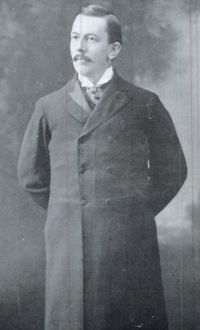 Warren King Moorehead
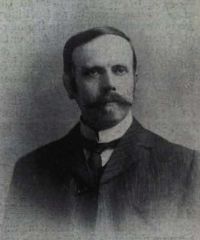 Ernest Binfield HavellMary Katrine Rice SedgwickCincinnatus Heine MillerEdmund B. TuttleJames Napier BaileyElias Johnson
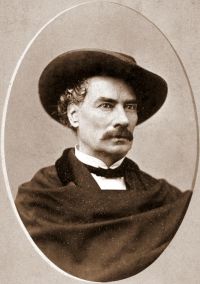 John Carey Cremony
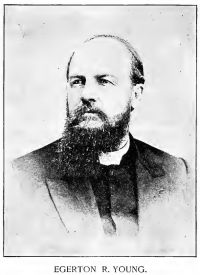 Egerton Ryerson YoungJames Athearn JonesEdward Sylvester EllisCharles M. SkinnerWilliam Henry Johnson