Italian language

Definition and stakes

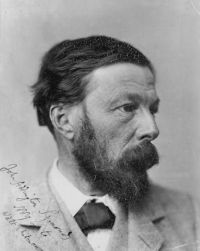
Portrait of George Borrow George Borrow,  The Romany Rye (1857)

“ Italian is a sweet language, and of beautiful simplicity—its literature perhaps the first in the world. The Italians!—wonderful men have sprung up in Italy. Italy is not merely famous for painters, poets, musicians, singers, and linguists—the greatest linguist the world ever saw, the late Cardinal Mezzofanti, was an Italian; but it is celebrated for men—men emphatically speaking: Columbus was an Italian, Alexander Farnese was an Italian, so was the mightiest of the mighty, Napoleon Bonaparte;—but the German language, German literature, and the Germans! ”
Source: Wikisource

Various,  The Mirror of Literature, Amusement…

“ I will venture to affirm that, on this side the Alps, there is no country in Europe whose natives have so little to learn, or to unlearn, in acquiring a good Italian pronunciation, as the English. We have neither the gutturals of the German and the Spaniard, nor the mute vowels and nasal n’s of the French to get rid of; there is scarcely a sound in the Italian language which we are not in the daily habit of uttering, and nearly our whole task would be confined to the learning that certain conventional alphabetical symbols, which represent one sound in English, represent another in Italian. ”
Source: Gutenberg

Portrait of F. Max Müller F. Max Müller,  Lectures on the Science of Language

“ Now if we call Italian the daughter of Latin, we do not mean to ascribe to Italian a new vital principle. Not a single radical element was newly created for the formation of Italian. Italian is Latin in a new form. Italian is modern Latin, or Latin ancient Italian. The names mother and daughter only mark different periods in the growth of a language substantially the same. ”
Source: Gutenberg

Get perspective with Kwize: daily news enlightened by great literature