
“ Close in the rear the Tuscan troops pursue, And urge their flight: Asylas leads the chase; Till, seiz’d, with shame, they wheel about and face, Receive their foes, and raise a threat’ning cry. The Tuscans take their turn to fear and fly. ”
Tuscans
Definition and stakes
The Tuscans, an ancient people of central Italy, have long captured the attention of literary figures, embodying a fusion of cultural endurance, artistic sensitivity, and historical depth. From Virgil’s portrayal of their martial courage in The Aeneid to Vernon Lee’s musings on their subtle aesthetic philosophy, writers have examined their heritage from multiple angles.
Joseph Woods emphasized their steadfast national spirit, while William Cullen Bryant observed their inclination toward lenient rule. Saint Catherine of Siena praised their medieval piety, and Robert Kerr outlined their impact on seafaring. These differing viewpoints together highlight the Tuscans’ lasting significance as a link between ancient traditions and Renaissance values, their character molded by both historical background and creative vision.
Quotes about “Tuscans”
Joseph Woods, Letters of an Architect, From France…
“ The tenacity with which the Tuscans still maintain their claim to these vases, and to the style of ruins found at Pæstum, with every sort of evidence against them, is a curious exemplification of the character of that people. A Tuscan cannot bear to give up any thing which appears to make for the honour of his country. ”
 William Cullen Bryant,
Letters of a Traveller; Or, Notes of Things Seen in Europe and America
William Cullen Bryant,
Letters of a Traveller; Or, Notes of Things Seen in Europe and America
“ The Tuscans are pleased with the birth of an heir to the Dukedom, first because the succession is likely to be kept in a good sort of a family, and secondly because for want of male children it would have reverted to the House of Austria, and the province would have been governed by a foreigner. I am glad of it, also, for the sake of the poor Tuscans, who are a mild people, and if they must be under a despotism, deserve to live under a good-natured one. ”
Saint of Siena Catherine, Letters of Catherine Benincasa
“ There is something very charming, wholly Italian and mediaeval, in the thought of the three highly-born and gently-bred young Tuscans, who, without leaving the world or taking religious vows, attached themselves with a pure and passionate devotion to the person of the Beata Populana, dedicated their time and powers to her service, caught the fire of her ideals, and after her death followed her wishes for their future. ”
 Vernon Lee,
Laurus Nobilis: Chapters on Art and Life
Vernon Lee,
Laurus Nobilis: Chapters on Art and Life
“ Similarly the Tuscans must have been influenced by the grace, the sparseness, the serenity of the olive, its inexhaustible vigour and variety; yet how many of them ever painted it? That a people should never paint or describe their landscape may mean that they have not consciously inventoried the items; but it does not mean that they have not æsthetically, so to speak nervously, felt them. Their quality, their virtue, may be translated into that people's way of talking of or painting quite different things: the Tuscan quality is a quality of form, because it is a quality of mood. ”
Robert Kerr, A General History and Collection of Voyages and Travels - Volume 18
“ But the most direct and unequivocal testimony to the power of the Tuscans, and that that power was principally, if not entirely, derived from their maritime skill and commerce, is to be found in Livy. This historian informs us, "that before the Roman empire, the Tuscan dominions extended very far both by sea and land, even to the upper and lower sea, by which Italy is surrounded, in form of an island. Their very names are an argument for the vast power of this people; for the Italian natives call the one the Tuscan Sea, and the other the Adriatic, from Adria, a Tuscan colony. ”
Baldassarre Castiglione, The Book of the Courtier (1901)
“ Therefore in writing, I believe it is proper to use Tuscan words used only by the ancient Tuscans, because that is great proof and tested by time, that they are good and effective to express the sense in which they are used. And besides this, they have that grace and venerableness which age lends not only to words, but to buildings, to statues,, to pictures, and to everything that is able to attain it, and often merely by their splendour and dignity they make diction beautiful, by virtue whereof (and of grace) every theme, however mean it be, can be so adorned as to merit very high praise. ”
Vernon Lee,
Laurus Nobilis: Chapters on Art and Life
“ There is, thank heaven, wholesome art various enough to appeal to many various healthy temperaments; and perhaps for each single temperament more than one kind of art is needful. My object in the foregoing pages has not been to put forward reasons for preferring the art of the Tuscans any more than the climate and landscape of Tuscany; but merely to bring home what the especial charm and power of Tuscan art and Tuscan nature seem to me to be. More can be gained by knowing any art lovingly in itself than by knowing twenty arts from each other through dry comparison. ”
 William Le Queux,
The Stretton Street Affair — Chapter 6
(1922)
William Le Queux,
The Stretton Street Affair — Chapter 6
(1922)
“ The Tuscans, fine aristocratic nobles with ten centuries of lineage behind them, and splendid peasants with all their glorious traditions of feudal servitude under the “nobile,” are, after all, like children, with a simplicity that is astounding, combined with a cunning that is amazing. ”
 Theodor Mommsen,
The History of Rome
(1875)
Theodor Mommsen,
The History of Rome
(1875)
“ The religion of the Tuscans, in particular, presenting a gloomy fantastic character, and delighting in the mystical handling of numbers and in wild and horrible speculations and practices, is equally remote from the clear rationalism of the Romans and the genial image-worship of the Hellenes. ”
 Maurice Hewlett,
Earthwork out of Tuscany: Being Impressions and Translations of Maurice Hewlett
Maurice Hewlett,
Earthwork out of Tuscany: Being Impressions and Translations of Maurice Hewlett
“ They are mountaineers, a strong race. At pallone one day, I saw muscles "all a-ripple down the back," arms and shoulders, which would have intoxicated the great old "amatore del persona" himself. For their vivacity, it is racial; I think all Tuscans, more or less, retain the buoyant spirits, the alertness as of birds, which crowned Italy with Florence instead of Rome or Milan. Tuscan Art is a proof of that, and Tuscan Art can be studied at its roots in Pistoja: you see there the naked thing itself with none of the wealth of Florence to make the head swim. ”
Various, Robert Merry's museum, Volumes III-IV… (1842)
“ A few miles brought us into Tuscany; and here we were struck with a remarkable improvement in the appearance of the people and the face of the country. The inhabitants are tidily dressed, clean and industrious. The roads are in excellent repair. The towns and villages are neat and thriving. The Tuscans, in fact, are the Yankees of Italy, and their country stands in much the same relation to the rest of the peninsula, that New England does to the other portion of the United States. It has a hard, rugged soil, and a comparatively cool climate. ”
 Élisée Reclus,
The Earth and its inhabitants, Volume 1…
Élisée Reclus,
The Earth and its inhabitants, Volume 1…
“ The modern Tuscans, like their ancestors, have known a time when they took the lead amongst the people of Italy, and even now they stand at the head of the nation in certain respects. After the decadence of Rome, when civilisation gravitated towards the north, the valley of the Arno became one of the great centres of the world’s activity. At that time the passage of the Alps was still difficult, but communications by sea were established between Tuscany, France, and Spain. ”
Various, Encyclopaedia Britannica, 11th Edition…
“ The Tuscans spoke a dialect which most closely resembled the mother-tongue, Latin—one which afterwards Tuscan poetry. became almost exclusively the language of literature, and which was already regarded at the end of the 13th century as surpassing the others; “Lingua Tusca magis apta est ad 900 literam sive literaturam”: thus writes Antonio da Tempo of Padua, born about 1275. Being very little or not at all affected by the Germanic invasion, Tuscany was never subjected to the feudal system. ”
Emanuele Celesia, The Conspiracy of Gianluigi Fieschi…
“ Such wise generosity acquired him the affection of the people. The foreign wars and the stagnation of trade had impoverished a great part of the citizens, especially the spinners and the silk operatives, then called Tuscans, of whom there were fifteen thousand in Genoa. ”
Ellis Cornelia Knight, Autobiography of Miss Cornelia Knight…
“ The Tuscans, of all classes, appeared to me to be a very polished people, as if still retaining traces of their early civilisation. The peasants were far superior in every respect to those of other countries, and fewer crimes were at that time committed in Tuscany than in any other part of Europe.On the 30th of April, 1791, we once more found ourselves in Rome.The two French princesses, Madame Adelaide and Madame Victoire, aunts of Louis XVI., were lodged at Cardinal de Bernis’. The cardinal having declined to take the oath of allegiance to the republic, was no longer ambassador ”
M. F. Mansfield, Italian Highways and Byways from a Motor Car
“ The alabaster bric-à-brac trade and traffic still exists, and provides a livelihood for a large part of the population of the city; but thousands of Tuscans, many of them from Volterra, doubtless, have deserted their{141} former arts for the pleasure of dragging a hand organ from street to street, in London and New York, and gathering soldi by ministering to the pleasures of the populace. ”
Élisée Reclus,
The Earth and its inhabitants, Volume 1…
“ After the suppression of piracy the islanders came down to the marina, or coast, and established themselves in the towns of Porto Ferrajo, Porto Longone, Marciana, and Rio. The resources of the island are considerable, and afford plenty of occupation to fishermen, salt-makers, wine-growers, and gardeners. The inhabitants are hospitable, and, though neighbours of the fierce Corsicans, they possess all the gentleness of Tuscans. ”
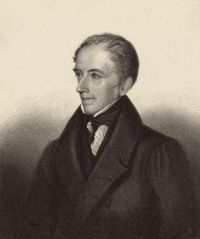 James Montgomery,
Eminent literary and scientific men of Italy…
James Montgomery,
Eminent literary and scientific men of Italy…
“ No Tuscan ever would or even could tolerate the introduction of any of the words or phrases belonging to other dialects; and they endure the mistakes of foreigners with less disgust than the uncouth pronunciation of their countrymen of the north and east of the peninsula. Nor will they allow that even the well educated among these use classic modes of speech. This is the point of contention; for their antagonists insist, that they are in as full possession as the Tuscans of pure Italian, drawing it from the same sources— namely, the best writers of the country ”
Seeing Europe with Famous Authors…
“ The poets and painters, in particular, with few exceptions, have been, in the wide ethnical sense, Tuscans.The towns of ancient Etruria were hill-top strongholds. Florence was not one of these; even its neighbor, Fiesole (Faesulue) , did not rank among the twelve great cities of the Etruscan league. But with the Roman conquest and the Roman peace, the towns began to descend from their mountain peaks into the river valleys; roads grew important, through internal trade; and bridges over rivers assumed a fresh commercial value. ”
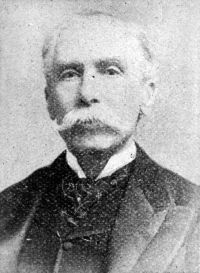 Alfred Austin,
Lamia's Winter-Quarters
Alfred Austin,
Lamia's Winter-Quarters
“ Of the manifold charms of Tuscany, perhaps there is none so great or so enduring as the charm of manner peculiar to its rural population. Frank without being free, deferential but never servile, not without a fine reserve yet with never a touch of shyness, withholding not a certain tribute to social superiority, while tacitly intimating the fundamental equality that appertains to human brotherhood, the demeanour and speech of Tuscan contadini keep intercourse perpetually fresh, and impart to conversation on the tritest and most familiar themes perennial liveliness and interest. ”
Various, The Atlantic Monthly, Volume 20…
“ Indeed, not a fact or trait of modern Tuscan life seems to have escaped the author's vigilant observation and patient record; the life of the effete noble, the frugal citizen, the shrewd broker, the pampered, ecclesiastic, the peasant, and the artist is revealed with the most precise and graphic detail. We are taken to the promenade and the caffè, to the piazza and the church, to the farm-house and the palazzo; and there we see and hear the actual everyday intercourse of the people. ”
 Aldous Huxley,
Little Mexican & Other Stories
Aldous Huxley,
Little Mexican & Other Stories
“ Changeful in its beauty, this wide landscape always preserved a quality of humanness and domestication which made it, to my mind at any rate, the best of all landscapes to live with. Day by day one travelled through its different beauties; but the journey, like our ancestors’ Grand Tour, was always a journey through civilisation. For all its mountains, its steep slopes and deep valleys, the Tuscan scene is dominated by its inhabitants. They have cultivated every rood of ground that can be cultivated; their houses are thickly scattered even over the hills, and the valleys are populous. ”
William Le Queux,
The gamblers
(1901)
“ Every type, indeed, is represented in that long, single street at night—the dark-haired Jewess, the classic Greek, the thick-lipped Tunisian, the pale-cheeked Armenian, and the beautiful Tuscan, the purest type of beauty in all the world. Once again, after several years, I heard, as I walked onward, the soft sibilations of the Tuscan tongue about me, the gay chatter of that city of sun and sea, where, although half the population is in a state of semi-starvation, hearts are still as light as in the days when "cara Livorno" was still prosperous. ”
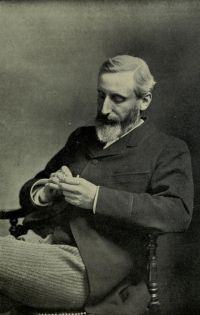 Grant Allen,
Science in Arcady
Grant Allen,
Science in Arcady
“ From the very beginning they are strong, but sullen. Solidity and power, rather than beauty and grace, are what they aim at; and in this, Michael Angelo was a true Tuscan. If we look at the massive old Etruscan buildings, the Cyclopean walls of Fæsulæ and Volterræ, with their gigantic unhewn blocks, or the gloomy tombs of Clusium, with their heavy portals, and then at the frowning façade of the Strozzi or the Pitti Palace, we shall see in these, their earliest and latest terms, the special marks of Tuscan architecture. ”
Estelle M. Hurll, The Madonna in Art
“ In each one we have the typical Tuscan landscape, filling the whole picture with its tranquil beauty. The "glad green earth" blossoms with dainty flowers; the fair blue sky above is reflected in the placid surface of a lake. From its shores rise gently undulating hills, where towers show the signs of happy activity. In the foreground of this peaceful scene sits a beautiful woman with two charming children at her knee. They belong to the landscape as naturally as the trees and flowers; they partake of its tranquil, placid happiness. ”
Edward Hutton, Florence and Northern Tuscany with Genoa
“ In all Carrara and the valley of Torano I saw no beautiful or distinguished faces,—the women were without sweetness, the men a mere gang of workmen. Now, common as this is in any manufacturing city of the North, it is very uncommon in Italy, where humanity has not been injured and enslaved by machinery as it has with us. You may generally find beauty, sweetness, or wisdom in the faces of a Tuscan crowd in any place. Only here you will see the man who has become just the fellow-labourer of the ox. ”
 Anna Katharine Green,
The Sword of Damocles: A Story of New York Life
Anna Katharine Green,
The Sword of Damocles: A Story of New York Life
“ But gallantry while it sits well upon a man, does not make him one, any more than a feather makes the cap it adorns. For a Tuscan he hath also a certain comeliness, but then I have ever sworn, in good faith too, that I would not marry a Tuscan, were he the best made man in Italy. ”
William Le Queux,
The Mysterious Mr. Miller
“ Of all the people in the whole of proud old Tuscany assuredly none were so easy-going and vivacious, none so light-hearted and full of poetry as those Livornese people passing to and fro below us. The more I had dwelt among the Tuscan people the more I loved them. There is surely no other people on the face of the earth so entirely lovable, even with their many sad faults, as they; none so gregarious, so neighbourly, so courteous, kindly or poetic, none so content upon the most meagre fare that ever held body and soul together. ”
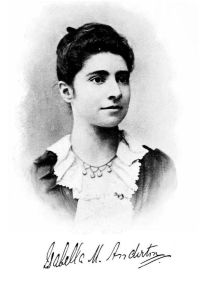 Isabella Mary Anderton,
Tuscan folk-lore and sketches, together with some other papers
Isabella Mary Anderton,
Tuscan folk-lore and sketches, together with some other papers
“ A TUSCAN COUNTRYSIDE AND THE FESTA AT IL MELO I had left Clementina and the little ones behind me, and had moved further up among the Apennines to a village which, perched on a low hill, overlooks the river and the winding valley. The summits of the mountains all around rise bare and scarped from dark pine and ash woods, while their bases are clothed with chestnuts. Many a long line of soldiers have the villagers seen marching up the valley on the other side of the river which flows at their feet: for the pass is an important one, being the high road from Tuscany into the Modenese. ”
Marjorie Moyca Newell, The Medici Balls: Seven little journeys in Tuscany
“ Follow up any of the Tuscan rivers—through the Val d'Ema, Val di Pesa, Val d'Elsa, or the valleys of the Mugnone, Sieve, Bisenzio, and Ombrone, every one an affluent of the Arno—and you will find a pathway of delight, a real progress through a world of exquisite colour, form, and fragrance. Yet it is not easy to turn away from Florence and wander off in pastures new; like a siren, she holds us in willing thraldom by the infinite variety of charms so potent that all the [6] world beyond her warm, grey walls becomes vague and unreal. ”
Various, The Atlantic Monthly, Volume 20…
“ The modern life of a decayed branch of the Tuscan nobility in the nineteenth century, the process and method of its decadence, the charm of "a local habitation and a name," once identified with the vital power of the old republic, and the sad, effeminate, yet not unromantic sentiment incident to its passing away, through the prosperous encroachments of new men, with whom money is the power once only attached to birth, are most aptly described. The thrifty farmer of the Apennine, and his slow and handsome son, are capital types of the frugal and shrewd fattore and rustic proprietor of Tuscany ”
