Air pollutant

Definition and stakes

ICTA Petition for a Writ of Certiorari on EPA Global Warming Case

“ By using the word “any,” Congress demonstrated its intent to provide EPA expansive authority, not to limit the agency’s jurisdiction to only certain kinds of air pollutants. See Dept. of HUD v. Rucker, 535 U.S. 125, 131 (2002) (“the word ‘any’ has an expansive meaning, that is, ‘one or some indiscriminately of whatever kind’”) (internal quotation omitted) . As noted above (supra at 6) , section 302 (g) of the Act defines “air pollutant” comprehensively, and each of the four pollutants associated with climate change and emitted by motor vehicles is plainly covered by this definition. ”
Source: Wikisource

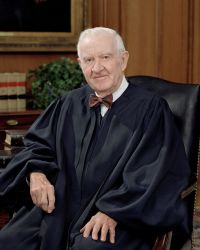
Portrait of John Paul Stevens John Paul Stevens,  Massachusetts v. Environmental Protection Agency…

“ Administrator shall by regulation prescribe (and from time to time revise) in accordance with the provisions of this section, standards applicable to the emission of any air pollutant from any class or classes of new motor vehicles or new motor vehicle engines, which in his judgment cause, or contribute to, air pollution which may reasonably be anticipated to endanger public health or welfare . ”
Source: Wikisource

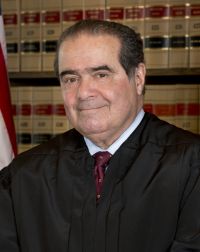
Portrait of Antonin Scalia Antonin Scalia,  Massachusetts v. Environmental Protection Agency…

“ In short, the word "including" does not require the Court's (or the petitioners') result. It is perfectly reasonable to view the definition of "air pollutant" in its entirety: An air pollutant can be "any physical, chemical, . . . substance or matter which is emitted into or otherwise enters the ambient air," but only if it retains the general characteristic of being an "air pollution agent or combination of such agents." This is precisely the conclusion EPA reached: " [A] substance does not meet the CAA definition of 'air pollutant' simply because it is a 'physical, chemical, . ”
Source: Wikisource

Get perspective with Kwize: daily news enlightened by great literature