Anthropocentrism

Definition and stakes

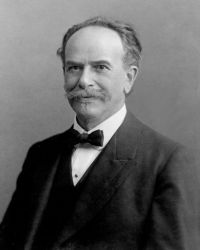
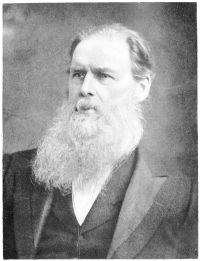
Portrait of Edwin Abbott Abbott Edwin Abbott Abbott,  The Kernel and the Husk (1886)

“ It is precisely the same in the science of humanity, which we may call anthropology. In order to prepare the way for 'applied anthropology' whereby we may dominate the immaterial world, the minds and tempers of men, we must begin with 'pure anthropology'; that is to say, we must idealize and speak of man not as he is but as he would be if certain tendencies which we see in him conducive to social order and individual development, could be infinitely—yes, and we must add, if we limit our horizon to this present life, impossibly—extended. ”
Source: Wikisource

Portrait of Helen H. Gardener Helen H. Gardener,  Facts and Fictions of Life

“ They are thinking of, planning for and executing plans which subordinate the race—the human entity—to a subdivision, the mark and sign of which is the lowest and most universal possession of male nature—the mere procreative instinct and possibility. And this has grown to be the habit of thought until in science, in philosophy, in religion, in law, in politics—one and all—we must translate all language into other terms than those used. For the word "universal" we must read "male;" for the "people," the "nation," we must read "men." ”
Source: Gutenberg

Civilization in the United States… (1922)

“ Between these two limits—the primitive and the human—the ideal beginning and the ideal end—we can recognize, at any given moment in history, through the segmentation and aggregation of a multitude of cultures, different ages and strata of culture coexisting in the same social group; and the individual mind emerges at the confluence of the practical cultures, with science and philosophy and the ethical, non-tribal ideals, germs and initia, of the human civilization remaining above the given society as a soul that never entirely vivifies its own body. ”
Source: Gutenberg

Get perspective with Kwize: daily news enlightened by great literature