“ But I think it will bring you something besides this, something that is the knowledge of real strength in art: not that you should imitate the works of these men; but their artistic spirit, their artistic attitude, I think you should absorb that. ”
Artistic spirit
Definition and stakes
The theme of “artistic spirit” has been addressed by authors such as Cora L. V. Richmond, Giovanni Gentile, Various, Carleton Eldredge Noyes and De Witt H. Parker. It is often associated with terms like art, artist, painter, poet and emotion.
Quotes about “artistic spirit”
 Willa Cather,
A Collection of Stories, Reviews and Essays
Willa Cather,
A Collection of Stories, Reviews and Essays
“ Art, it seems to me, should simplify. That, indeed, is very nearly the whole of the higher artistic process; finding what conventions of form and what detail one can do without and yet preserve the spirit of the whole—so that all that one has suppressed and cut away is there to the reader’s consciousness as much as if it were in type on the page. ”
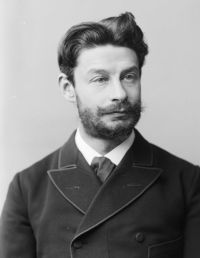 Georg Brandes,
Main Currents in Nineteenth Century Literature - 6…
Georg Brandes,
Main Currents in Nineteenth Century Literature - 6…
“ By the originality and vigour of the spiritual life and of the emotion of which the work is an expression, together with its power of impressing these characteristics on the reader. All art is the expression of some emotion, and has for its object the production of emotions. The deeper a signet gem is cut, the sharper, the clearer are the outlines in wax. The deeper the impression in the soul of the artist, the clearer, the more forcible is its artistic expression. ”
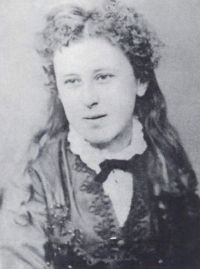 Vernon Lee,
Belcaro; Being Essays on Sundry Aesthetical Questions
Vernon Lee,
Belcaro; Being Essays on Sundry Aesthetical Questions
“ What becomes of the real, inherent effect of the work of art itself in the midst of such concatenations of fancies and associations? How can we listen to its own magic speech, its language of lines and colours and sounds, when our mind is full of confused voices telling us of different and irrelevant things? Where, at such times, is our artistic appreciation, and what is it worth? ”
Vernon Lee,
Laurus Nobilis: Chapters on Art and Life
“ Now this possibility of storing for later use, of increasing by combination, the impressions of beautiful things, makes art—and by art I mean all æsthetic activity, whether in the professed artist who creates or the unconscious artist who assimilates—the type of such pleasures as are within our own keeping, and makes the æsthetic life typical also of that life of the spirit in which alone we can realise any kind of human freedom. ”
Giovanni Gentile, The Reform of Education
“ The artist has transfused into the stone an idea, a sentiment, a soul, which we, under the influence of the ravishing power of artistic beauty, are able to seize to the exclusion of all material attributes ”
“ Thus, while the three arts are each limited to their own special functions, they, at the same time, would appear to assimilate from each other what is lacking in themselves, and so contribute to the complete artistic harmony. ”
 Harriet Beecher Stowe,
Sunny Memories of Foreign Lands…
Harriet Beecher Stowe,
Sunny Memories of Foreign Lands…
“ How agreeable to converse with cultivated and refined artistic minds! How delightful to find people to whom the beautiful has been a study, and art a world in which they could live, move, and have their being! ”
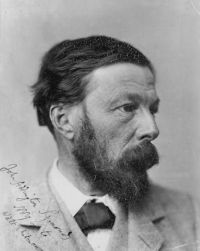 John Addington Symonds,
Sketches and Studies in Italy and Greece…
John Addington Symonds,
Sketches and Studies in Italy and Greece…
“ Even thus the spirit, immersed in things of sense presented to us by the figurative arts, is still spirit, though diminished in its intellectual clearness and invested with hues not its own. To fashion that alabaster form of art with utmost skill, to make it beautiful, to render it transparent, is the artist's function. ”
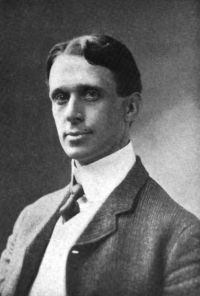 Cale Young Rice,
A Night in Avignon
Cale Young Rice,
A Night in Avignon
“ The complete mastery of technique, the dignity and dramatic force of the characters, the beauty of the language and clear directness of the style together with the vivid imagination needed to portray so strikingly the renaissance spirit and atmosphere, make the work one that should last. ”
De Witt H. Parker, The Principles of Aesthetics
“ This is supplemented from still another source of value. Through artistic expression pent-up emotions find a welcome release. No matter how poignant be the experience expressed, the weight, the sting of it disappears through expression. For through expression, as we have seen, the experience is drawn from the dark depths of the self to the clear and orderly surface of the work of art; the emotions that weighed are lifted out and up into color and line and sound, where the mind can view and master them. ”
Carleton Eldredge Noyes, The Gate of Appreciation: Studies in the Relation of Art to Life
“ The emotion, to become definite, gathers about an idea, conceived in the terms of its own medium, as form, or color and mass, or musical relations; and this artistic idea presents itself as the subject or motive of the work. The emotion and artistic idea, in order that they may be expressed and become communicable, embody themselves in material, as the marble of a statue, the pigment of a picture, the audible tones of a musical composition. This material form has the power to satisfy the mind and delight the senses. Through the channel of the senses and the mind the work reaches the feelings ”
“ Their difficulties of execution arise from the necessities of artistic expression, and such difficulties will be found in all the truest and best art, the art that lives beyond the fashion of the hour. ”
 H. G. Wells,
Mankind in the Making
H. G. Wells,
Mankind in the Making
“ Here is your great artist, your great exceptional mind groping in the darknesses beneath the surface of life, half apprehending strange elusive things in those profundities, and striving—striving sometimes to the utmost verge of human endeavour—to give that strange unsuspected mystery expression, to shape it, to shadow it in form and wonder of colour, in beautiful rhythms, in phantasies of narrative, in gracious and glowing words. So much in its essential and precious degree is art. Think of what the world must be in the wider vision of the great artist. ”
Carleton Eldredge Noyes, The Gate of Appreciation: Studies in the Relation of Art to Life
“ Whether the medium be the painter's color, the musician's tones, or the poet's words, the purpose of the representation is fulfilled in so far as the work expresses the emotion which the artist has felt in the presence of this spectacle. He, the artist, more than I or another, has thrilled to its mystery, its tumult, its power. It is this effect, received as a unity of impression, that he wants to communicate. This power of the object over him, and consequently the content of his work, is beauty. ”
Cora L. V. Richmond, My experiences while out of my body (1915)
“ One perceives in such states as were there revealed that the true “artist” has not always been known among his fellow human beings, moving upon the world of thought, influencing other lives by the beauty and harmony of their own natures, these seem, when viewed from the spirit, to constitute the real artists. ”
 Joseph Conrad,
Notes on My Books
Joseph Conrad,
Notes on My Books
“ All art, therefore, appeals primarily to the senses, and the artistic aim when expressing itself in written words must also make its appeal through the senses, if its [Pg 19] high desire is to reach the secret spring of responsive emotions. It must strenuously aspire to the plasticity of sculpture, to the colour of painting, and to the magic suggestiveness of music—which is the art of arts. ”
De Witt H. Parker, The Principles of Aesthetics
“ Third, the perfect use of the medium in the effort to fulfill the artistic purpose of sympathetic representation—the power to delight the senses and create sympathy for the object expressed, on the one hand, and the range of the vision of the object, on the other; the depth and the breadth of the aesthetic experience. With reference to the former we ask: how vividly does the work of art force us to see; how completely does it make us enter into the world it has created ”
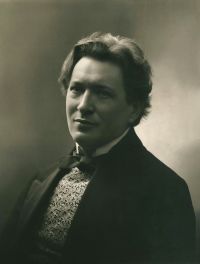 Ferruccio Busoni,
Sketch of a New Esthetic of Music
Ferruccio Busoni,
Sketch of a New Esthetic of Music
“ The spirit of an art-work, the measure of emotion, of humanity, that is in it—these remain unchanged in value through changing years; the form which these three assumed, the manner of their expression, and the flavor of the epoch which gave them birth, are transient, and age rapidly.Spirit and emotion retain their essence, in the art-work as in man himself; we admire technical achievements, yet they are outstripped, or cloy the taste and are discarded. ”
Carleton Eldredge Noyes, The Enjoyment of Art
“ Just as art, in order to be manifest, must be embodied in the particular work, as the statue, the picture, the building, the drama, the symphony, so the human spirit becomes operative in the person of the individual, and temperament may be best studied in the character of the individual artist. ”
 Walter Scott,
The Journal of Sir Walter Scott
Walter Scott,
The Journal of Sir Walter Scott
“ All the Fine Arts have it for their highest and more legitimate end and purpose, to affect the human passions, or smooth and alleviate for a time the more unquiet feelings of the mind—to excite wonder, or terror, or pleasure, or emotion of some kind or other. ”
 Georg Wilhelm Friedrich Hegel,
The Philosophy of Fine Art, volume 1…
Georg Wilhelm Friedrich Hegel,
The Philosophy of Fine Art, volume 1…
“ Considered simply as a natural basis a talent of this kind asserts itself for the most part in early youth, and is manifested in the restless persistency, ever intent with vivacity and alertness, to create artistic shapes in some particular sensuous medium, and to make this mode of expression and utterance the unique one or the one of main importance and most suitable. ”
“ Nowhere else in art is such a temperament revealed; never did inclination and opportunity combine to express such enjoyment. The mixture of flowers and gems and brocade, of blooming flesh and shining sea and waving groves, of youth, health, movement, desire—all this is the brightest vision that ever descended upon the soul of a painter. Happy the artist who could entertain such a vision; happy the artist who could paint it as the masterpiece I here recall is painted. ”
“ If it is the love of that which your work represents—if, being a landscape painter, it is love of hills and trees that moves you—if, being a figure painter, it is love of human beauty and human soul that moves you—if, being a flower or animal painter, it is love, and wonder, and delight in petal and in limb that move you, then the Spirit is upon you, and the earth is yours, and the fulness thereof. ”
 Margaret Fuller,
Memoirs of Margaret Fuller Ossoli…
Margaret Fuller,
Memoirs of Margaret Fuller Ossoli…
“ The fine arts were one compensation for the necessary prose of life. The man who could not write his thought of beauty in his life,—the materials of whose life would not work up into poetry,—wrote it in stone, drew it on canvas, breathed it in music, or built it in lofty rhyme. ”
John Addington Symonds,
Sketches and Studies in Italy and Greece…
“ Comparing these several manifestations of creative power, we feel ourselves in the grasp of a painter who was essentially a poet, one for whom his art was the medium for expressing before all things thought and passion. ”
Vernon Lee,
Laurus Nobilis: Chapters on Art and Life
“ Melody, harmony: the two great halves of the most purely æsthetic of all arts, symbolise, as we might expect, the two great forces of life: consecutiveness and congruity, under their different names of intention, fitness, selection, adaptation. These are what make the human soul like a conquering army, a fleet freighted with riches, a band of priests celebrating a rite. And this is what art, by no paltry formula, but by the indelible teaching of habit, of requirement, and expectation become part of our very fibre—this is what art can teach to those who will receive its highest lesson. ”
 Oscar Wilde,
The Picture of Dorian Gray
Oscar Wilde,
The Picture of Dorian Gray
“ Thought and language are to the artist instruments of an art. Vice and virtue are to the artist materials for an art. From the point of view of form, the type of all the arts is the art of the musician. From the point of view of feeling, the actor’s craft is the type. All art is at once surface and symbol. Those who go beneath the surface do so at their peril. ”
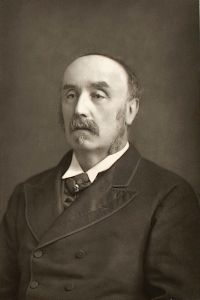
“ The stream is bound fast and the wolds are chill; And by the dead flats, where the cold blasts moan, A bent body wearily plods alone. THE PATHOS OF ART. Oft seeing the old painters' art, We find the tear unbidden start, And feel our full hearts closer grow To the far days of long ago. Not burning faith, or godlike pain, Can thus our careless thought enchain; The heavenward gaze of souls sublime, At once transcends, and conquers time. Nor pictured form of seer or saint, Which hands inspired delight to paint; Art's highest aims of hand or tongue, Age not, but are for ever young. ”
Elma Graves, The American Journal of Sociology (1901)
“ Art in its message to us, and as expression, holds much of the joy and solace of the elevation and inspiration of life. This surely for art were excuse enough for being and for becoming a necessity of life and education ”
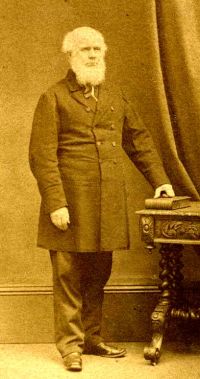 William Howitt,
The Rural Life of England
William Howitt,
The Rural Life of England
“ In our love of the fine arts, our attention is occupied with human imitations of what is beautiful in nature;—in this, we fix our admiration at once on the magnificent works of the Great Artist of the Universe. ”
 John Ruskin,
The Two Paths — Lecture II: The Unity of Art
(1859)
John Ruskin,
The Two Paths — Lecture II: The Unity of Art
(1859)
“ All these, properly called Arts, but not Fine Arts, are pursuits in which the hand of man and his head go together, working at the same instant.Then FINE ART is that in which the hand, the head, and the heart of man go together. ”
“ This desire for expression is the driving-force of the artist; it informs, controls, and animates his method of working; it governs the hand and eye. That figures should give the impression of life and spontaneity, that the sun should shine, trees move in the wind, and nature be felt and represented as a living thing—this is the firm ground in art; and in those who have this feeling every effort will, consciously or unconsciously, lead towards its realisation. ”
Deristhe L. Hoyt, Barbara's Heritage
“ If you seek to find this in pictures you will soon learn to distinguish between those (too many of which are painted to-day) whose only excellence lies in trick of handling or cunning disposition of color-masses,—because these things are all of which the artist has thought,—and those that have grown out of the highest art-desire, which is to bear some message of the restfulness, the power, the beauty, or the innocence of nature to the hearts of other men. ”
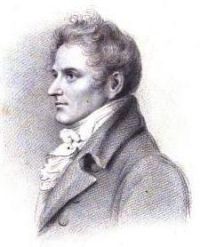
“ The world will see a simple rag Become a treasure rarely known. LINES TO A PROMISING YOUNG ARTIST. These bays be thine; and, tho’ not form’d to shine Clear as thy colour, faultless as thy line, Yet shall the Muse essay, in humble verse, Thy merits, lovely Painting! to rehearse. ”
Carleton Eldredge Noyes, The Enjoyment of Art
“ In the actual to discern the ideal, in the appearance to penetrate to the reality, without taking leave of the material to reveal the spiritual,—this is the mystery and vocation of the artist, and his achievement is art. ”
Gilbert Norwood, Greek tragedy (1920)
“ Every work of art springs from a definite concept held by the artist, some piece of reality clearly understood and sincerely felt, insisting on expression at his hands precisely because it affects him emotionally. ”
“ for I wish rather, in this lecture at least, to dwell on the effect that decorative art has on human life—on its social not its purely artistic effect. ”
Vernon Lee,
Laurus Nobilis: Chapters on Art and Life
“ And meanwhile, through all the centuries of centuries, art, which is the type and sample of all higher, better modes of life, art has given us in itself the concrete sample, the unmistakable type of that needful reconciliation of work and play; and has shown us that there is, or should be, no difference between them. For art has made the things which are useful, and done the things which are needed, in those shapes and ways of beauty which have no aim but our satisfaction. ”
Sir Joshua Reynolds, Fifteen Discourses
“ This manner is in reality, in painting, what language is in poetry; we are all sensible how differently the imagination is affected by the same sentiment expressed in different words, and how mean or how grand the same object appears when presented to us by different painters. Whether it is the human figure, an animal, or even inanimate objects, there is nothing, however unpromising in appearance, but may be raised into dignity, convey sentiment, and produce emotion, in the hands of a painter of genius. ”
Oscar Wilde,
Essays and Lectures
“ All these appeals to art to set herself more in harmony with modern progress and civilisation, and to make herself the mouthpiece for the voice of humanity, these appeals to art ‘to have a mission,’ are appeals which should be made to the public. The art which has fulfilled the conditions of beauty has fulfilled all conditions: it is for the critic to teach the people how to find in the calm of such art the highest expression of their own most stormy passions. ”
 Evelyn Underhill,
Practical Mysticism: A Little Book for Normal People
Evelyn Underhill,
Practical Mysticism: A Little Book for Normal People
“ Surely it is your business, so far as you may, to express in action something of the real character of that universe within which you now know yourself to live? Artists, aware of a more vivid and more beautiful world than other men, are always driven by their love and enthusiasm to try and express, bring into direct manifestation, those deeper significances of form, sound, rhythm, which they have been able to apprehend: and, doing this, they taste deeper and deeper truths, make ever closer unions with the Real. ”
Related terms
Authors who wrote about “artistic spirit”
Cora L. V. RichmondGiovanni GentileVariousCarleton Eldredge NoyesDe Witt H. ParkerVernon LeeOscar WildeWilla CatherGeorg BrandesJames WardHarriet Beecher StoweCale Young RiceC. F. Abdy WilliamsJoseph ConradJohn Addington SymondsFerruccio BusoniGeorg Wilhelm Friedrich HegelJohn Ruskin John Greenleaf Whittier
 Samuel Taylor Coleridge
Vernon LeeOscar WildeWilla CatherGeorg BrandesJames WardHarriet Beecher StoweCale Young RiceC. F. Abdy WilliamsJoseph ConradJohn Addington SymondsFerruccio BusoniGeorg Wilhelm Friedrich HegelJohn RuskinJohn Greenleaf WhittierSamuel Taylor Coleridge