Atlas (anatomy)

Definition and stakes

Various,  Blackwood's Edinburgh Magazine…

“ To the scholar, to the student, and to the already large yet daily increasing multitude of inquirers who cultivate natural science, the Physical Atlas is a treasure of incalculable value. It brings before the mind's eye, in one grand panoramic view, and in a form clear, definite, and easily comprehensible, all the facts at present known relative to the great subjects of which it treats, and may be regarded as a lucid epitome of a thousand scattered volumes, more or less intrinsically valuable, of which it contains the heart and substance. ”
Source: Gutenberg

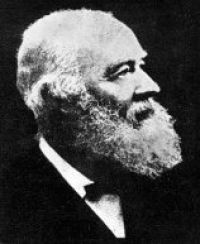
Portrait of John Ball John Ball,  Journal of a tour in Marocco and the Great Atlas (1878)

“ From near the eastern extremity of the main range two other straight ridges are shown, diverging abruptly at an acute angle, and enclosing a trench-like valley that extends north-west for fully 120 miles. If this were even approximately correct, we should be led to conclude that the structure of the Great Atlas is quite unlike that of any other known mountain region. The tendency of mountain ranges to follow a uniform general direction is always modified by the numerous secondary causes that have helped to fashion the earth’s surface. ”
Source: Gutenberg

1911 Encyclopedia Britannica (1911)

“ Finally, Atlas was explained as the name of a primitive astronomer, who was said to have made the first celestial globe (Diodorus iii. 60) . He was the father of the Pleiades and Hyades; according to Homer, of Calypso. In works of art he is represented as carrying the heavens or the terrestrial globe. The Farnese statue of Atlas in the Naples museum is well known. ”
Source: Wikisource

Get perspective with Kwize: daily news enlightened by great literature