Beam (lumber)

Definition and stakes

Various,  The Galaxy, March, 1877

“ In most balances the beam rests on steel knife edges; but a maker who has lately obtained celebrity makes his supports of pure rock crystal. The steel edges can be seen with the naked eye; the quartz edges cannot be seen even with a magnifying glass. One writer on this subject thinks that with these perfect crystal edges, with an inflexible girder beam, a short beam giving quick vibrations, and a sensitiveness that can be increased by screwing up the centre of gravity, there can hardly be a practical limit to the smallness of the weight that will turn the beam. ”
Source: Gutenberg

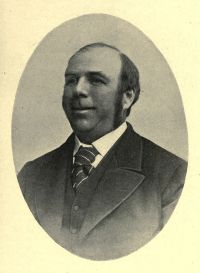
Portrait of Robert S. Ball Robert S. Ball,  Experimental Mechanics

“ We [Pg 222] have shown that when a beam of wood is supporting a weight, the fibres at the bottom of the beam are extended, the tendency being to tear them (Art. 376) . The fibres on the top of the beam are compressed, while the centre of the beam is in its natural state. The condition of strain in a cast iron beam is precisely similar; the bottom portions are in a state of extension, while the top is compressed. If therefore a beam be very thin, the material at the lower part may not be sufficient to withstand the forces of extension, and fracture is produced. ”
Source: Gutenberg

John Cargill Brough,  The fairy tales of science (1857)

“ It therefore appears that the main strength of a beam consists in its power to resist compression and extension, and that the middle is comparatively useless, so that to obtain the greatest amount of strength, the given quantity of material to be used should be accumulated at the top and bottom, where the strain is greatest; or, in plain terms, the middle of the beam, whether of wood or iron, should be bored out. All iron girders, all beams in houses—in fact all things in domestic or naval architecture that bear weight—are subject to the same law. ”
Source: Wikisource

Get perspective with Kwize: daily news enlightened by great literature