Brush (electric)

Definition and stakes

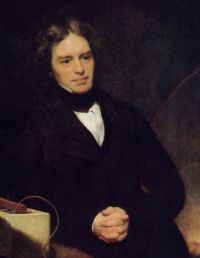
Portrait of James Clerk Maxwell James Clerk Maxwell,  A Treatise on Electricity and Magnetism (1873)

“ The electric brush is a phenomenon which may be produced by electrifying a blunt point or small ball so as to produce an electric field in which the tension diminishes, but in a less, rapid manner, as we leave the surface. It consists of a succession of discharges, ramifying as they diverge from the ball into the air, and terminating either by charging portions of air or by reaching some other conductor. ”
Source: Wikisource

Various,  Scientific American Supplement…

“ Now when electromagnets are to be employed with rapidly alternating currents, such as are used for electric lighting, the frequency of the alternations being usually about 100 periods per second, slitting the cores is insufficient to guard against eddy currents; nothing short of completely laminating the cores is a satisfactory remedy. I have here, thanks to the Brush Electric Engineering Company, an electromagnet of the special form that is used in the Brush arc lamp when required for the purpose of working in an alternating current circuit. ”
Source: Gutenberg

Portrait of Nikola Tesla Nikola Tesla,  Canadian Patent No. 24033 — Dynamo Electric Machine (1886)

“ The relative positions of the respective brushes may be varied by moving the auxiliary brush or the brush c may remain quiescent and the core p be connected to the main brush holder A-1 so as to adjust the brushes a, b, in their relation to the brush c. If however an ajustment is applied to all the brushes as seen in Fig. 5 the solenoid should be connected to both A-1 and C so as to move them towards or away from each other. There are several known devices for giving motion in proportion to an electric current. ”
Source: Wikisource

Get perspective with Kwize: daily news enlightened by great literature