Chlorine gas

Definition and stakes

James Cutbush,  A System of Pyrotechny

“ Charcoal will not burn in dry chlorine. It unites with a less proportion of oxygen, and forms carbonic oxide gas, which burns with a deep blue flame. This combination is formed by distilling in a red heat, a mixture of equal parts of iron filings and chalk. This gas mixed with chlorine gas, and exposed to the sun's rays, will unite with it, and form chlorocarbonic acid gas. Carbon unites with azote, and forms cyanogen, the base of Prussic acid. ”

Source: Gutenberg

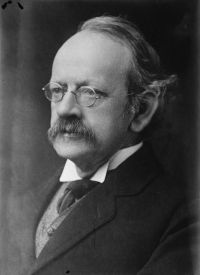
Portrait of John Henry Pepper John Henry Pepper,  The Boy's Playbook of Science

“ Some Dutch metal, or powdered antimony, or a bit of phosphorus, immediately takes fire when introduced into a bottle containing chlorine gas, forming a series of compounds termed chlorides, and demonstrating by the evolution of heat and light, the energetic character of chlorine, and that oxygen is not the only supporter of combustion; chlorine gas has even, in some cases, greater chemical power, because some time elapses before phosphorus will ignite in oxygen gas, whilst it takes fire directly when placed in a bottle of chlorine. ”
Source: Gutenberg

Arnold James Cooley,  Cooley's Cyclopædia of Practical Receipts and Collateral Information in the Arts…

“ Strong hydrochloric acid is poured on half of its weight of finely-powdered peroxide of manganese, previously placed in a glass flask or retort; chlorine gas is immediately evolved, even in the cold, but much more rapidly on the application of a gentle heat, and is collected in clean, dry bottles by displacement. The tube conducting the gas is so arranged as to reach to the bottom of the bottle, and the chlorine, being heavier than the air, displaces the latter without mixing with it. ”
Source: Gutenberg

Get perspective with Kwize: daily news enlightened by great literature