Claim (law)

Definition and stakes

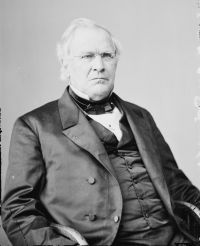
Portrait of Robert Cooper Grier Robert Cooper Grier,  Gill v. Oliver's Executors/Opinion of the Court…

“ Wholly dissimilar is the claim before us. Such is its character, that it cannot be presented to a court of justice but by a disclosure of its impurities; and if any thing is conclusively settled, or ought to be so regarded, it is that a claim, thus imbued with illegality and corruption, will never be sanctioned or enforced by a court either of law or equity. ”

Source: Wikisource

Sir John W. Salmond,  Jurisprudence (1913)

“ A litigant may claim the 91assistance of a court of law, not because his rights have been violated, but because they are uncertain. What he desires may be not any remedy against an adversary for the violation of a right, but an authoritative declaration that the right exists. Such a declaration may be the ground of subsequent proceedings in which the right, having been violated, receives enforcement, but in the meantime there is no enforcement nor any claim to it. ”
Source: Gutenberg

Oliver Wendell Holmes,  The Common Law

“ But when the facts are past and gone, such as the giving of a consideration and the receiving of a promise, there can be no claim to the resulting rights set up by any one except the party of whom the facts were originally true—in the case supposed, the original contractee,—because no one but the original contractee can fill the situation from which they spring. ”
Source: Gutenberg

Get perspective with Kwize: daily news enlightened by great literature