“ So the balance between production and consumption, which in previous ages was more or less adequately maintained by natural conditions, has been entirely destroyed, and a major social-economic problem created. ”
Economic difficulty
Definition and stakes
The theme of “economic difficulty” has been addressed by authors such as Walter Renton Ingalls, John Maynard Keynes, Jack London, Ernst Lehrs and Anatole France. It is often associated with terms like economics, industry, trade, labor and capital.
Quotes about “economic difficulty”
 Scott Nearing,
The Next Step: A Plan for Economic World Federation
Scott Nearing,
The Next Step: A Plan for Economic World Federation
“ These problems of job control, of wealth and income distribution, of industrial inter-relations and of the relation between the state and industry are pressing for solution in every important centre of modern economic life. Each constitutes a disturbing element and contributes its mite to the aggregate of social instability and unrest that are racking the economic world. ”
 Anatole France,
The White Stone
(1910)
Anatole France,
The White Stone
(1910)
“ After having increased production to a considerable extent, it failed in its endeavours to regulate it, and struggled hopelessly in the toils of inextricable difficulties. "'You are not totally ignorant, comrade, of the economic disturbances which filled the twentieth century. During the last hundred years of the capitalistic domination, the disorder of production and the delirium of competition piled up disasters high. The capitalists and the masters vainly attempted, by means of gigantic combinations, to regulate production and to annihilate competition. ”
 Louis F. Post,
The basic facts of economics
(1927)
Louis F. Post,
The basic facts of economics
(1927)
“ Other causes of Economic depression than “slumps” in speculative Land-values there doubtless are. They spring from such superficial maladjustments in the processes of Trade as are connected with defective banking, fluctuations in the values of corporate stocks and variations in Money standards from lack of effective stabilization. ”
 Carl Schurz,
Speeches, correspondence and political papers of Carl Schurz
(1913)
Carl Schurz,
Speeches, correspondence and political papers of Carl Schurz
(1913)
“ Permit me here a word on what, in my humble opinion, is the true source of the discontent so far as it is entertained by honest men. The new economic conditions somewhat suddenly created in our time by the vast improvements in the means and methods of production and transportation have surprised, puzzled and perplexed the minds of many well-meaning people. They became alarmed at the naturally and necessarily following decline of the prices of agricultural as well as industrial products and at the general tendency of profits toward a minimum. ”
 Henry George,
Progress and Poverty (George)…
(1879)
Henry George,
Progress and Poverty (George)…
(1879)
“ With natural opportunities thus set free to labour, with capital and improvements exempt from tax and exchange released from restrictions, the spectacle of willing men unable to turn their labour into the things they want would become impossible; the recurring paroxysms which paralyse industry would cease; every wheel of production would be set in motion; trade would increase in every direction and wealth augment on every hand. ”
 Franklin D. Roosevelt,
First Inaugural Address
(4 March 1933)
Franklin D. Roosevelt,
First Inaugural Address
(4 March 1933)
“ Values have shrunken to fantastic levels; taxes have risen; our ability to pay has fallen; government of all kinds is faced by serious curtailment of income; the means of exchange are frozen in the currents of trade; the withered leaves of industrial enterprise lie on every side; farmers find no markets for their produce; the savings of many years in thousands of families are gone. ”
Archibald Prentice, History of the Anti-Corn Law League (1853)
“ That the continued and increasing depression of the manufacturing, commercial, and agricultural interests of this country, and the wide-spreading distress of the working classes, are most alarming:—manufacturers without a market, and shipping without freight; capital without investment, trade without profit; and farmers struggling under a system of high rents, with prices falling, as the means of consumption by the people fail; a working population rapidly increasing, and a daily decreasing demand for its labour ”
Henry George,
Progress and Poverty, Volumes I and II
“ Everything seems to be going on as usual, commerce and industry vigorous and expanding, when suddenly there comes a shock, as of a thunderbolt out of a clear sky—a bank breaks, a great manufacturer or merchant fails, and, as if a blow had thrilled through the entire industrial organization, failure succeeds failure, and on every side workmen are discharged from employment, and capital shrinks into profitless security. ”
 Patrick Matthew,
Prospectus of the Scots New Zealand Land Company
Patrick Matthew,
Prospectus of the Scots New Zealand Land Company
“ The usual balance of demand and supply of labour being thus deranged, has caused occasional gluts, and it may require a time, and much further misery may ensue, risking political convulsion, before the social economy adjust itself, unassisted, to the new order of things. ”
Walter Renton Ingalls, Current Economic Affairs (1918)
“ It may be prolonged by the erection of more economic impediments, stupidly conceived as panaceas although in truth their sponsors have sight of nothing but superficial symptoms. Nothing is going to avert the economic inevitable and the sooner we recognize that the better shall we be. ”
 George Howard Earle, Jr.,
The Act in Relation to the Uncertainties in Trade
(1920)
George Howard Earle, Jr.,
The Act in Relation to the Uncertainties in Trade
(1920)
“ What always happens when scarcity appears is that "the trade," indeed the whole world, insists upon the duty of increased production. As a result, wages and everything necessary in production advance. Costs sink to a second place. People having been frightened inevitably hoard, and finally when the joint effort of the world oversteps the market, there come the collapses called "panics," and thousands of business men are swept to ruin. ”
English Economic History: Select Documents
“ But notwithstanding all these facts I admit there are evils, serious evils, and much distress in the manufacturing districts; many are still out of employment, and in many branches of trade wages are low. We have violent fluctuations in trade, and periods when multitudes endure great suffering and it becomes this House to inquire why do these fluctuations occur, and what is the great cause of their suffering. I attribute much of this [Pg 611] to the mistaken and unjust policy pursued by this House, with respect to the trade and industry of the country. ”
 August Bebel,
Woman under socialism
August Bebel,
Woman under socialism
“ The number of bankruptcies will be unparalleled; export stops—and thereby thousands of factories are condemned to idleness; the supply of food ceases—and thereby the prices of the means of life rise enormously. ”
by the Federal Reserve Bank of Chicago, Modern Money Mechanics — Introduction
“ But if, on the other hand, growth in the supply of money does not keep pace with the economy's current production, then prices will fall, the nations's labor force, factories, and other production facilities will not be fully employed, or both. ”
Henry George,
Progress and Poverty, Volumes I and II
“ This check to production, beginning at the basis of interlaced industry, propagates itself from exchange point to exchange point, cessation of supply becoming failure of demand, until, so to speak, the whole machine is thrown out of gear, and the spectacle is everywhere presented of labor going to waste while laborers suffer from want. This strange and unnatural spectacle of large numbers of willing men who cannot find employment is enough to suggest the true cause to whomsoever can think consecutively. ”
 David Hume,
Hume's Political Discourses
David Hume,
Hume's Political Discourses
“ That provisions and labour should become dear by the increase of trade and money is, in many respects, an inconvenience; but an inconvenience that is unavoidable, and the effect of that public wealth and prosperity which are the end of all our wishes. ”
 Oliver Bell Bunce,
Popular Science Monthly
(1877)
Oliver Bell Bunce,
Popular Science Monthly
(1877)
“ The prostration of trade has arisen from extravagance, he repeatedly declares. "The commercial depression, so long, so monotonous, so heavy, and so dull, came from the excessive consumption of English capital in unwarranted constructions beyond savings, and unwarranted expenditure in living by all classes, which destroyed wealth without repairing it with new productions." ”
J. N. Larned, History for ready reference, Volume 6 (1895)
“ Such fall of prices has destroyed the profits of legitimate industry, injuring the producer for the benefit of the non-producer, increasing the burden of the debtor, swelling the gains of the creditor, paralyzing the productive energies of the American people, relegating to idleness vast numbers of willing workers, sending the shadows of despair into the home of the honest toiler, filling the land with tramps and paupers, and building up colossal fortunes at the money centres. ”
 Ronald Reagan,
Presidential Radio Address
(1987)
Ronald Reagan,
Presidential Radio Address
(1987)
“ When you hear talk about a tough trade bill, remember that being tough on trade and commerce, the lifeblood of the economy, will have the worst possible consequences for the consumer and the American worker. ”
 Frank A. Fetter,
Manual of References and Exercises in Economics for Use with Volume II. Modern Economic Problems
Frank A. Fetter,
Manual of References and Exercises in Economics for Use with Volume II. Modern Economic Problems
“ For half a century, therefore, with regularly recurring seasons of surplus production, there came those inevitable commercial crises which emphasized with increasing force the necessity for foreign markets. ”
 Florence Nightingale,
A Note on Pauperism
(1869)
Florence Nightingale,
A Note on Pauperism
(1869)
“ Political economy requires farther expansion in order to include all the elements of this great social problem. It is a true doctrine that demand and supply regulate the price of all things, labour included. ”
“ The country was on the verge of hard times, [2] caused by a series of prosperous years wherein the difficulty of disposing abroad of the unconsumed surplus had become increasingly difficult. Industries were working short time; many great factories were standing idle against the time when the surplus should be gone; and wages were being cut right and left. [2] Under the capitalist régime these periods of hard times were as inevitable as they were absurd. Prosperity always brought calamity. This, of course, was due to the excess of unconsumed profits that was piled up. ”
Various, The Atlantic Monthly (1858)
“ The external characteristics of the phenomena before us are everywhere pretty much the same, namely, — a prosperous trade gradually slackening, an increasing demand for money, depreciation and sacrifice of securities, numerous failures, disappearance of gold, panic, and the complete stagnation of every branch of labor ”
 Henry Charles Lea,
A History of the Inquisition of Spain…
Henry Charles Lea,
A History of the Inquisition of Spain…
“ Material progress became impossible, industry languished, and the inability to meet foreign competition assisted the mistaken internal policy of the government in prolonging and intensifying the poverty of the people. ”
Henry George,
Progress and Poverty (George)…
(1879)
“ Chapter XIV The persistence of poverty amidst advancing wealth Look over the world today. In countries the most widely differing - under conditions the most diverse as to government, as to industries, as to tariffs, as to currency - you will find distress among the working-classes; but everywhere that you thus find distress and destitution in the midst of wealth you will find that the land is monopolized; that, for its use by labour, large revenues are extorted from the earnings of labour. ”
 John Taylor of Caroline,
Tyranny Unmasked — Section II
(1821)
John Taylor of Caroline,
Tyranny Unmasked — Section II
(1821)
“ And that this latter effect is so necessary, in order to create a continued stimulus to productive industry, and keep up an abundant supply of commodities, that in the cases in which it does not take place, a stagnation in the demand for labour is immediately perceptible, and the progress of wealth is checked. ”
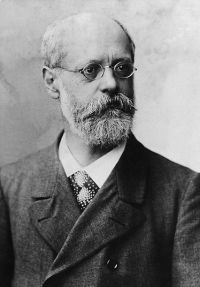 Karl Kautsky,
The Class Struggle
(1910)
Karl Kautsky,
The Class Struggle
(1910)
“ The great modern crises which convulse the world's markets arise from overproduction, which, in its turn, arises from the planlessness that inevitably characterizes our system of commodity production. ”
Frank A. Fetter,
Economics Volume II: Modern Economic Problems
“ The period leading up to a crisis is one of relative prosperity; then occurs a crisis in which prices fall, at first rapidly, and afterward for a while going slowly lower. When prices are at the lowest point many factories are closed, and much labor is unemployed. Let us start at that point. Conditions are worse in some industries than in others. General economy and great caution prevail; few new enterprises are undertaken. For those persons having available funds this is a good time to buy, and property begins to change hands. Then hoarded money begins to come out of its hiding places. ”
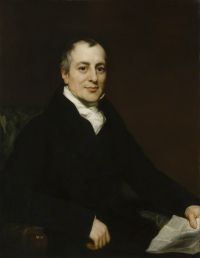 David Ricardo,
On The Principles of Political Economy…
David Ricardo,
On The Principles of Political Economy…
“ In all such cases, considerable distress, and no doubt some loss, will be experienced by those who are engaged in the manufacture of such commodities; and it will be felt not only at the time of the change, but through the whole interval during which they are removing their capitals, and the labour which they can command, from one employment to another. ”
 John Stuart Mill,
Principles of Political Economy
(1871)
John Stuart Mill,
Principles of Political Economy
(1871)
“ The other phenomenon from which the notion of a general excess of wealth and superfluity of accumulation seems to derive countenance, is one of a more permanent nature, namely, the fall of profits and interest which naturally takes place with the progress of population and production. The cause of this decline of profit is the increased cost of maintaining labour, which results from an increase of population and of the demand for food, outstripping the advance of agricultural improvement. ”
Herbert Hoover, State of the Union Addresses
“ The cumulative effects of demoralizing price falls of these important commodities in the process of adjustment of production to world consumption have produced financial crises in many countries and have diminished the buying power of these countries for imported goods to a degree which extended the difficulties farther afield by creating unemployment in all the industrial nations. ”
Chester Arthur Phillips, Readings in Money and Banking
“ Commerce is at a standstill, the markets are glutted, products accumulate, as multitudinous as they are unsaleable, hard cash disappears, credit vanishes, factories are closed, the mass of the workers are in want of the means of subsistence; bankruptcy follows upon bankruptcy, execution upon execution. The stagnation lasts for years; productive forces and products are wasted and destroyed wholesale, until the accumulated mass of commodities finally filter off, more or less depreciated in value, until production and exchange gradually begin to move again. ”
Henry George,
Progress and Poverty (George)…
(1879)
“ The primary and fundamental occupations, which create a demand for all others, are evidently those that extract wealth from nature; and hence, if from one exchange point to another and from one occupation to another we trace this check to production, which shows itself in decreased purchasing power, we must ultimately find it in some obstacle that checks labour in expending itself on land. And that obstacle, it is clear, is the speculative advance in rent, or the value of land, which produces the same effects as (in fact, it is) a lock-out of labour and capital by landowners. ”
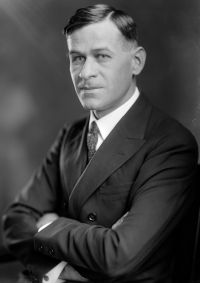 Charles G. Ross,
The Country's Plight—What Can Be Done About It…
(1931)
Charles G. Ross,
The Country's Plight—What Can Be Done About It…
(1931)
“ Because for a long period before the crash our production had been outrunning our consumption. The workers were producing more than they could buy with the wages they received. Our predicament is primarily due to the inequitable distribution of the earnings of industry as between capital and labor. ”
J. A. Hobson, Morals of Economic Internationalism
“ But the injuries resulting from the superior pressure upon governments of organized bodies of producers and merchants who have things to sell, to the detriment of the consuming public who have only buying needs, are too grave matters to be neglected here. ”
William Simpson, The Man from Mars: His Morals, Politics and Religion
“ Outside of the defects of your currency, and your speculation, which are most prolific sources of industrial disaster, comes that blind over-production, entirely undirected by any reliable or authoritative knowledge of the existing capacity to consume. ”
 John Clark Ridpath,
The Life and Work of James A. Garfield…
John Clark Ridpath,
The Life and Work of James A. Garfield…
“ That the great depression of business, the stagnation of trade, the ‘hard times’ which have prevailed during the past year, and which still prevail, have not been caused by an insufficient amount of currency, but mainly by the great falling off of the demand for all the products of labor, compared with the increased supply since the return from war to peace. ”
Henry George,
How to Help the Unemployed
“ These recurring spasms of business stagnation; these long-drawn periods of industrial depression, common to the civilized world, do not come from our treatment of money; are not caused and are not to be cured by changes of tariffs. ”
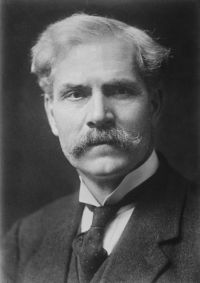 James Ramsay MacDonald,
The Socialist Movement
(1911)
James Ramsay MacDonald,
The Socialist Movement
(1911)
“ Old work-places are closed, production is regulated and organised, profits are guaranteed when works are idle, economies in management are effected, processes of manufacture are specialised and differentiated. The waste involved in competitive industry is enormous, and the sheer force of circumstances is tending to eliminate it. 4. Waste of Labour. One further consideration must be noted. We have seen that the private ownership of land and capital is a serious drain upon national wealth and a heavy burden upon national production. ”