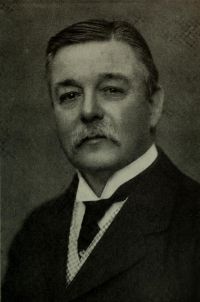
Editor-in-chief

Definition and stakes

J. A. Hammerton,  The Call of the Town: A Tale of Literary Life

“ An editor who familiarises with his reporters imperils his authority, for every man of his staff considers himself to be as good a craftsman as the editor; and does not the humblest junior carry in his wallet the potential quill of an editor-in-chief?
A newspaper, moreover, for all the prating about the profession of journalism, is as much a business establishment as the grocer's round the corner.
”
Source: Gutenberg

Willard Grosvenor Bleyer,  Newspaper Writing and Editing

“ The editor-in-chief, under whom are one or more editorial writers, has charge of the editorial columns and determines the editorial policy, subject to whatever control of this policy the owner or directors desire to exercise. The editorial writers and the editor-in-chief confer daily to consider the attitude that the paper shall take in its editorials and to divide the work of writing them. Some of the editorials are written by men in other professions who are not on the regular staff, and often by such members of the news staff as the financial editor or the dramatic critic. ”
Source: Gutenberg

Frank Michael O'Brien,  The Story of the Sun: New York…

“ DANA’S FIRST BIG NEWS MEN
Amos J. Cummings, Dr. Wood, and John B. Bogart.—The Lively Days of Tweedism.—Elihu Root as a Dramatic Critic.—The Birth and Popularity of “The Sun’s” Cat.
Managing editors did not come into favour in American newspaper offices until the second half of the last century. As late as 1872 Frederic Hudson, in his “History of Journalism in the United States,” grumbled at the intrusion of a new functionary upon the field:
If a journal has an editor, and editor-in-chief, it is fair to assume that he is also its managing editor.
”
Source: Gutenberg

Get perspective with Kwize: daily news enlightened by great literature