“ Folk-tales, when they are reduced to the level of literature, will never really teach children literature, nor morals, nor manners; because all their charm is in the unconscious—the unconscious—beauty and poetry of their incidents and characters. Let the real hero-tale of history then be brought to do its duty in the nursery, and in the meantime let us note how it was in the years gone by the original of the traditional tale itself. ”
Folk tale
Definition and stakes
A folk tale is a traditional narrative, often oral, passed down through generations, reflecting cultural values and collective imagination. Although the term sometimes refers to a 2013 video game, its main literary importance lies in its role as a cornerstone of storytelling. Scholars such as Joseph Jacobs and Stith Thompson examined folk tales as stores of human experience, focusing on their structural patterns and moral depth.
Oscar Wilde praised their central role in shaping fiction, while Dorothy Scarborough emphasized their lasting impact on contemporary literature. These viewpoints highlight the folk tale’s dual purpose: as both a reflection of societal norms and a driving force for creative development, connecting early storytelling with refined artistic expression.
Quotes about “folk tale”
Transactions of the Second International Folk-Congress (1892)
“ What then are we to study in a folk-tale? Well, in the first place the folk-tale itself and for itself. The essential character of folk-tales is best described by the Italian name for them, novelline popolari: they are little novels for children, as the others are for children of a larger growth. And in novels the essential thing is plot, which has been well described as pattern in human action. We must be able to draw out this plot, or pattern, in the folk-tale, and for this purpose analyse it into its elements, which are the incidents of the story. ”
Jessie L. Weston, The Three Days' Tournament: A Study in Romance and Folk-Lore
“ Of the value of folk-lore and folk-tale as witnesses in the case of a group of stories based largely upon popular tradition, and in their earlier stages of evolution the property of popular story-tellers, we are only slowly becoming aware. ”
“ For the Folk-tale is the father of all fiction as the Folk-song is the mother of all poetry; and in the games, the tales and the ballads of primitive people it is easy to see the germs of such perfected forms of art as the drama, the novel and the epic. It is, of course, true that the highest expression of life is to be found not in the popular songs, however poetical, of any nation, but in the great masterpieces of self-conscious Art ”
Laura Fry Kready, A Study of Fairy Tales (1916)
“ And because the folk-tale is so pervaded with this quest of the ages in search of truth, and because the child by nature is so deeply imitative, the folk-tale inherently possesses an educational value to stir and feed original impulses of investigation and experiment. ”
Dorothy Scarborough, The Supernatural in Modern English Fiction
“ The Supernatural in Folk-Tales The folk-tale is one of the new fashions in fiction. True, folk-lore has long constituted an important element of literature, constantly recurring in poetry, particularly in the ballad, in the drama, the novel, and short story. ”
Portal:The Folk-Lore Society, The Folk-Lore Journal (1883)
“ But, though these great collections give us an idea of the value of a folk-tale as one factor of social life, we shall perhaps gain a clearer view of the folk-tale as the natural expression of village opinion by analysing a single sample. ”
Portal:The Folk-Lore Society, The Folk-Lore Journal (1883)
“ And not only will the folk-tale classification give us a very good indication of the kind of tale that pleases most, and a series of model plots which we can adapt to our own uses, it will also give us valuable hints in the construction of our stones. Nothing is more remarkable in folk-tales than the dramatic skill with which the materials are handled. ”
“ I have actually at times introduced or deleted whole incidents, have given another turn to a tale, or finished off one that was incomplete, while I have had no scruple in prosing a ballad or softening down over-abundant dialect. This is rank sacrilege in the eyes of the rigid orthodox in matters folk-lorical. My defence might be that I had a cause at heart as sacred as our science of folk-lore—the filling of our children's imaginations with bright trains of images. But even on the lofty heights of folk-lore science I am not entirely defenceless. ”
Portal:The Folk-Lore Society, The Folk-Lore Journal (1885)
“ If a folk-tale is valuable because it has descended upon the lips of the people, from one generation to another from the earliest times, so for a similar reason is a custom or superstition valuable: for both have descended by the acts or beliefs of the people from one generation to another. ”
“ And in studying the literature of the people—the ballad, the fairy-tale, the proverb, the chap-book—Folk-lore has often to resort for elucidation to the products of individual artistic creation which go to form Literature properly so-called, especially in that mediaeval phase of it that is known as Romance. And finally, as it has been found by practice that much of Folk-lore that eludes explanation from the thoughts and customs of civilised peoples finds ready elucidation from savage practice and belief, Folk-lore has here points of contact with Ethnography and Anthropology. ”
John Harland, Lancashire Folk-lore
“ Folk-Lore, in its present signification—and for its general acceptance we are largely indebted to the Editor of that valuable periodical Notes and Queries,—means the notions of the folk or people, from childhood upwards, especially their superstitious beliefs and practices, as these have been handed down from generation to generation, in popular tradition and tale, rhyme, proverb, or saying, and it is well termed Folk-Lore in contradistinction to book-lore or scholastic learning. ”
Russian Fairy Tales: A Choice Collection of Muscovite Folk-lore (1872)
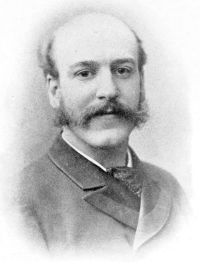
“ The manner in which these tales are told, however, may often be taken as a test of the intellectual capacity of their tellers. For in style the folk-tale changes greatly as it travels. A story which we find narrated in one country with terseness and precision may be rendered almost unintelligible in another by vagueness or verbiage; by one race it may be elevated into poetic life, by another it may be degraded into the most prosaic dulness. ”
 Alfred Nutt,
Studies on the legend of the Holy Grail
(1888)
Alfred Nutt,
Studies on the legend of the Holy Grail
(1888)
“ As regards the quester himself, the maiden he thus woos is his reward and the noblest prize earth has to offer him. Where the romance writers made power, or riches, or learning, or personal salvation the goal of man's effort, the folk-tale bids him seek happiness in the common human affections. ”
 Joseph Jacobs,
More English Fairy Tales
(1922)
Joseph Jacobs,
More English Fairy Tales
(1922)
“ Meanwhile the eighty-seven tales (representing some hundred and twenty variants) in my two volumes must represent the English folk-tale as far as my diligence has been able to preserve it at this end of the nineteenth century. There is every indication that they form but a scanty survival of the whole corpus of such tales which must have existed in this country. Of the seventy European story-radicles which I have enumerated in the Folk-Lore Society's Handbook, pp. ”
Joseph Jacobs,
Europa's Fairy Book
“ The Clever Lass is of exceptional interest to the student of the Folk-Tale because of its exceptionally wide spread throughout Europe and Asia, and also because it is one of those tales which have been made the basis of the theory of the Eastern origin of all Folk-Tales. ”
Louise Seymour Houghton, The Russian Grandmother's Wonder Tales
“ Folk-tales, of whatever character, speak the more directly home to the hearts of children, whatever their own intellectual environment, in proportion as their setting is most nearly that which naturally belongs to them. ”
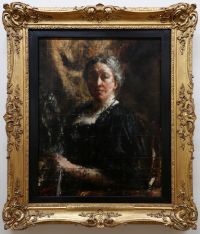
“ Tales with definite plot, of complicated yet artistic form, are not primitive in origin. (7) Tales of complicated plot, and more than three or four incidents, must have been thought out in the first instance by a definite folk-artist. (8) Tales struggle for existence in the folk-mind, and the more artistic oust the less and survive. These seem to be the inductions to which we are led by a survey of the actual contents of the folk-tales of the Indo-European world, without prejudice to any theories as to what lies behind those facts derived from any universal history of mankind. ”
 Lady Gregory,
Gods and Fighting Men
Lady Gregory,
Gods and Fighting Men
“ From the moon come the folk-songs imagined by reapers and spinners out of the common impulse of their labour, and made not by putting words together, but by mixing verses and phrases, and the folk-tales made by the capricious mixing of incidents known to everybody in new ways, as one deals out cards, never getting the same hand twice over. ”
United States. Work Projects Administration, Slave Narratives: A Folk History of Slavery in the United States from Interviews with Former Slaves…
“ The narratives belong also to folk literature. Rich not only in folk songs, folk tales, and folk speech but also in folk humor and poetry, crude or skilful in dialect, uneven in tone and treatment, they constantly reward one with earthy imagery, salty phrase, and sensitive detail. In their unconscious art, exhibited in many a fine and powerful short story, they are a contribution to the realistic writing of the Negro. ”
 George Laurence Gomme,
Folklore as an Historical Science
George Laurence Gomme,
Folklore as an Historical Science
“ It appears to me that the appearance or non-appearance of these phases of early life are typical of what has been going on with the plot and structure of folk-tales as long as they have remained the traditional treasures of the people. A story identical in all the main outlines of plot will be varied in matters of detail, according to the people who are using it in their daily routine of story-telling. ”
Homer Bezalee Hulbert, The passing of Korea (1906)
“ FOLK-LORE is a very ambiguous term, including at one extreme not only the folk-tales of a people, but the folk-songs, superstitions, charms, incantations, proverbs, conundrums and many other odds and ends of domestic tradition which find no classification under other headings. ”
Folk Tales Every Child Should Know
“ These fancies or faiths or superstitions were often distorted with stories, and side by side with folk-lore grew up the folk-tales, of which there are so many that a man might spend his whole life writing them down. ”
Portal:The Folk-Lore Society, The Folk-Lore Journal (1883)
“ III.—But out of this reciprocal aid grows a third consideration of the good which may be effected if the students of folk-lore, of psychology, and of education, will go together through the world, like the famous six in the märchen. In studying the origin of folk-tales we are very apt to look upon folk-lore as something quite dead and ancient, a relic to be preserved, and not a custom to be maintained. ”
 John Richard de Capel Wise,
The New Forest: its history and its scenery
(1863)
John Richard de Capel Wise,
The New Forest: its history and its scenery
(1863)
“ Still more important is a country's folk-lore, as showing the higher mental faculties of the race, in those legends and snatches of song, and fragments of popular poetry, which speak the popular feeling, and which not only contain its past history, but foreshadow the future literature of a country; in those proverbs, too, which tell the life and employment of a nation; and those superstitions which give us such an insight into its moral state. ”
William Crooke, Folk-Lore (1919 (vol. 30), 1920 (vol. 31))
“ It would be easy to add further examples. The tales illustrate social life in a delightful way, and the collection deserves the attention of all students of folk tales, especially those of oriental origin. ”
 Franz Boas,
The development of folk-tales and myths
(1916)
Franz Boas,
The development of folk-tales and myths
(1916)
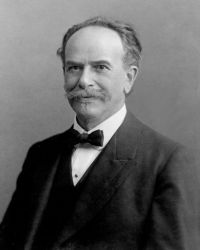
“ The literary device that holds together each one of these tales consists in the use of the interest in the hero that has been created by the introductory story, and that makes the audience desirous of knowing about his further deeds and adventures. The greater the personal interest in the hero, the more marked is the desire to attach to his name some of the favorite exploits that form the subject of folk-tales. I presume this is the reason why in so many cases the introductory tales differ enormously, while the adventures and exploits themselves show a much greater degree of uniformity. ”
Portal:The Folk-Lore Society, The Folk-Lore Journal (1883)
“ It will be seen at once that folk-lorists can give great help to educationists in this work, because the collections asked for are just those which the Folk-Lore Society is now making. The tabulation of folk-tales will, when it has approached some degree of completion, afford precisely what Prof. Hall wants. The tales which appear in the great collections of folk-lore are tales, as I take it, that have survived from age to age because they have delighted generation after generation, not only of men and women, but of children. ”
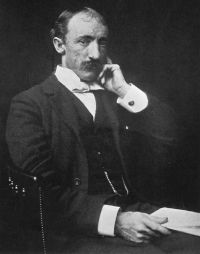 Frank Hamilton Cushing,
Zuñi Folk Tales
Frank Hamilton Cushing,
Zuñi Folk Tales
“ Folk-lore is a discredited mythology—a mythology once held as a philosophy. Nowadays the tales of savage men, not being credited by civilized and enlightened men with that wisdom which is held to belong to philosophy, are called folk-lore, or sometimes folk-tales. ”
Portal:The Folk-Lore Society, The Folk-Lore Journal (1889)
“ The value of the materials with which our Society deals is becoming more and more obvious. That there is nothing "common or unclean," that the folktale crystallizes some thought or speculation of a remote past, and the folkwont some obscure custom, is our main task to show. Whether the story embodies man's serious reflections, or is the outcome of his idle, playful mood, it is this trivial or earnest purpose which we seek to reach. ”
Portal:The Folk-Lore Society, The Folk-Lore Journal (1885)
“ But if the study of folklore has its starting-point in this age, the vestiges of which remain not only in the people but in all classes—just as vestiges of childhood remain during the whole life, both in the adult and in the old man — the study of folk-lore should include that of the people during the whole of its life as well in the actual exercise of its mental faculties, and in its practices and customs of to-day, as in the evidences which it preserves, by its customs and by oral tradition, of its anterior exercise of them, and of its past life. ”
Transactions of the Second International Folk-Congress (1892)
“ In these studies of ours every one may help us; from the mother who observes the self-developed manners and the curious instincts of her children, to the clergyman who can record the superstitions of his flock, or the rural usages that survive from a dateless antiquity. Folk-lore, as we shall see, is very much like that study of man which the poet recommends to mankind; it is a study to which every one who keeps his eyes open can contribute. ”
Stith Thompson, Motif-Index of Folk-Literature (1955)
“ The purpose of the present study, then, has been to arrange in a single logical classification the elements which make up traditional narrative literature. Stories that have formed part of a tradition, whether oral or literary, find a place here. The folktale, the myth, the ballad, the fable, the mediaeval romance, the fabliau, the jest, the exemplum, and the local tradition have all been included, though some of these divisions have been inadequately recorded. ”
Alfred M. Williams, Studies in Folk-Song and Popular Poetry
“ So there must be the element of reality in their defects before the folk-songs can be accepted as really genuine, and it adds a power and even a literary effect to them, which in its peculiar flavor the most accomplished literary art cannot produce. We seem to hear the speech of living men, to feel the thoughts of simple hearts through the imperfect utterance, and to experience all the flavor of actual and homely life. ”
Portal:The Folk-Lore Society, Folk-Lore (1899)
“ Folklore we define, in this connection at least, as the persistence of elements of a lower, or at all events of an outworn, stage of culture in the midst of a higher and more living one. But as to the mode and nature of their persistence hardly two investigators are agreed. Some would treat the lore of the folk as simply the weakened and distorted echo of what once engaged the thought or charmed the fancy of the higher minds of the race; others would regard it as the permanent substratum of all systems, social, religious, artistic, by which man has sought to regulate his life. ”
John M. Tyler, The New Stone Age in Northern Europe
“ So we find ourselves faced with a fundamental contrast between what is called fiction and what is called folk-lore. The one exhibits an abnormal degree of dexterity, operating within our daily limitations; the other exhibits quite normal desires extended beyond those limitations. Fiction means the common things as seen by the uncommon people. Fairy-tales mean the uncommon things as seen by the common people.“As our world advances through history toward its present epoch, its becomes more specialist, less democratic, and folk-lore turns gradually into fiction. ”
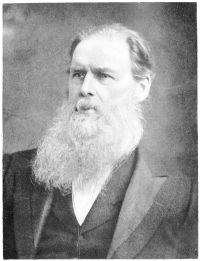 Edward B. Tylor,
Primitive culture, vol. 1 (of 2…
(1871)
Edward B. Tylor,
Primitive culture, vol. 1 (of 2…
(1871)
“ It seems a fair inference to think folk-lore nearest to its source is where it has its highest place and meaning. Thus, if some old rhyme or saying has in one place a solemn import in philosophy or religion, while elsewhere it lies at the level of the nursery, there is some ground for treating the serious version as the more original, and the playful one as its mere lingering survival. ”
Portal:The Folk-Lore Society, The Folk-Lore Journal (1883)
“ And yet, if we think of it, nothing is more certain than that every folk-story was once alive in the sense that for the people who told it it had a real present meaning, and was told among them, not because it referred to the heavenly bodies, or had been handed down from ancient times, but because it reflected the daily life of the villagers, their ideas of right and wrong, their hopes and fears, the means to ward off harm from their cattle, and to make the crops bear rich fruit. ”
Related terms
Authors who wrote about “folk tale”
Laura Fry KreadyPortal:The Folk-Lore SocietyJoseph JacobsAlfred M. WilliamsUnited States. Work Projects AdministrationJessie L. WestonGeorge Laurence GommeAlfred NuttWilliam BottrellT. F. Thiselton-DyerJoseph Campbellcontessa Evelyn Lilian Hazeldine Carrington Martinengo-CesarescoWilliam Crooke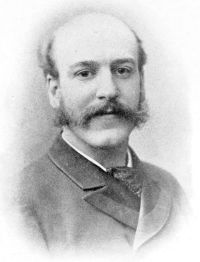 Alfred Trübner NuttW. DentonVariousFranz BoasDorothy Scarborough
 John Greenleaf Whittier
 Oscar Wilde
Joseph JacobsAlfred M. WilliamsUnited States. Work Projects AdministrationJessie L. WestonGeorge Laurence GommeAlfred NuttWilliam BottrellT. F. Thiselton-DyerJoseph Campbellcontessa Evelyn Lilian Hazeldine Carrington Martinengo-CesarescoWilliam CrookeAlfred Trübner NuttW. DentonVariousFranz BoasDorothy ScarboroughJohn Greenleaf WhittierOscar Wilde