Genre painting

Definition and stakes

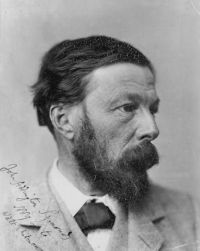
Richard Muther,  The History of Modern Painting…

“ Genre painting followed, and rendered the true spirit of life, illustrating it histrionically, but without surprising it in its unconstrained working. And so trees, mountains, and clouds also were forced to lay aside the innocence of unconscious being and wrap themselves in the cloak of affectation. Simple reality in its quiet, delicate beauty, the homely “mood” of nature, touching the forms of landscape with the play of light and air, had nothing to tell an age overstrained by the heroics of history and the grimaces of genre painting. ”
Source: Gutenberg

Fernand Khnopff, Gerard Brown, Léonce Bénédite, Marion H. Spielmann, Richard Muther and John Van Dyke,  1911 Encyclopædia Britannica (1911)

“ The point of view chosen is that of the relation of painting to nature, and it is shown how the art, beginning with the delineation of contour, passes on through stages when the effort is to render the truth of solid form, to the final period when, in the 17th century, the presentment of space, or nature in all her extent and variety, becomes the subject of representation. Certain special forms of painting characteristic of modern times, such as portraiture, genre painting, landscape, still-life, &c., are briefly discussed. ”
Source: Wikisource

Richard Muther,  The History of Modern Painting…

“ In an age which was prouder of its antiquarian knowledge than of its own achievements, which recognised the faithful imitation of the method of all past periods, the mere performance of a delicate task, as the highest aim of art, these genre painters were the first to portray the actual man of the nineteenth century; the first to desert museums and appeal to nature, and thus to lay the foundation of modern painting. ”
Source: Gutenberg

Get perspective with Kwize: daily news enlightened by great literature