Load (mechanics)

Definition and stakes

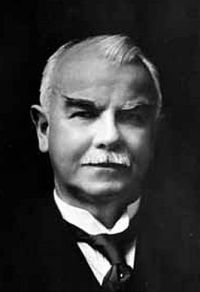
Portrait of Robert S. Ball Robert S. Ball,  Experimental Mechanics

“ When the power arm is longer than the load arm, the load is greater than the power; but when the power arm is shorter than the load arm, the power is greater than the load.
We may regard the strain on the balance as a power which supports the weight, just as we regard the weight to be a power producing the strain on the balance. We see, then, that for the lever of the first order to be efficient as a mechanical power it is necessary that the power arm be longer than the load arm.
”

Source: Gutenberg

Portrait of Robert S. Ball Robert S. Ball,  Experimental Mechanics

“ If the load be raised one foot, it is plain that the power must descend two [Pg 103] feet: for in order to raise the load the two parts of the rope descending to the moveable pulley must each be shortened one foot, and this can only be done by the power descending two feet. ”
Source: Gutenberg

Portrait of Robert S. Ball Robert S. Ball,  Experimental Mechanics

“ Placing upon the load hook a weight of 200 lbs., I find that 38 lbs. attached to a hook fastened on the power chain is sufficient to raise the load; that is to say, the power is about one-sixth of the load. If I make the load 400 lbs. I find the requisite power to be 64 lbs., which is only about 3 lbs. less than one-sixth of 400 lbs. We may safely adopt the practical rule, that with this differential pulley-block a man would be able to raise a weight six times as great as he could raise without such assistance. ”
Source: Gutenberg

Get perspective with Kwize: daily news enlightened by great literature