John Inglesant: A Romance (Volume 2 of 2…
“ For whole hours he would remain on his knees at mass, lost and wandering in that strange world of infinite variety, the mass music—so various in its phases, yet with a monotone of pathos through it all. ”
John Inglesant: A Romance (Volume 2 of 2…
“ For whole hours he would remain on his knees at mass, lost and wandering in that strange world of infinite variety, the mass music—so various in its phases, yet with a monotone of pathos through it all. ”
comte de Georges Louis Leclerc Buffon, Buffon's Natural History. Volume 04…
“ If we strike a body incapable of vibration with a double force, or a double mass of matter, it will produce a sound doubly grave. Music has been said, by the ancients, to have been first invented from the blows of different hammers on an anvil. ”
A Dictionary of Music and Musicians (1900)
“ The modern Dominant Harmonic Cadence is the passage of the mass of the harmony of the Dominant into the mass of the Tonic, and defines the key absolutely by giving successively the harmonies which represent the compound tone of the two most important roots in the scale, the most important of all coming last. ”
 John Tyndall,
Fragments of Science: A Series of Detached Essays…
“ Double your mass, other things being equal, and you double your amount of heat; double your velocity, other things remaining equal, and you quadruple your amount of heat. Here then we have common mechanical motion destroyed and heat produced. When a violin bow is drawn across a string, the sound produced is due to motion imparted to the air, and to produce that motion muscular force has been expended. We may here correctly say, that the mechanical force of the arm is converted into music. ”
Karl Wilson Gehrkens, Music Notation and Terminology
“ The requiem mass is the "mass for the dead" and differs considerably from the ordinary mass. Both regular and requiem masses have been written by many of the great composers (Bach, Beethoven, Verdi, Gounod) , and in many cases these masses are so complex that they are not practicable for the actual service of the Church, and are therefore performed only by large choral societies, as concert works.166. A cantata is a vocal composition for chorus and soloists, the text being either sacred or secular. The accompaniment may be written for piano, organ, or orchestra. ”
The Art of Music. Vol. 01 (of 14…
“ This sharping of the G augments the natural interval from F to G, and, since this augmented interval is hard to sing, the F, too, is sometimes sharped, and the scale then becomes what we call the melodic minor. Nothing could be more indicative than this ‘melodic’ compromise of the power harmony has exercised over the development of music, for rather than do without the leading tone, which is itself an alteration of the natural scale, we alter the scale still further. Our melodic minor scale is therefore constructed to square with the harmonic need, a queer paradox. ”
Carl Engel, Musical Myths and Facts, Volume 2…
“ Again, the diatonic major scale is regarded by many musicians as the natural order of intervals on which the [Pg 231] compositions must be founded whenever the art of music has attained to a high degree of development, and which will therefore be universally adopted in the course of time. They form this opinion especially from the laws of Acoustics, since the intervals constituting the diatonic major scale are those which as harmonics stand in the most simple relation to the fundamental tone produced by a vibrating body. ”
 Aubertine Woodward Moore,
For Every Music Lover
“ Musical sound, or tone, is produced by regular vibrations, and differs from mere noise whose vibrations are irregular and confused. The pitch of a musical tone rises in proportion with the rapidity of the vibrations that produce it. Tones may be perceived by the human ear ranging from about sixteen vibrations in a second to nearly forty thousand, more than eleven octaves. Only about seven octaves are used in music. The science of acoustics is full of interesting facts of this kind, and is of profound value to any one who would gain an insight into the structure of music. ”
W. J. Baltzell, A Complete History of Music
“ How did man reach the conception of fixed scales? Here again opinions differ. Some consider that the extreme notes were fixed by the average compass of the human voice in impassioned speech, the interval being variously divided. Others claim that along with the vocal phase of music there was an instrumental side, and that the mechanical conditions in connection with instruments had bearing in the matter of organizing sounds into a scale; the rude, primitive trumpet of wood or bark, still found among forest tribes in South America and Africa, gives a series of harmonic notes. ”
John Weeks Moore, Complete Encyclopaedia of Music… (1880)
“ A musical string is of a uniform thickness, and is stretched between two points, by a force much greater than its weight. The stretching force which is applied is generally conceived as measured by the weight which would occasion an equal tension. The sound which a string gives, thus stretched, or in this mode of vibration, is called its fundamental sound. The tone of a string becomes more acute as we increase its tension, or diminish its length, and the weight of a given portion. ”
Sidney Licht, Music in Medicine (1946)
“ Of the many possible modes only two are used in our present system of music, the major and the minor. There is only one form of the major mode, and it is the one most people recall when they think of the scale. There are three forms of the minor mode, but of these the harmonic is the most frequently used. ”
 Robert Browning,
Pomegranates from an English Garden
“ I seemed to hear depths and heights of sound beyond the scale which human ears can receive, keen, far-up octaves, like vividly twinkling starlight of music, and mighty slow vibrations of gigantic strings going down into grand thunders of depths, octaves below anything otherwise appreciable as musical notes. ”
Popular Science Monthly (1879)
“ The author, preparing the way with a chapter on elementary acoustics, states the phenomena of overtones, and then shows their action in determining the tone-character or timbre of the various musical instruments. These overtones also constitute the natural basis for the scales, for melody, tonality, and harmony—in so far as these have a natural basis. For æsthetical influences, local, individual, and transitory, have played the largest part in giving to music its present form. ”
“ All that is left to us of musical effort before the seventeenth century, proves to me that early musicians knew melody only; they were ignorant of harmony and its immense resources. Music is at once a science and an art. It is rooted in physics and mathematics, hence it is a science; inspiration makes it an art, unconsciously utilizing the theorems of science. It is founded in physics by the very nature of the matter it works on. Sound is air in motion. ”
W. H. Hadow, Studies in Modern Music, Second Series
“ For, in the first place, a settled scale is not only a vehicle for melody, it is also a means of modulation, and this latter function comes more into evidence as music becomes more complex and the need of modulation increases. ”
 W. S. B. Mathews,
A Popular History of the Art of Music
“ It is astonishing that in so complex and rapid a movement of the fingers the musical proportions can be preserved, and that throughout the difficult modulations on their various instruments the harmony is completed with so sweet a velocity, so unequal an equality, so discordant a concord, as if the chords sounded together fourths and fifths. ”
 Daniel Gregory Mason,
The Romantic Composers
“ Properly speaking, "form" refers to the molecular constitution of music, to the ways in which relations of pitch and rhythm are manipulated in melody and harmony; "structure" to the molar constitution of music, the subsequent grouping of the melodies into complete pieces. The difference between a sonata, a fugue, and a nocturne is a difference of structure; the difference between a good melody and a bad one is a difference of form. ”
Daniel Gregory Mason,
From Grieg to Brahms: Studies of Some Modern Composers and Their Art
“ And as the diversity of the possible forms becomes greater and greater as we advance from foot to stanza, there being few forms of feet but many of stanza, so metrical form in music becomes more and more complex as it evolves, and though all music must be built out of dual or triple measures, it may be built into tunes of an infinite variety of pattern. ”
 Mary Somerville,
On the Connexion of the Physical Sciences
“ The density and elasticity of the air, varying with every alternation of temperature, lead to the consideration of barometrical changes, the measurement of heights, and capillary attraction; and the doctrine of sound, including the theory of music, is to be referred to the small undulations of the aërial medium. A knowledge of the action of matter upon light is requisite for tracing the curved path of its rays through the atmosphere, by which the true places of distant objects are determined, whether in the heavens or on the earth. ”
Worthington Hooker, Science for the School and Family…
“ The more simple is the relation the greater is the harmony. For example, if we take the first note, termed the fundamental note, of what is called the scale in music, it harmonizes better with the octave than with any other of the eight notes, because for every vibration in it there are just two in the octave. ”
George M. Shaw, Popular Science Monthly (1878)
“ The common musical scale is derived from a tone and its overtones, by making, on separate strings, full tones corresponding to the overtones of some fundamental string-tone. That which produces a "chord" in music, where the harmony is made by full tones, would produce a vowel if the main tone only were full, and the "chording" tones overtones. When, then, a vowel is sung, high or low, it is still the same vowel at a different pitch—that is, the same "chord" in another key. But "chords" are music, and music means air-waves, so that vowels are musical air-waves. ”
Edward Woodall Naylor, Shakespeare and Music (1896)
“ These extracts fairly represent the ancient opinion about the Music of the spheres. There was a strong tendency last century to revive the notion, and even to our modern ideas, with our Copernican astronomy, there remains at least the possibility of drawing fantastical analogies between the proportionate distances of the planets and the proportionate vibration numbers of the partial tones in a musically vibrating string or pipe. ”
Oskar Bie, History of the pianoforte and pianoforte players (1899)
“ But since the seventeenth century our conception of music has gradually, from melodic, become harmonic; we hear vertically as well as horizontally; we hear the beauty of all chords as sounded together, and, unconsciously, we fill in the harmonies to every melody we hear. It would have been natural if the keyed instruments had adapted themselves to this altered musical conception, and had resigned the original conception of the scale to make way for harmonic conveniences. ”
 Henry White Warren,
Among the Forces
“ It is biblically asserted and scientifically demonstrable that space is full of causes of sound. To anyone capable of turning these causes to effects this sound is not dull and monotonous, but richly varied into songful music. Light makes its impression of color by its different number of vibrations. So music sounds its keys. We know the number of vibrations necessary for the note C of the soprano scale, and the number that runs the pitch up to inaudibility. We know the number of vibrations of light necessary to give us a sensation of red or violet. ”
Viscountess Marianne Margaret Compton Cust Alford, Needlework As Art
“ If proportion, colour, and sound alike depend on certain mathematical measurements, and on rhythmical vibrations, there must be a real and tangible relation between these elements, though applied to obtain different results. In music, as in all art, harmony is, or ought to be, a first consideration. ”
Daniel Gregory Mason,
Contemporary Composers
“ The coincidence of the rhythm and the measure is an entirely particular case, which men have unfortunately tried to generalize, propagating the error that 'the first beat of the measure is always strong.' This identification of rhythm with measure has had the most deplorable consequences for music.... Rhythm, submitted to the restricting requirements of meter, becomes rapidly impoverished, even to the most desolating platitude, just as a branch of a tree, strongly [181] compressed by a ligature, becomes enfeebled and atrophied, while its neighbors absorb all the sap. ”
 Georg Wilhelm Friedrich Hegel,
The Philosophy of Fine Art, volume 3…
“ The second material which enlists our attention is no longer the physical quality asserted in the sound, but the essential definition of the tone itself, and its relation to other tones. This objective relation, whereby musical tone in the first instance, not merely in its essential and emphatically defined singularity, but also in its fundamental relation to simultaneously persistent tones, expatiates, constitutes the actual harmonious element of music, and is based, regarded under its own original physical conditions, upon quantitative differences and numerical proportions. ”
W. S. B. Mathews,
The Masters and Their Music
“ Symmetry in music is much more exactly observed than in literary composition, even in verse, since music itself is a matter of time and vibration, and the proportionate and mathematical relation of parts belongs to the very essence of the art. Every musical form, therefore, whether large or small, consists essentially of one leading idea and of two or more subordinate ideas, brought in with whatever cleverness of treatment the composer may find convenient, and the whole turned over and diversified according to his fancy. ”
Daniel Gregory Mason,
Contemporary Composers
“ In the long evolution from the simple to the complex which music shares with everything else we know we may observe two different methods of tone-combination which, working together, have given us the elaborate texture of the modern art. That especially suited to melodic instruments, like those used in the orchestra or the chorus, puts melodies together as an engraver puts together lines, each remaining distinct, standing off clearly from the others, representing a different musical thought, and yet all agreeing, or, as we say, harmonizing. ”
Carl Engel, Musical Myths and Facts, Volume 1…
“ By far the greater number of our rules of composition are not dictated by any physical law traceable in acoustics, but only by human taste, which is continually undergoing modifications in the course of time. Thus, most of our great composers have caused some alterations in our theory of music. It is not only possible, but probable, that in a hundred years' time we shall have admirable musical compositions very different in form and construction from our present ones. ”
Carl E. Gardner, Essentials of Music Theory: Elementary
“ The quality and intensity of sound do not alter the rate of speed. If this were not true, ensemble music would be impossible. Intensity of sound is greater in condensed air; velocity of sound is greater in a warm temperature. ”
A Dictionary of Music and Musicians (1900)
“ HARMONICS, tones of higher pitch which accompany every perfect musical sound in a regular series. As they ascend they diminish in intensity, and approximate in pitch. If the piano be opened and a note—say D in the bass—be struck smartly and kept down, on listening attentively a succession of faint sounds will be heard, apparently rising out of the principal sound and floating round it. These are the harmonics. They are really constituents of the main musical tone, and are produced by the concurrent vibration of the aliquot parts of the string. ”
Karl Wilson Gehrkens, Music Notation and Terminology
“ The student of some interesting modern developments will also speedily discover that the adoption of the so-called whole-tone scale as a basis of music is, except upon a keyed instrument tuned to the compromise of equal temperament, unnatural and impossible. ”
Florence Armstrong Grondal, The music of the spheres (1926)
“ The daily movements of these stars were watched as they were carried along on their spheres, and it was seen that they moved in law and order. Noting that the planets seemed to be placed at intervals corresponding to the scale in music and being at the same time greatly impressed with the discovery that music was based on mathematics, he beautifully combined these discoveries and arrived at the entrancing conclusion that so great and orderly a movement of so many crystal spheres must give forth strains which united in a wonderful harmony of incredible volume and sweetness. ”
Stephen Austen Pearce, Popular Science Monthly (1877)
“ The solid and highly-compound tones of the organ, sustained with equal energy, caused the imperfections of the concords to be markedly apparent. They could not be ignored, as when occurring with the evanescent tone of a piano-forte. The super-harmonics, or summation-tones, disagreeing with each other, developed, in common with difference-tones, a mass of attendant dissonances, which even the employment of a double foundation (sixteen-feet manual stops) and powerful pedal-organ, etc., could barely hide. ”
Daniel Gregory MasonJohn Weeks MooreSidney LichtKarl Wilson GehrkensCarl EngelAubertine Woodward Moore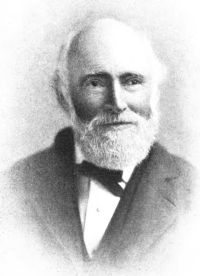 John Sullivan Dwight
 Alma Webster Hall PowellEdward Woodall NaylorW. S. B. MathewsW. J. BaltzellGeorge Ainslie HightW. H. Hadow
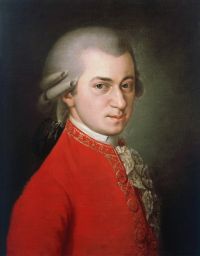 Wolfgang Amadeus Mozart
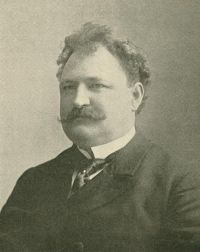 Henry Edward KrehbielOskar BieStephen Austen Pearce
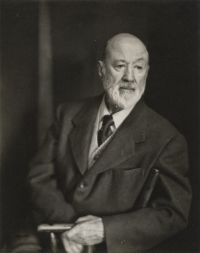 Charles Ives
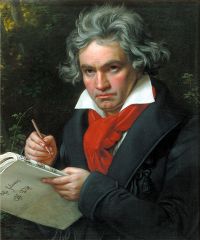 Ludwig van Beethoven
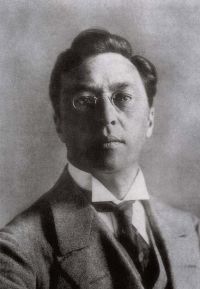 Wassily Kandinsky