Mechanical power

Definition and stakes

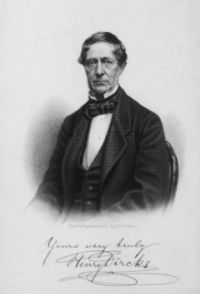
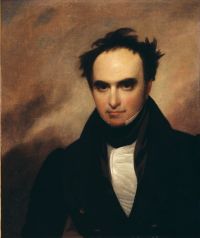
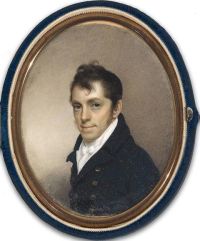
Portrait of Daniel Webster Daniel Webster,  The Works of Daniel Webster, Volume 1

“ The slightest glance, however, must convince us that mechanical power and mechanical skill, as they are now exhibited in Europe and America, mark an epoch in human history worthy of all admiration. Machinery is made to perform what has formerly been the toil of human hands, to an extent that astonishes the most sanguine, with a degree of power to which no number of human arms is equal, and with such precision and exactness as almost to suggest the notion of reason and intelligence in the machines themselves. ”
Source: Gutenberg

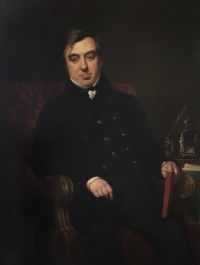
Portrait of Thomas P. Jones Thomas P. Jones,  Conversations on Natural Philosophy…

“ The lever, the pulley, the wheel and axle, the inclined plane, the wedge and the screw; one or more of which enters into the composition of every machine.
A mechanical power is an instrument by which the effect of a given force is increased, whilst the force remains the same.
In order to understand the power of a machine, there are four things to be considered. 1st. The power that acts: this consists in the effort of men or horses, of weights, springs, steam, &c.
2dly. The resistance which is to be overcome by the power: this is generally a weight to be moved.
”
Source: Gutenberg

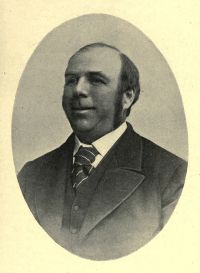
Portrait of Robert S. Ball Robert S. Ball,  Experimental Mechanics

“ When the power arm is longer than the load arm, the load is greater than the power; but when the power arm is shorter than the load arm, the power is greater than the load.
We may regard the strain on the balance as a power which supports the weight, just as we regard the weight to be a power producing the strain on the balance. We see, then, that for the lever of the first order to be efficient as a mechanical power it is necessary that the power arm be longer than the load arm.
”
Source: Gutenberg

Get perspective with Kwize: daily news enlightened by great literature