 Herman Melville,
Moby-Dick
(1851)
Herman Melville,
Moby-Dick
(1851)
“ For all men tragically great are made so through a certain morbidness. Be sure of this, O young ambition, all mortal greatness is but disease. ”
Herman Melville,
Moby-Dick
(1851)
“ For all men tragically great are made so through a certain morbidness. Be sure of this, O young ambition, all mortal greatness is but disease. ”
An Invalid, Life in the sick-room (1844)
“ Nothing, perhaps, has impressed me so deeply as the clear view I have of almost all, if not quite the whole, of the suffering I have witnessed being the consequence of vice or ignorance. But when my heart has sickened at the sight, and at the thought of so much gratuitous pain, it has grown strong again in the reflection that, if unnecessary, this misery is temporary,—that the true ground of mourning would be if the pain were not from causes which are remediable. ”
 George Barton Cutten,
Three Thousand Years of Mental Healing
George Barton Cutten,
Three Thousand Years of Mental Healing
“ The fact that there is a reciprocal relation between mental states and bodily conditions, acting both for good and ill, is nothing new in human experience. Even among the most crude and unobserving, traditions and incidents have given witness to this knowledge. For centuries stories of the hair turning white during the night on account of fright or sorrow, the cause and cure of diseases through emotional disturbances, and death, usually directly by apoplexy, caused by anger, grief, or joy, have been current and generally accepted. ”
 Émile Zola,
The Three Cities Trilogy: Lourdes…
Émile Zola,
The Three Cities Trilogy: Lourdes…
“ Such was the mystical explanation of that election of suffering, the raison d’etre of that being who was so harshly separated from her fellows, weighed down by disease, transformed into the pitiable field of every human affliction. ”
 Emma Dorothy Eliza Nevitte Southworth,
Lilith
(1881)
Emma Dorothy Eliza Nevitte Southworth,
Lilith
(1881)
“ The body and mind are so nearly connected that when one is weakened or diseased, the other is apt to be so too,” added the doctor.“You are both mistaken. My remorse and despair have nothing to do with health of body or mind. They are both normal and natural. Listen to me. 23If I, in the madness of the moment, had not insulted, outraged, and driven my young wife from my side, she would never have gone forth that bitter winter night to meet the cruel death at the hands of some midnight marauder—according to the verdict of the coroner’s jury.” ”
Mary Wollstonecraft Shelley, The Last Man (1826)
“ I cannot intrigue, or work a tortuous path through the labyrinth of men's vices and passions; but I can bring patience, and sympathy, and such aid as art affords, to the bed of disease; I can raise from earth the miserable orphan, and awaken to new hopes the shut heart of the mourner. I can enchain the plague in limits, and set a term to the misery it would occasion ”
 Arthur Quiller-Couch,
Dead Man's Rock
Arthur Quiller-Couch,
Dead Man's Rock
“ A morbid soul—and I will admit that mine is morbid—preying upon its recollections, and nourished on that food alone, cannot hope to attain the sense of proportion which is the proper gift of varied experience. ”
 Johann Wolfgang von Goethe,
The Works of J. W. von Goethe
(1901–1902)
Johann Wolfgang von Goethe,
The Works of J. W. von Goethe
(1901–1902)
“ And when the last fatal malady seizes the being whose untimely grave you have prepared, when she lies languid and exhausted before you, her dim eyes raised to heaven, and the damp of death upon her pallid brow, then you stand at her bedside like a condemned criminal, with the bitter feeling that your whole fortune could not save her; and the agonising thought wrings you, that all your efforts are powerless to impart even a moment's strength to the departing soul, or quicken her with a transitory consolation. ”
 Vernon Lee,
Penelope Brandling: A Tale of the Welsh coast in the Eighteenth Century
Vernon Lee,
Penelope Brandling: A Tale of the Welsh coast in the Eighteenth Century
“ Or is some shred of nightmare returning ever and again out of the black depths of my sickness? It comes and goes, and every time new doubts—hope it may be a dream, fear it may be reality—come with it. ”
 Timothy East,
The Sheepfold and the Common; Or…
Timothy East,
The Sheepfold and the Common; Or…
“ Or take the case of one who has been a living martyr to physical afflictions and sufferings; who has scarcely ever breathed the breath of uncontaminated health, though she has wandered from one salubrious place to another, to catch its invigorating inhaling; whose food has been tasteless, and to whom restless nights and days of weariness and pain have been appointed; and whose ethereal spirit has been held in a state of langour and depression by the mysterious action of disease on her nervous sensibilities. ”
B. G. Jefferis and J. L. Nichols, Searchlights on Health — Immorality… (1919)
“ THE SISTERHOOD OF SHAME AND DEATH.—Whenever we pass the sisterhood of death, and hear the undertone of song, which is one of the harlot's methods of advertising, let us recall the words, that these represent the "pestilence which walketh in darkness, the destruction that wasteth at noonday." The allusion, of course, is to the fact that the great majority of these harlots are full of loathsome physical and moral disease; with the face and form of an angel, these women "bite like a serpent and sting like an adder;" their traffic is not for life, but inevitably for shame, disease, and death. ”
 Benjamin Rush,
Medical Inquiries and Observations…
Benjamin Rush,
Medical Inquiries and Observations…
“ Do we observe the memory, the imagination, and the judgment, to be affected by diseases, particularly by madness? Where is the physician who has not seen the moral faculty affected from the same causes! How often do we see the temper wholly changed by a fit of sickness! And how often do we hear persons of the most delicate virtue, utter speeches in the delirium of a fever, that are offensive to decency or good manners! ”
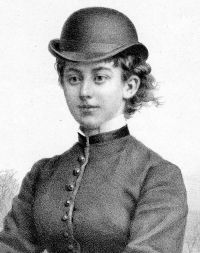 Lady Florence Dixie,
Isola; or, The disinherited: A revolt for woman and all the disinherited
(1877)
Lady Florence Dixie,
Isola; or, The disinherited: A revolt for woman and all the disinherited
(1877)
“ Kill not for food, and where Necessity Demands the sacrifice of sentient life, Kill with all kindness and with due regard To Physical—and Mental—feelings. Pain Is a nerve-racking, dread experience, Especially unto the dumb Creation, Who cannot question, yet are forced to bear That dread experience, all unwillingly. ”
“ One night, when we had given up all hope of saving the sick woman, he terrified me, for, by some words which escaped him, I realised that, should death be the result of this illness, he would throw himself from the region of high aspirations and generous sentiments into an abyss of the greatest perversity, and in that moment I believed in the reality of all the stories I had heard told about the count. ”
 Sarah Stickney Ellis,
The Mothers of England
(1844)
Sarah Stickney Ellis,
The Mothers of England
(1844)
“ Nor indeed is bodily illness an affliction at all to be compared to those visitations of a darkened spirit, which convey the impression that we are not cared for by those we love, that we are not essential to their happiness, and that life to them would be as full of interest and enjoyment, if we were sleeping in the grave. ”
Various, Graham's Magazine, Vol. XIX, No…
“ That pale face—those fixed, staring, dead eyes—the countenance emaciated by disease, and the long consuming fire of conscience—the step, solemn, slow, measured and unearthly—and the dark, dim and shifting imagery of the past, which floats to and fro through her imagination, form altogether a spectacle shocking and almost insupportable. ”
 Oscar Wilde,
The Picture of Dorian Gray
Oscar Wilde,
The Picture of Dorian Gray
“ It is too ugly, too horrible, too distressing. There is something terribly morbid in the modern sympathy with pain. One should sympathize with the colour, the beauty, the joy of life. The less said about life’s sores, the better. ”
 Paschal Beverly Randolph,
Eulis! the History of Love — Part I: Affectional Alchemy
(1874)
Paschal Beverly Randolph,
Eulis! the History of Love — Part I: Affectional Alchemy
(1874)
“ O my God! what utter horror and blank despair have I seen gleam from the eyes of thousands!—victims all,—to vampiral depletion; nervous and vital exhaustion; impotentia, barrenness; diseases of uterus, vulva, ovaries, kidneys, prostate, heart, lungs, brain—the terrible personal hades outgrown from society, society, society, with its falses and shams ”
Johann Wolfgang von Goethe,
The Works of J. W. von Goethe
(1901–1902)
“ A violent fever, with its train of consequences, medicines, overstraining, and exhaustion, besides the unwearied attentions of his family, the love of his brothers and sisters, which first becomes truly sensible in times of distress and want, were so many fresh occupations to his mind, and thus formed a kind of painful entertainment. ”
Franz Hunolt, Hunolt Sermons/Volume 12 (1895)
“ Sickness and bodily pain, trouble and anguish of mind, poverty and temporal misfortunes, loss of good name by detraction and calumny, and many other crosses of the kind are guests that come uninvited, that we must daily behold with weeping eyes, and bear with sweating hands, and grieve for with sorrowing hearts. ”
 Grace Aguilar,
Home Influence: A Tale for Mothers and Daughters
Grace Aguilar,
Home Influence: A Tale for Mothers and Daughters
“ But illness, appearing to be but the ghastly vehicle of death, clothed in such fearful pain that no control, even of reason and strong will, can check its agonized expression, till at last, reason itself succumbs beneath it, and bears the mind from the tortured frame, this is a trial of no ordinary suffering, even when such illness has been brought about by what may be termed natural causes. ”
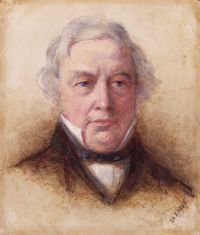 Thomas Love Peacock,
Nightmare Abbey
Thomas Love Peacock,
Nightmare Abbey
“ MR HILARY All these anecdotes admit of solution on psychological principles. It is more easy for a soldier, a philosopher, or even a saint, to be frightened at his own shadow, than for a dead man to come out of his grave. Medical writers cite a thousand singular examples of the force of imagination. Persons of feeble, nervous, melancholy temperament, exhausted by fever, by labour, or by spare diet, will readily conjure up, in the magic ring of their own phantasy, spectres, gorgons, chimaeras, and all the objects of their hatred and their love. ”
“ The hopeless tragedy of the situation is admirably expressed without a trace of theatrical exaggeration. We see a young man, suffering from a grave and mysterious malady, extended upon his bed of suffering. ”
 Donald Grant Mitchell,
Reveries of a Bachelor; or, A Book of the Heart
Donald Grant Mitchell,
Reveries of a Bachelor; or, A Book of the Heart
“ But this sparkling sensibility to one struggling under infirmity, or with grief or poverty, is very dreadful. The soul is too nicely and keenly hinged to be wrenched without mischief. How it shrinks, like a hurt child, from all that is vulgar, harsh and crude! ”
 Richard Challoner,
Think Well On't
(1801)
Richard Challoner,
Think Well On't
(1801)
“ Consider, and in order to understand something better what hell is, set before your eyes a poor sick man lying on his bed, burning with a pestilential fever, attended with a universal pain over all his body, his head perfectly rent asunder, his eyes ready to fly out, his teeth raging, his sides pierced with dreadful stitches, his belly racked with violent cholic ”
Th. Ribot, The Psychology of the Emotions (1897)
“ When we review the abnormal or morbid forms of the affective life: destructive impulses, phobias, incurable melancholy, sexual perversions, failure of the moral sense, insanity of doubt, etc., and seek their causes, we at once find some which are proximate or immediate. Among the most frequent are physical maladies, injuries to the head, sudden shocks, as in railway accidents; sorrow, whatever its origin, whether love, ambition, ruin, separation ”
Various, The Harvard Classics Volume 38
“ And hence, by the way, it may perchance be why grief, and love, and envy, and anxiety, and all affections of the mind of a similar kind are accompanied with emaciation and decay, or with disordered fluids and crudity, which engender all manner of diseases and consume the body of man. ”
Anonymous, Des Grieux (1899)
“ They were morbidly sensitive, quick to feel every trifle with too great acuteness, magnifying the slightest incidents of daily life with the subtile keenness of their sickly imaginations into unbearable misfortunes. ”
 Charles Brockden Brown,
Edgar Huntly; or, Memoirs of a Sleep-Walker
Charles Brockden Brown,
Edgar Huntly; or, Memoirs of a Sleep-Walker
“ He rolled upon the ground, uttering doleful shrieks, and throwing his limbs into those contortions which bespeak the keenest agonies to which ill-fated man is subject. Horror, and compassion, and remorse, were mingled into one sentiment, and took possession of my heart. To shut out this spectacle, I withdrew from the spot, but I stopped before I had moved beyond hearing of his cries. ”
An Invalid, Life in the sick-room (1844)
“ I was lately speaking to a tender-hearted woman, who had known suffering, but not torment, of more than one case of persons who, dying slowly under a torturing disease, simply and naturally declared, shortly before death, the season of their illness to have been the happiest part of their lives. ”
 Dorothy Canfield Fisher,
The home-maker
(1924)
Dorothy Canfield Fisher,
The home-maker
(1924)
“ No circle in any hell would have contained more concentrated suffering than was crowded into his every conscious moment—horrible, brute, physical suffering, tearing at every nerve, suffering that degraded him, that left him no humanity. ”
 Herbert Spencer,
Essays on Education and Kindred Subjects
Herbert Spencer,
Essays on Education and Kindred Subjects
“ And it is from this cause that in human beings bodily suffering expresses itself not only in contortions, but in shrieks and groans—that in anger, and fear, and grief, the gesticulations are accompanied by shouts and screams—that delightful sensations are followed by exclamations—and that we hear screams of joy and shouts of exultation. ”
“ It is difficult to say what is the dividing line between healthy sorrow and morbid sentiment. It seems a natural instinct, which makes the bereaved care lovingly for the very grave, and which makes the mother keep locked up the little shoes worn by the little feet, relics hid from the vulgar eye. The instinct has become a little more morbid, when it has preserved the room of a dead mother, with its petty decorations and ornaments as she left them. Beautiful as the instinct may be, there is nothing so dangerous as when our most natural feeling turns morbid. ”
 David Christie Murray,
Recollections
David Christie Murray,
Recollections
“ And now, when I am settling down to these reminiscences in late middle age, the most dreadful waking sense of real horror, and the first real touch of human pity, seem to meet each other, and to blend. ”
 Erasmus Darwin,
The Temple of Nature; or, the Origin of Society…
Erasmus Darwin,
The Temple of Nature; or, the Origin of Society…
“ Thus the appearance of a cheerful countenance gives us pleasure, and of a melancholy one makes us sorrowful. Yawning, and sometimes vomiting, are thus propagated by sympathy; and some people of delicate fibres, at the presence of a spectacle of misery, have felt pain in the same parts of their bodies, that were diseased or mangled in the object they saw. ”
Thomas Archer, "About My Father's Business": Work Amidst the Sick…
“ There are some of whom we might be ready to say, they dwell in that valley;—that the shadow of death lies darkling before them, constantly enwrapping them,—enshrouding them in gloom. We are accustomed to think so of persons suffering from what we call incurable diseases, some of which are painful, occasionally agonising, others susceptible of relief from the suffering that attends them. ”
Harry E. Mereness, Weird Tales (1923)
“ After the first sight—after that sharp, quivering intake of breath—the gaze of the condemned man shifts about the room. His expression haunts one. You feel that it is both all-seeing and unseeing. The fear of death—a definite emotion—is here portrayed in a fashion that but few have beheld. ”
 Charles Dickens,
Sketches by Boz — The hospital patient
(1836)
Charles Dickens,
Sketches by Boz — The hospital patient
(1836)
“ Who can tell the anguish of those weary hours, when the only sound the sick man hears, is the disjointed wanderings of some feverish slumberer near him, the low moan of pain, or perhaps the muttered, long-forgotten prayer of a dying man? ”
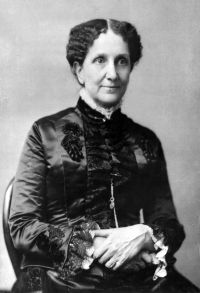 Mary Baker G. Eddy,
Science and Health with Key to the Scriptures
(1898)
Mary Baker G. Eddy,
Science and Health with Key to the Scriptures
(1898)
“ Passion, appetite, dishonesty, envy, and malice ripen into action, only to pass on from shame and woe to their next stage, self-destruction. The dream of disease is like the dreams we have in sleep, wherein every one recognizes suffering to be Diease a dream. wholly in mortal mind. In both cases the dreamer thinks his body is material, and that the suffering is in that body. ”
 Henry Howard, Earl of Surrey,
Alas! so all things now do hold their peace
Henry Howard, Earl of Surrey,
Alas! so all things now do hold their peace
“ But by and by the cause of my disease Gives me a pang that inwardly doth sting, When that I think what grief it is, again, To live, and lack the thing should rid my pain. ”
 Fanny Kemble,
Records of Later Life
Fanny Kemble,
Records of Later Life
“ It may be more difficult to formulate that species of anguish in words, and it may seem a less positive and substantial grief than some others, but the plagues of the soul are real tortures, and I set few sufferings above them, few difficulties and few pains beyond those that have their source not in the outward dispensation of events, but in the inward conditions of our physical and moral constitutions. ”
 G. Stanley Hall,
Senescence, the Last Half of Life
(1922)
G. Stanley Hall,
Senescence, the Last Half of Life
(1922)
“ A few in fancy feel ill, imagine doctor and nurse, go through the last agony, imagine others standing about weeping and praising them, or perhaps picture themselves as the bystanders and see the imaginary death of a friend and try to weep. ”
“ He bears the characters, physical and psycho-physical, of degeneration, of aberration, of constitutional abnormality, sufficient for recognition. Especially noteworthy are the lambdoidal depression, the marked plagiocephalia and plagio-prosopia, the superior prognathism, and the inferior dental irregularities, the thoracic asymmetry, the pallid complexion, the hypoalgesia, the weakness and perversion of some of the special senses, the unrestrained onanism, the predominant love of vagabondage, the furious and animal-like anger, the destructive tendencies. ”