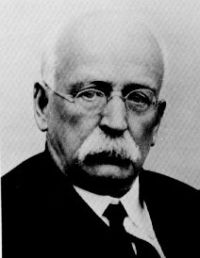
Productive forces, central to Marxist theory, refer to the combination of human labor with tools, technology, and natural resources in the production process. Karl Marx and Friedrich Engels emphasized their dynamic role in shaping societies, while Willem Adriaan Bonger focused on their causal impact on economic circumstances. Guy Debord associated their development with changes in human living conditions, and Paul Lafargue highlighted their potential to free labor through automation.
Friedrich Engels argued that advancing these forces is essential for societal progress, yet their growth frequently conflicts with existing production relations. These viewpoints collectively illustrate productive forces as both a catalyst for historical transformation and a framework for examining power structures within economic systems.
 Willem Adriaan Bonger,
Criminality and economic conditions
(1916)
Willem Adriaan Bonger,
Criminality and economic conditions
(1916)