“ The immense growth of scientific knowledge during the last century was bound to react on human conceptions of scientific procedure. The enormous number of new facts brought to light by manipulating hypotheses could not but modify our view of scientific law. Laws no longer seem to scientists the immutable foundations of an eternal order, but are inevitably treated as man-made formulae for grouping and predicting the events which verify them. ”
Scientific law
Definition and stakes
A scientific law is an empirical statement derived from repeated observations, describing natural phenomena under specific conditions. Unlike absolute truths, these laws serve as provisional frameworks, refined through experimentation and mathematical expression. Authors like D.L. Murray viewed them as "man-made formulae" for predicting events, while Thomas Huxley emphasized rigorous verification, stressing that confidence in a law depends on consistent experimental outcomes.
Rudolf Schmid associated laws with mechanistic causality, framing them as patterns that can be mathematically estimated. Together, these perspectives highlight that scientific laws are not unchanging decrees but evolving approximations, continually tested and improved by new evidence, reflecting humanity’s effort to decipher the universe’s underlying order.
Quotes about “scientific law”
 Thomas Henry Huxley,
Autobiography and Selected Essays
“ In science we do the same thing;—the philosopher exercises precisely the same faculties, though in a much more delicate manner. In scientific inquiry it becomes a matter of duty to expose a supposed law to every possible kind of verification, and to take care, moreover, that this is done intentionally, and not left to a mere accident, as in the case of the apples. And in science, as in common life, our confidence in a law is in exact proportion to the absence of variation in the result of our experimental verifications. ”
 George Edward Woodberry,
Heart of Man
“ The way in which type concretes truth is sufficiently plain; but it may be useful, with respect to plot, to draw out more in detail the analogy which has been said to exist between it and an illustrative scientific experiment. If scientific law is declared experimentally, the course of nature is modified by intent; certain conditions are secured, certain others eliminated; a selected train of phenomena is then set in motion to the end that the law may be illustrated, and nothing else. In a perfect experiment the law is in full operation. ”

Related terms
Authors who wrote about “scientific law”
Thomas Henry Huxley Richard Feynman
 John DeweyThomas HuxleyVarious
 William Stanley JevonsAlexander Campbell FraserDmitry Ivanovich Mendeleyev
 Henry George
 Charles Fort
 Leslie Stephen
 Henry Edward CramptonOliver Wendell HolmesWilliam R. Corliss
 Felix AdlerCarveth ReadCharles Francis Adams
 Annie BesantJames Ward
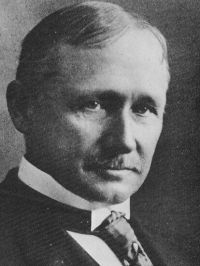 Frederick Winslow Taylor
