“ Nothing can be affected by any transition prior to self-motion. Then the first and eldest principle of motion, whether in things at rest or not at rest, will be the principle of self-motion; and that which is moved by others and can move others will be the second. 'True.' Let me ask another question: What is the name which is given to self-motion when manifested in any material substance? 'Life.' And soul too is life? ”
Self-motion
Definition and stakes
The theme of “self-motion” has been addressed by authors such as Duchess of Margaret Cavendish Newcastle, Isaac Newton, John Locke, Henry Dircks and Sir Oliver Lodge. It is often associated with terms like body, matter, consciousness, will and sensation.
Quotes about “self-motion”
John Smith Harrison, Platonism in English poetry of the sixteenth and seventeenth centuries (1903)
“ In man the self-motion of the soul is present in the activity of reason, whether as the presiding power in all of the operations of the image-making faculty, or as the contemplative and speculative power. ”
The German Classics of the Nineteenth and Twentieth Centuries…
“ Yonder it waves free, and leaps and dances as self-forming motion in the brute; and, in every new body, represents itself as another separate, self-subsisting world—the same power which, invisible to me, stirs and moves in my own members. ”
 Aristotle,
On the Vital Principle
(1855)
“ Although, however, Vital Principle should be self-motive, it would still be in motion, and thus, as all motion is displacement of that which moved, as being moved, the Vital Principle might be displaced from its essence, unless its self-motion were a casual property; but self-motion is of its very essence. ”
Duchess of Margaret Cavendish Newcastle, Philosophical Letters: or, modest Reflections upon some Opinions in Natural Philosophy
“ Wherefore, Matter, in my opinion, has self-motion in it self, which is the onely soul and life of Nature, and is dividable as well as composable, and full of variety of action; for it is as easie for several parts to act in separation, as in composition, and as easie in composition as in separation; Neither is every part bound to one kind or sort of Motions; for we see in exterior local motions, that one man can put his body into several shapes and postures, much more can Nature. ”
Chalcidensis Iamblichus, Iamblichus on the mysteries of the Egyptians… (1895)
“ For neither do we admit in the soul a self-motion, which consists 28of the mover and that which is moved; but we conceive that it is a certain simple essential motion, subsisting from itself, [26] and not possessing a habitude to another thing, and exempt from acting on, and suffering from, itself. Who, therefore, can endure that the peculiarities of the genera superior to the soul, should be distinguished according to active or passive motions? ”
Proclus, The Six Books of Proclus, the Platonic Successor…
“ If, therefore, the self-motive essence is more ancient than alter-motive natures, but soul is primarily self-motive, from which the image of self-motion is imparted to bodies, soul will be beyond bodies, and the motion of every body, will be the progeny of soul, and of the motion it contains. ”
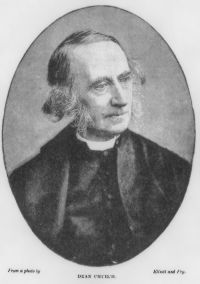 R. W. Church,
The Oxford Movement; Twelve Years…
“ We say an energy continued and abiding, for accident will cause the activity of a moment, and an external principle give the semblance of self-motion. On the other hand, even a living body may for a while be asleep. ”
 Plato,
The Dialogues of Plato
(1892)
“ Very true. But in the case of hearing and sight, or in the power of self-motion, and the power of heat to burn, this relation to self will be regarded as incredible by some, but perhaps not by others. ”
Duchess of Margaret Cavendish Newcastle, Philosophical Letters: or, modest Reflections upon some Opinions in Natural Philosophy
“ Wherefore one body may occasion another body to move so or so, but not give it any motion, but every body (though occasioned by another, to move in such a way) moves by its own natural motion; for self-motion is the very nature of animate matter, and is as much in hard, as in fluid bodies, although your Author denies it, saying, [3] The nature of fluid bodies consists in the motion of those little insensible parts into which they are divided, and the nature of hard bodies, when those little particles joyned closely together, do rest; for there is no rest in nature ”
 Adam Smith,
The Essays of Adam Smith
“ A new-born animal, which had the power of self-motion, and which felt its body, either agreeably or disagreeably, more heated or more cooled on the one side than on the other, would, I imagine, instinctively and antecedently to all observation and experience, endeavour to move towards the side in which it felt the agreeable, and to withdraw from that in which it felt the disagreeable sensation. But the very desire of motion supposes some notion or preconception of externality ”
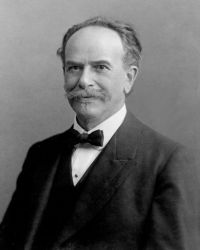 Franz Boas,
The mind of primitive man
(1911)
“ It would seem that the power of motion of the self, and the power of motion of an object, have led to the inclusion of man and movable objects in the same category, with the consequent imputation of human qualities to the moving objective world. ”
“ This motor impulse finds expression in the joy in being a cause, which I regard as so essential to play, and in conjunction with attention is probably the source of the impulse for activity of which I have spoken. We must bear in mind all the forms of pleasure connected with movement, and especially motor experimental play, where, besides the mere enjoyment of motion in itself, there is the satisfaction of being one’s self the originator of it, the joy-bringing sense of being a cause. ”
Duchess of Margaret Cavendish Newcastle, Philosophical Letters: or, modest Reflections upon some Opinions in Natural Philosophy
“ So if a particular Creature hath such opposite qualities and mixtures of corporeal motions, what will the Creator have which is self-moving Matter? Wherefore it is impossible to affirm, that self-moving Matter is either all rare, or all dense, or all hard, or all soft; because by its self-moving power it can be either, or both, and so by the change and variety of motion, there may be soft and rare Points, and hard and sharp Points, hard and contracted Globes, and soft and rare Globes ”
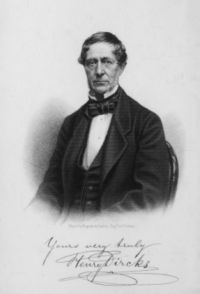 Henry Dircks,
Perpetual Motion
“ Perpetual Motion as used in this book means what it is usually understood to mean—Self-Motive Power—a machine that furnishes the power to keep its parts going as a machine. In this sense Perpetual Motion has always engaged the minds of many, many people—and what is more natural? ”
 John Wesley Powell,
Truth and Error — Chapter XIV.
(1898)
“ The feeling of motion in self results whenever we are conscious of the will to move. Thus the will to move is the cause of the feeling of molar motion itself, and the feeling of motion is developed into the sense of vision by which motion is primordially and naively interpreted as the sense of conception. The feeling of motion is developed into the sense of seeing, for we feel molar motion and feel that that is caused by will, and primitive man naively infers that all molar motion is caused by will ”
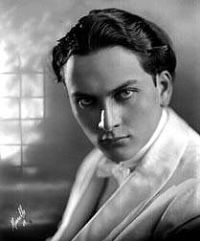 Manly Palmer Hall,
The Secret Teachings of All Ages…
(1928)
“ That which is immovable but moves is anterior to that which is self-moved, which likewise is anterior to that which it moves. That in which motion is inherent cannot be separated from its motive power ”
baron d' Paul Henri Thiry Holbach, The System of Nature, or, the Laws of the Moral and Physical World…
“ Every thing he does—every thing that passes within himself—his concealed motion—his visible action, are the effects of inert force—of self-gravitation—the attractive or repulsive powers contained in his machine—of the tendency he has, in common with other beings, to his own individual preservation ”
 George Santayana,
Reason in Common Sense
(1920, 1905)
“ But before the idea of self is well constituted and before the category of ideals has been conceived at all, every ingredient ultimately assigned to those two regions is attracted into the perceptual vortex for which such qualities as pressure and motion supply a nucleus. ”
Paul Claudel, The East I know (1914)
“ Each one of us contains in himself the autonomous power of motion by which he moves toward his food and his work. As for me, the even motion of my legs serves to measure for me the intensity of more subtle appeals. The allurement of everything! I feel it in the silence of my soul. I understand the harmony of the world. ”
 Henry David Thoreau,
A Week on the Concord and Merrimack Rivers
(1849)
“ All the phenomena which surround him are simple and grand, and there is something impressive, even majestic, in the very motion he causes, which will naturally be communicated to his own character, and he feels the slow irresistible movement under him with pride, as if it were his own energy. ”
 Ralph Waldo Emerson,
Miscellanies
(1855)
“ Once embarked, once having overcome the novelty of the situation, he finds it just as easy and natural to speak,—to speak with thoughts, with pictures, with rhythmical balance of sentences,—as it was to sit silent; for, it needs not to do, but to suffer; he only adjusts himself to the free spirit which gladly utters itself through him; and motion is as easy as rest. ”
Duchess of Margaret Cavendish Newcastle, Philosophical Letters: or, modest Reflections upon some Opinions in Natural Philosophy
“ Wherefore every creature being composed of this commixture of animate and inanimate matter, has also selfe-motion, that is life and knowledg, sense and reason, so that no part hath need to give or receive motion to or from another part ”
William James, The Principles of Psychology, Volume 1…
“ In this instinctive, reflex sort of shame, the body is just as much the entire vehicle of the self-feeling as, in the coarser cases which we first took up, it was the vehicle of the self-seeking. As, in simple 'hoggishness,' a succulent morsel gives rise, by the reflex mechanism, to behavior which the bystanders find 'greedy,' and consider to flow from a certain sort of 'self-regard;' so here your disdain gives rise, by a mechanism quite as reflex and immediate, to another sort of behavior, which the bystanders call 'shame-faced' and which they consider due to another kind of self-regard. ”
 Miguel de Unamuno,
Tragic Sense Of Life
“ It is because I feel myself to be substance—that is to say, permanent in the midst of my changes—that I attribute substantiality to those agents exterior to me, which are also permanent in the midst of their changes—just as the concept of force is born of my sensation of personal effort in putting a thing in motion. ”
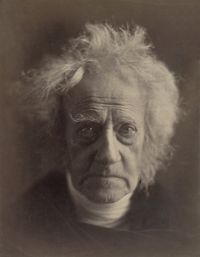 John F. W. Herschel,
Preliminary Discourse on the Study of Natural Philosophy
“ Were there no such thing as motion, had we been from infancy shut up in a dark dungeon, and every limb encrusted with plaster, this internal consciousness would give us a complete idea of force; but when set at liberty, habit alone would enable us to recognize its exertion by its signal, motion, and that only by finding that the same action of the mind which in our confined state enables us to fatigue and exhaust ourselves by the tension of our muscles, puts it in our power, when at liberty, to move ourselves and other bodies. ”
 Hamilton Wright Mabie,
Books and Culture
“ This process is, at the start, partly mechanical; in the nature of things it must be entirely within the view and control of a vigilant consciousness. But as the training progresses, the element of self-consciousness steadily diminishes, until, in great moments, the true orator, become one harmonious instrument of expression, surrenders himself to his theme, and his personality shines clear and luminous through speech, articulation, and gesture. ”
 Sir Oliver Lodge,
The Substance of Faith Allied with Science…
“ Another aspect of the universal struggle for self-manifestation and corporeal realisation, which plays so large a part in all activity and is especially marked in the domain of life, is illustrated on a higher level by that overpowering instinct or impulse towards production and self-realisation, which is characteristic of genius. It may be said that throughout nature, from the lowest to the highest, a tendency to self-realisation, and a manifestation of joy in existence, are conspicuous. ”
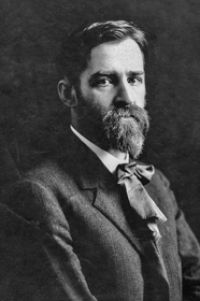 Edwin George Lutz,
Animated cartoons
(1920)
“ When we become weary of toil—which in itself is often an unwelcome and imposed form of stimulus—we seek stimuli in recreation. Or if we haven’t energy enough for the self-stimulation of sports, or the like activity, we look for it outside of ourselves. ”
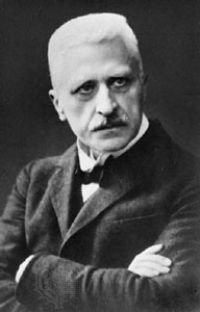 Rudolf Otto,
Naturalism and Religion
“ The most important part of the problem lies in the domain of the psychical. To move an arm or a leg is a relatively unimportant function of the will as compared with the deliberate adoption of a rule of conduct, with inward self-discipline, self-culture, and the development of character. ”
Thomas Wood, The Mosaic History of the Creation of the World
“ Every one feels that he has an inherent power to move this or that part of his body or not, and to give it a direction this way or the contrary, just as he pleases. I can, as I choose, open or shut my eyes, speak or be silent, rise up or sit down, stretch out my hand or draw it in, and use any of my limbs according to my pleasure, as well as my whole body. Matter may be moved, but it can never move itself. ”
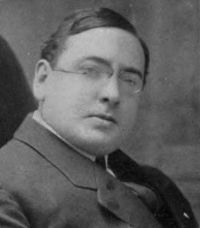 Ned Wayburn,
The Art of Stage Dancing
“ The handicap of self-consciousness is largely overcome by the complete mastery of the movements of the body; the mind becomes freed, the mental horizon enlarged, as the direct result of body and nerve control.The delight of free and expressive movement with a body that responds joyously to the slightest impulse of54 thought and feeling, develops a new resource of pleasure, and in perfection of bodily response is found a new source of beauty with endless promise for the future. ”
 Jean-Marie Guyau,
The Non-religion of the Future…
“ Considered from within everything, even the intellectual forms of time and space, is resolvable by the psychologist into sensation and desire; [159] and, considered from without, everything is resolvable by the physicist into emotion; to feel and to move seem to be the two formulæ that express the entire inner and outer universe, the concave and convex aspects of things; but to feel that one’s self moves is the formula that expresses self-conscious life which is still so infrequent in the great totality of things, but which is becoming increasingly more common. ”
baron d' Paul Henri Thiry Holbach, The System of Nature, or, the Laws of the Moral and Physical World…
“ Man, feeling within himself a concealed force, that insensibly produced action, that imperceptibly gave direction to the motion of his machine, believed that the entire of Nature, of whose energies he is ignorant, with whose modes of acting he is unacquainted, owed its motion to an agent analogous to his own soul ”
J. Maxwell, Metapsychical Phenomena: Methods and Observations
“ Movements executed without the participation of the personal consciousness and will are called automatic. This expression signifies for me, that the voluntary activity of the personality remains foreign to the movement executed.Therefore, in the motor sphere, that is to say in movements, we may have different relations between the movement executed and the personal consciousness. We have, first of all, conscious and voluntary movements; then involuntary or impulsive movements, perceived or unperceived by the personal consciousness. ”
Robert Kemp Philp, The Reason Why
“ With regard to the mechanism of motion, let us take the case of a man who is walking a crowded thoroughfare, and we shall see how active are all the servants of the Soul, under the influence of the mind. He walks along in a given direction. But for the act of volition in the mind, not a muscle would stir. The eye is watching his footsteps. ”
 U. G. Krishnamurti,
The Mystique of Enlightenment
“ It can never lead to the being process?UG: No, anything you do, any movement in any direction on any level is a self-centered activity. That is a very clever thing — it has survived for centuries — it knows all the tricks in the world. ”
Th. Ribot, The evolution of general ideas (1899)
“ Contemporary psychology has studied the rôle of movements, far more than any of its predecessors. It attributes to them a capital importance; it shows that motor elements are included in every intellectual state without exception, in percepts, in images, and even in concepts. Hence it feels no repugnance in accepting the common thesis. We must however remember that the psychology of motion is centred in the consciousness of muscular effort, which moreover represents the type of primitive causality. ”
“ Ability to observe such movements in one’s self is no criterion. There may be individuals with very strong inner imitative movements who are unable to separate the motor element from the tout ensemble. ”
Irwin Edman, Human Traits and their Social Significance
“ The self exists, then, as a well-defined, systematic trend of behavior. Impulses to action attain a certain order of priority Page 153 in an individual's conduct, and it is by the momentum of these primary drives to action that his life is controlled. What is commonly known as "will" is simply another name for the power and momentum of a man's "personal self." ”
Patañjali, Yoga Sutras (1912)
“ The series of dynamic mind-images is beginningless, because Desire is everlasting.The whole series of dynamic mind-images, which make up the entire history of the personal man, is a part of the mechanism which the Self employs, to mirror itself in a reflection, to embody its powers in an outward form, to the end of self-expression, selfrealization, self-knowledge. ”
Related terms
Authors who wrote about “self-motion”
Duchess of Margaret Cavendish Newcastle Isaac Newton
 John LockeHenry DircksSir Oliver Lodge
 Hermann HesseJohn Wesley PowellWilliam JamesPlatobaron d' Paul Henri Thiry HolbachRalph Waldo EmersonKarl Groos
 Christina RossettiHenry David ThoreauPaul ClaudelGeorge SantayanaManly Palmer HallFranz BoasAdam SmithR. W. Church
Isaac NewtonJohn LockeHenry DircksSir Oliver LodgeHermann HesseJohn Wesley PowellWilliam JamesPlatobaron d' Paul Henri Thiry HolbachRalph Waldo EmersonKarl GroosChristina RossettiHenry David ThoreauPaul ClaudelGeorge SantayanaManly Palmer HallFranz BoasAdam SmithR. W. Church