“ But at moments I do appreciate music as pure musical form, as sounds combined according to the laws of a mysterious necessity, as pure art with a tremendous significance of its own and no relation whatever to the significance of life; and in those moments I lose myself in that infinitely sublime state of mind to which pure visual form transports me. How inferior is my normal state of mind at a concert. Tired or perplexed, I let slip my sense of form, my aesthetic emotion collapses, and I begin weaving into the harmonies, that I cannot grasp, the ideas of life. ”
Spiritual (musical form)
Definition and stakes
The theme of “spiritual (musical form)” has been addressed by authors such as Wassily Kandinsky, Clive Bell, Various, William Hazlitt and De Witt H. Parker. It is often associated with terms like music, dance, emotion, rhythm and soul.
Quotes about “spiritual (musical form)”
The German Classics of the Nineteenth and Twentieth Centuries…
“ I can no longer separate myself from it, but with impetuous rapture I must reproduce it in all modulations, and, in the final moment, I triumph over the musical idea—and that, you see, is a symphony! Yes, music is truly the mediator between the spiritual and the sensuous world. ”
Raymond MacDonald Alden, English Verse: Specimens Illustrating its Principles and History
“ Wherever any object takes such a hold of the mind as to make us dwell upon it, and brood over it, melting the heart in tenderness, or kindling it to a sentiment of enthusiasm; wherever a movement of imagination or passion is impressed on the mind, by which it seeks to prolong and repeat the emotion, to bring all other objects into accord with it, and to give the same movement of harmony, sustained and continuous, or gradually varied, according to the occasion, to the sounds that express it—this is poetry. The musical in sound is the sustained and continuous ”
 John Muir,
The Story of My Boyhood and Youth
(1913)
“ Alighting on nearby trees, they sing with a hearty vengeance, bursting out without any puttering prelude in gloriously glad concert, hundreds or thousands of exulting voices with sweet gurgling _baumpalees_ mingled with chippy vibrant and exploding globules of musical notes, making a most enthusiastic, indescribable joy-song, a combination unlike anything to be heard elsewhere in the bird kingdom; something like bagpipes, flutes, violins, pianos, and human-like voices all bursting and bubbling at once. ”
 Loie Fuller,
Fifteen years of a dancer's life
(1913)
“ Harmony was there; man, classifying and arranging the sounds, created music.We all know what man has been able to get from it since then.Man, past master of the musical realm, is to-day still in the infancy of art, from the standpoint of control of light. ”
English Critical Essays: Nineteenth Century
“ If your delineation be authentically musical, musical not in word only, but in heart and substance, in all the thoughts and utterances of it, in the whole conception of it, then it will be poetical; if not, not.—Musical: how much lies in that! A musical thought is one spoken by a mind that has penetrated into the inmost heart of the thing; detected the inmost mystery of it, namely the melody that lies hidden in it; the inward harmony of coherence which is its soul, whereby it exists, and has a right to be, here in this world. All inmost things, we may say, are melodious ”
“ Incapable of feeling the austere emotions of art, I begin to read into the musical forms human emotions of terror and mystery, love and hate, and spend the minutes, pleasantly enough, in a world of turbid and inferior feeling. At such times, were the grossest pieces of onomatopoeic representation—the song of a bird, the galloping of horses, the cries of children, or the laughing of demons—to be introduced into the symphony, I should not be offended. ”
Francis B. Pearson, The Vitalized School
“ Music and life.—Having a sensory foundation capable of reacting to the best music, this man opens wide the portals of his world for the reception of the orchestra, the concert, the opera, and the choir, and his spirit revels in the “concord of sweet sounds.” Through the toil of the day he anticipates the music of the evening, and the next day he goes to his work buoyant and rejuvenated by reason of the musical refreshment. He has music in anticipation and music in retrospect, and thus his world is regaled with harmony. ”
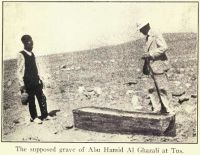 Samuel Marinus Zwemer,
A Moslem seeker after God
“ The effect of music and dancing is deeper in proportion as the nature on which they act are simple and prone to emotion; they fan into a flame whatever love is already dormant in the heart, whether it be earthly and sensual, or divine and spiritual.... ”
Elizabeth Sara Sheppard, Charles Auchester, Volume 2 (of 2…
“ Music is the soul of the drama, for the highest drama is the opera,—the highest possible is the soul, of course; and so the music should be above the other forms, and they the ministers. But most people put the music at the bottom, and think of it last in this drama. If the music be high, all rise to it; and the higher it is, the higher will all rise. So, the dramatic personification passes naturally into that spiritual height, as the forms of those we love, and their fleeting actions fraught with grace, dissolve into our strong perception of the soul we in them love and long for. ”
De Witt H. Parker, The Principles of Aesthetics
“ For when the musical meaning is specialized through the emotions that are the burden of the song, it necessarily loses the power which it would otherwise have of expressing one's own inner life—once more, what it gains in definiteness it loses in scope. It no longer possesses the unique function of the musical. ”
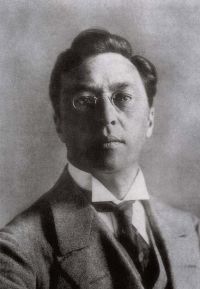 Wassily Kandinsky,
Concerning the Spiritual in Art
“ With few exceptions music has been for some centuries the art which has devoted itself not to the reproduction of natural phenomena, but rather to the expression of the artist's soul, in musical sound. ”
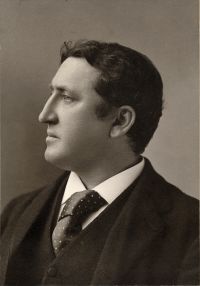 James Huneker,
Iconoclasts: A Book of Dramatists
“ It is the theatre that last feels its approach. Poetry, painting, sculpture, music, all have met it halfway; only the stage lags in the rear. Plot, action, trickeries, cheap illusions, must be swept away into the limbo of things used up. Atmosphere, the atmosphere of unuttered emotions, arrested attitudes, ideas of the spiritual subconscious, are to usurp the mechanical formulas of to-day. The ideal is music—music, the archetype of the arts. ”
author:Metta Victoria Fuller Victor, Poems of Sentiment and Imagination (1851)
“ From the gay, bright-plumed choir, or by the quick, Low, musical chattering of the small, And many habitants of the old wood— To find a flower, that half-concealed by leaves, Had bloomed unseen (so many flowers of life Are passed unheeded by, and careless feet Trample them in the dust) ; all these have tongues, That murmur in soft discourse to the heart. The very shadows on the dusty way, Changeful and restless, mock the swinging boughs That suit their motion to the fitful breeze, And whisper music to the dream-bound soul. ”
Oskar Bie, History of the pianoforte and pianoforte players (1899)
“ She feels keenly the eternal magic of invisible music which lies pillowed in silence and night. The whole scene is a hymn on the infelt soul of musical self-centredness, wherein man finds his best self. ”
Elizabeth Sara Sheppard, Charles Auchester, Volume 2 (of 2…
“ I suppose it may be that as we make the music that issues from the 291 orchestra, or from the organ where all musics mingle, so he makes the love that religion burns to utter, but that music, for the musical, alone makes manifest. All worship is sacred, but that is unutterably holy. How holy should the heart of the musician be! ”
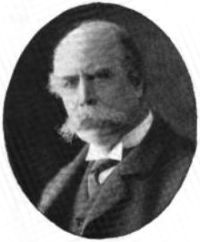 H. Sutherland Edwards,
History of the Opera from its Origin in Italy to the present Time
“ The music of an impassioned love song will seem equally appropriate as that of a fervent prayer, except to those who have already associated it intimately in their memories with the words to which it has first been written. A positive feeling of joy, or of grief, of exultation, or of depression, of liveliness, or of solemnity, can be expressed by musical means without the assistance of words, but not mixed feelings, into which several shades of sentiment enter—at least not with definiteness ”
 Vernon Lee,
Belcaro; Being Essays on Sundry Aesthetical Questions
“ With its determined relations between the audible movement and the psychical movement, it can give us only musical gesture, but never musical portrait; the gesture of composure or of violence, the solemn tread of self-possessed melody, the scuffling of frantically rushing up and down, of throbbing, quivering, gasping, passion-broken musical phrases; it can give us the rhythm which prances and tosses in victory, and the rhythm which droops, and languishes, and barely drags itself along for utter despair. ”
 Benjamin Lumley,
Another World: Fragments from the Star City of Montalluyah
“ They jump and bound, pass and repass each other, and as it were dance with joy, in a state of great excitement continuing their energetic gambols all the time the musical sound is heard, until, exhausted with their exertions, they lie down and sleep. ”
 Elizabeth Rundle Charles,
The Ravens and the Angels, with Other Stories and Parables
“ Love makes us musical. In Storms and Sunshine, Suffering and Joy, Action, Union, Life, Love is the music at the heart of all. Love makes us musical," said all the Creatures.And from the multitude before the throne, who, through fires of Tribulation and Storms of conflict, had learned the new song, and from depths of Darkness and the silence of Isolation had been brought together in the Light of Life to sing it, floated down a soft "Amen, for God is Love." ”
 Louis Couperus,
Majesty: A Novel
“ The passions on the stage unbridling themselves in swelling bursts of music, a world of music, of love and despair, of war and triumph and priestly ambition in music, all music, as though life were music, music the soul and essence of the world.... ”
 Edward Payson Roe,
Taken Alive
“ While the spirit of music so filled his heart that he could play to the moon and silent stars, an audience inspired him with tenfold power, especially if the floor was cleared or a smooth sward selected for a dance. ”
Wassily Kandinsky,
Concerning the Spiritual in Art
“ His music leads us into a realm where musical experience is a matter not of the ear but of the soul alone—and from this point begins the music of the future. ”
 Friedrich Nietzsche,
HUMAN, ALL TOO HUMAN, 'A Book For Free Spirits' Part I
(1909)
“ MUSIC.— Music is, of and in itself, not so significant for our inner world, nor so profoundly exciting, that it can be said to count as the immediate language of feeling; but its primeval union with poetry has deposited so much symbolism into rhythmic movement, into the varying strength and volume of musical sounds, that we now suppose it to speak directly to the inner world and to come from the inner world. Dramatic music becomes possible only when the tonal art has conquered an enormous domain of symbolic means, through song, opera and a hundred experiments in tone-painting. ”
Various, Graham's Magazine, Vol. XL, No…
“ And it is all en passant, all incidental to what follows, to what now bursts instantly upon the view as the back scene is withdrawn, and you see all the crowd and splendor of the ball-room, and are transported by the indescribably rich Finale, that ever climbing, widening crescendo and accumulation of all musical effects, till the climax is reached in a general storm and inundation of harmony. The simple, gay, continuous six-eight melody, to which the whole brilliant spectacle moves at first, is the very soul of festivity. ”
H. Ernest Hunt, Spirit and Music
“ This second and higher "soul" significance shows itself in the emotional appeal of the music, in the feelings it provokes and the mood it engenders. Here sound speaks in parables with an outer story and an inner meaning. The non-musical person hears sounds, but the musical mind hears sense. Whether the tidings be of sweetness, affection, or delight, of strength, vigour, or energy, of sorrow or regret, there is all the difference in the world between the outward comprehension and the inner interpretation. The formal part of the music is the frame, but the emotion supplies the picture within. ”
The Art of Music, Vol. 02 (of 14…
“ Then after reflective study of classic ideals we find him making the decisive break with all the conventionalities and traditions of ‘opera,’ thus evolving the music drama in which music, poetry and stage setting should combine in one unified art. Situations in such a drama are no longer created to afford musical opportunities, but text and music are joined in a unity of dramatic utterance of hitherto unattained eloquence. ”
Harvard Psychological Studies, Volume 2
“ And if such feeling-tones exist independently from harmony it is evident that they would enter into every melody in addition to the strictly musical feelings of harmony and that they deserve consideration as a factor of music. ”
Francis David Morice, Pindar (1879)
“ It is then the less surprising, though it is surprising still, that they were contented in their music to gratify their sense of melody and rhythm, without exploring the mines of musical enjoyment which have been opened to modern audiences by the discoverers of counterpoint and harmony. ”
H. Ernest Hunt, Spirit and Music
“ Nor need we devote much consideration to the sentimental ballads issued by the hundred, for "if music has no further function than to appeal to the emotions, then it is nothing better than melodious nonsense." [15] Of the dance and other miscellaneous music issued broadcast some, no doubt, is genuine music, but the greater part of it is avowedly commercial in tone and intention: in any spiritual scale its weight is of the lightest. ”
 George William Curtis,
From the Easy Chair, Volume 2
“ And whenever the music happens not to be of a light, trivial character, but charged with the spirit of festal pleasure, and the performers in the dance so far skilful as to betray no awkwardness verging on the ludicrous, I believe that many persons feel as I feel in such circumstances, viz., derive from the spectacle the very grandest form of passionate sadness which can belong to any spectacle whatsoever. ”
 Stewart Edward White,
The Rose Dawn
(1920)
“ The violins crooned, the rhythm beat in hot pulses, the hypnotic swing of the dancers was like a music made visible. Cheeks were flushed, eyes sparkling or dreamy. It was as though in the flag-draped, flower-hung enclosure, with its reflected lights, a new world had been created out of music and dancing, wherein people dwelt as in another element with new thoughts, new emotions informing their souls. A magic was about them that fused their diversities, lifted their fatigues. ”
 Gilbert Seldes,
The Seven Lively Arts
“ For a musical comedy, even a sentimental one, must be high-spirited in execution—that was the lesson of an unsentimental one, The Beggar’s Opera; and at the same time there must be some courage, some defiance of nature and sound sense, a feeling for fantasy, which means that the life of the spirit is high, even when the life of the body is in chains. ”
 Waldo David Frank,
Chalk face
(1924)
“ Evening, a dance. The electric lamps drive a stiff flood of light through the gold-paneled room. No air—this atmosphere is a harsh painted substance. Men and women are brittle or are cloying: their spirit is dark as if no air had ever entered them. The music is a weave of stuffs contorted, writhed, a hypocritical plea for gayety: its sinuous lies move through the hall and through the bodies of the dancers with a false laughter, with a macabre rhythm. Cynic music, substitute in this world for breath; as are the lamps for light.... And the coupled forms jerking slow in its rugose waves. ”
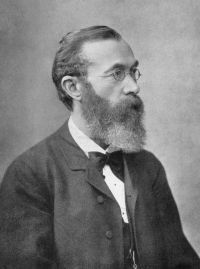 Wilhelm Max Wundt,
Elements of Folk Psychology
“ As a dependent art, however, accompanying the dance, the song, or the epic recital, it dates back to the age of primitive man. Musical art, also, received its first noteworthy stimulus from cult, as an accompaniment of the cult dance and the cult song. The strong emotions aroused by the cult activity caused a constantly increasing emphasis to be placed on the musical part of the ceremony, leading particularly to the development of melody. ”
De Witt H. Parker, The Principles of Aesthetics
“ Finally, the content of the dance may be further enriched through the use of symbolic costume and mimetic gestures, suggesting emotions like joy or love or grief, emotionally toned ideas like spring, or actions such as courtship. Now music, with its own rhythmical order and voluminous emotional content, has an obvious kinship with the rhythmic form and amorous substance of the dance, and so can well serve to accompany it. ”
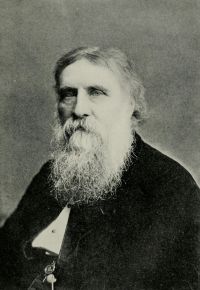 George MacDonald,
Phantastes: A Faerie Romance for Men and Women
“ The power of song came to me. But the moment my voice, though I sang low and soft, stirred the air of the hall, the dancers started; the quick interweaving crowd shook, lost its form, divided; each figure sprang to its pedestal, and stood, a self-evolving life no more, but a rigid, life-like, marble shape, with the whole form composed into the expression of a single state or act. ”
Related terms
Authors who wrote about “spiritual (musical form)”
Wassily Kandinsky Clive BellVariousWilliam HazlittDe Witt H. ParkerThomas CarlyleElizabeth Sara SheppardElizabeth Rundle Charles
 John Milton
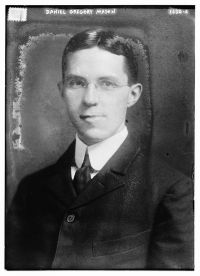 Daniel Gregory Mason
 Ralph Waldo EmersonH. Sutherland EdwardsH. Ernest HuntSamuel Marinus ZwemerOskar Bieauthor:Metta Victoria Fuller VictorJames HunekerRaymond MacDonald AldenJohn MuirLoie Fuller
