Square (geometry)

Definition and stakes

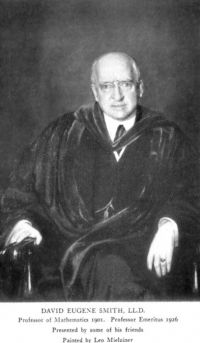
Portrait of David Eugene Smith David Eugene Smith,  The Teaching of Geometry

“ Thus we are more apt to-day to omit the oblong and rhomboid as unnecessary, and to define "rhombus" in such a manner as to include a square. We use "parallelogram" to cover "rhomboid," "rhombus," "oblong," and "square." For "oblong" we use "rectangle," letting it include square. Euclid's definition of "square" [Pg 149] illustrates his freedom in stating more attributes than are necessary, in order to make sure that the concept is clear; for he might have said that it "is that which is equilateral and has one right angle." We may profit by his method, sacrificing logic to educational necessity. ”
Source: Gutenberg

Portrait of John Phin John Phin,  The Seven Follies of Science [2nd ed…

“ As already noted, the great difficulty with most circle-squarers is that they are ignorant both of the nature of the problem to be solved and of the results which have been already attained. Sometimes we see it explained as the drawing of a square inside a circle and at other times as the drawing of a square around a circle, but both these problems are amongst the very simplest in practical geometry, the solutions being given in the sixth and seventh propositions of the Fourth Book of Euclid. ”
Source: Gutenberg

Various,  Encyclopaedia Britannica, 11th Edition…

“ If there is a unit to be found which is contained an exact number of times in each side of a rectangle, it is easily seen, and generally shown in the teaching of arithmetic, that the rectangle contains a number of unit squares equal to the product of the numbers which measure the sides, a unit square being the square on the unit line. ”
Source: Gutenberg

Get perspective with Kwize: daily news enlightened by great literature