Time dilation

Definition and stakes

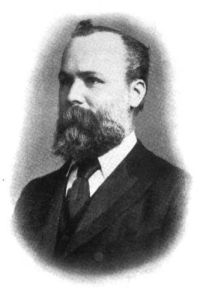
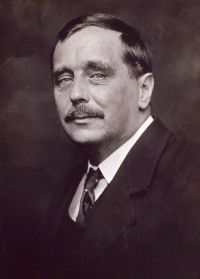
Portrait of Herbert George Wells Herbert George Wells,  The Time Machine (1895)

“ I pressed the lever over to its extreme position. The night came like the turning out of a lamp, and in another moment came to-morrow. The laboratory grew faint and hazy, then fainter and ever fainter. To-morrow night came black, then day again, night again, day again, faster and faster still. An eddying murmur filled my ears, and a strange, dumb confusedness descended on my mind.
"I am afraid I cannot convey the peculiar sensations of time travelling. They are excessively unpleasant. There is a feeling exactly like that one has upon a switchback—of a helpless headlong motion!
”
Source: Wikisource

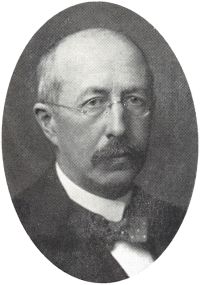
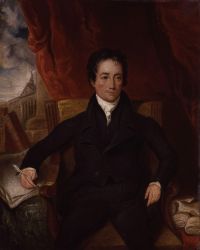
Portrait of Denison Olmsted Denison Olmsted,  Letters on Astronomy

“ If one clock is so constructed as to keep exactly with the sun, going faster or slower, according as the lengths of the solar days vary, and another clock [62] is regulated to mean time, then the difference of the two clocks, at any period, would be the equation of time for that moment. If the apparent clock were faster than the mean, then the equation of time must be subtracted; but if the apparent clock were slower than the mean, then the equation of time must be added, to give the mean time. ”
Source: Gutenberg

Arthur Hayden,  Chats on Old Clocks

“ We must commence with the known data that the earth revolves on its axis in twenty-four hours, or, to be more exact, in 23 hours 56 minutes 4 seconds. Astronomical clocks recording with scientific exactitude this phenomenon are on a plane apart, as are chronometers used by mariners. The astronomer uses a clock with numbers on its dial plate up to twenty-four; the common clock has only twelve hour numerals.
To come straight to modernity, it must be recognized that the measurement of time scientifically and the measurement of time according to civil law are two different things.
”
Source: Gutenberg

Get perspective with Kwize: daily news enlightened by great literature