Turning the other cheek
Definition and stakes
Quotes about “turning the other cheek”
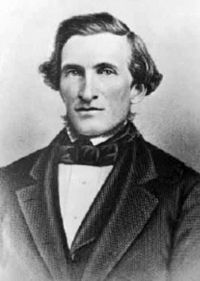 Jedediah M. Grant,
J. M. Grant's RIGDON — Part II, Elder Sidney Rigdon in Missouri
(1844)
Jedediah M. Grant,
J. M. Grant's RIGDON — Part II, Elder Sidney Rigdon in Missouri
(1844)
“ Ourcheeks have been given to the smiters—our heads to those who have plucked off the hair. We have not only, when smitten on one cheek, turned the other, but we have done it again and again, until we are wearied of being smitten, and tired of being trampled upon. ”
Bernard Capes, The story of Fifine (1914)
“ How women could let their beauty be so profaned! I had often dwelt on her profile seen against a background of silvery light or purple drapery, and loved its infinite childishness—the smooth rounded cheek, the short rather insolent nose, the upper lip projecting but the tiniest fraction of an inch over the lower, an endearing feature. ”
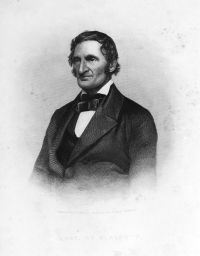 William A. Alcott,
The Young Woman's Guide
William A. Alcott,
The Young Woman's Guide
“ There are a thousand physical transgressions that dim the lustre of the eye, or sink it too deep in the socket, or flatten it, or paint a circle round it. So of the face in general. There are a thousand forms of transgression that take away the carnation of the lip and cheek, and leave unnatural hues, not to say pimples and furrows, in its stead. ”
Various, The Harmsworth Magazine, Vol. 1…
“ The immense development of the face below the brow, its enormous width between the cheek-bones, the absolute and sickening plausibility of the whole expression, the great lower jaw, the cruel callous mouth (look at this mouth closely) , and the peculiarly uncanny light blue eyes, are a collection of danger-signals that are rarely seen in one face. But his victims were probably deceived by this wretch's fat, easy, and bland manner—they stifled their instinct, and were duly poisoned. ”
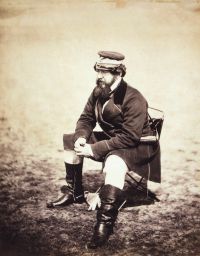 Sir William Howard Russell,
The British Expedition to the Crimea
Sir William Howard Russell,
The British Expedition to the Crimea
“ All the rougher features, the coarse nose, and the slight prominence of the cheek-bones, were more than redeemed by the quick, penetrating, and expressive eye, full of quiet courage and genius, and by the calm though rather stubborn brow, marked by lines of thought, rising above the thick shaggy eyebrow. ”
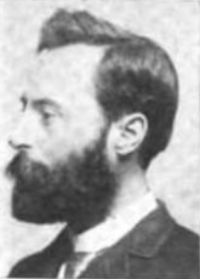 Frank Parsons,
The World's Best Books : A Key to the Treasures of Literature
Frank Parsons,
The World's Best Books : A Key to the Treasures of Literature
“ Even that beauty which is of the rounded form, the soft cheek's blooming tinge, the rosy mouth, and pearly lip, owes its debt to health; and that, as has been seen, may profit much by literature. And beyond all this we learn the means of great improvement in our comeliness,—how crooked may be changed to straight, and hollow cheeks to oval; frowns to smiles, and lean or gross to plump; ill-fitting, ill-adapted dress to beautiful attire; a shambling gait to a well-conducted walk,—and even the stupid stare of ignorance be turned to angel glances of indwelling power and interested comprehension. ”
Mrs. Alex. McVeigh Miller, Guy Kenmore's Wife, and The Rose and the Lily
“ They have grown larger and vaguely sad, the peachy cheek, rounded daintily like a child's, is pale to-day, the crimson lips have a slight, pathetic droop. Something in the softened loveliness of the brilliant face goes to his heart like a wordless reproach. ”
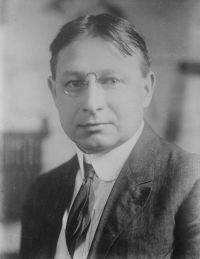 Ellis Parker Butler,
The Jack-Knife Man
Ellis Parker Butler,
The Jack-Knife Man
“ Her cheek bones were rather high and prominent and her cheeks hollow, and she had a strong chin for a woman, but the downward twist of discouragement that had marked her mouth during her later married years had already disappeared, giving place to a firmness that told she was well able to manage her own affairs. ”
T. F. Thiselton-Dyer, Domestic folk-lore
“ Pursuing our subject, we find that the cheek is not without its quota of folk-lore; for, like the ear, nose, and eye, it is considered ominous when one's cheek itches. According to Grose, "If the right cheek burns, some one is speaking to the person's advantage; if the left, to their disadvantage." One may still occasionally hear the following charm uttered by a person whose cheek suddenly burns ”
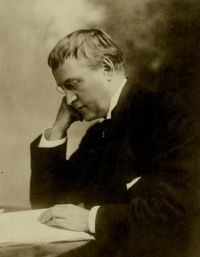 Henry T. Finck,
Romantic Love and Personal Beauty
Henry T. Finck,
Romantic Love and Personal Beauty
“ An excessive diminution in the size of the cheek-bones, as of the jaws, will be prevented by Romantic Love (Sexual Selection) , which ever aims at establishing and preserving those proportions and outlines of the features which are most in harmony with the general laws of beauty. ”
Irene Elliott Benson, Campfire Girls' Lake Camp; or, Searching for New Adventures
“ But the high cheek-bones give their faces a lumpy appearance, their mouths are generally broad, and the features irregular. Now and then, however, we meet one whose beauty is striking because of its contrast with those around. ”
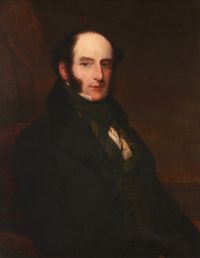 Robert Liston,
Elements of Surgery
Robert Liston,
Elements of Surgery
“ The affection may exist to a greater or less degree, being in some instances scarcely visible, and not troublesome, whilst in others, the eyelashes lie on the upper part of the cheek, and the swollen granulated conjunctiva is exposed. ”
“ Did I ever say that every single thing about me turns upwards?—my chin, nose, cheekbones, lips—all have that curly, odd, rather fascinating upward tilt, and every single hair on my head turns up at the ends. ”
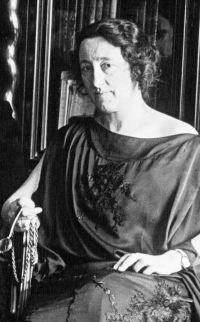 Judith Cladel,
Rodin: The Man and His Art, with Leaves from His Note-book
Judith Cladel,
Rodin: The Man and His Art, with Leaves from His Note-book
“ The surface of the cheeks extends to the extremity of the nose, forms a double depression by the sinking of the cheek, which grows hollow toward the convex lip, and surrounds the mouth and the two lips. ”
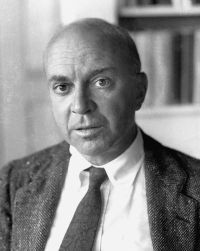 John Dos Passos,
A Pushcart at the Curb
John Dos Passos,
A Pushcart at the Curb
“ And a sweetness from the gorse on the flowerstand And brushes with his cool careless cheek the cheeks Of those on the street; mine, an old gnarled man's, The powdered cheeks of the girl who with faded eyes Stands in the shadow; a sailor's scarred brown cheeks, And a little child's, who walks along whispering To her sufficient self. ”
 Edna Ferber,
So Big
(1924)
Edna Ferber,
So Big
(1924)
“ Her cheek knew the harsh cool feel of a man’s cheek. She sensed the potent, terrifying, pungent odour of close contact—a mixture of tobacco smoke, his hair, freshly laundered linen, an indefinable body smell. ”
Juanita Helm Floyd, Women in the Life of Balzac
“ The eyebrows, strongly arched, bend over the eyes in which the fire sparkles now and again like that of fixed stars. The cheek-bones, though softly rounded, are more prominent than in most women, and confirm the impression of strength. ”
Major Richardson, Wau-nan-gee; Or, the Massacre at Chicago…
“ Yet, although her features, when lighted up by vivacity or emotion, were radiant with intelligence, their expression when in repose was of a pensive cast, that, contrasted with her general appearance, gave to it a charm, addressed at once to sense and sentiment, of which it is impossible by description to give an adequate idea. A dimpled cheek—an arm, hand, and foot, that might have served the statuary as a model, completed a person which, without exaggeration, might be deemed almost, if not wholly, faultless. ”
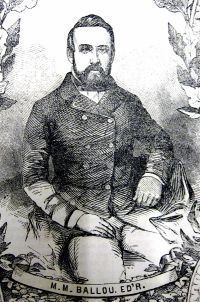 Maturin M. Ballou,
Equatorial America
Maturin M. Ballou,
Equatorial America
“ Their broad faces, high cheek-bones, low foreheads, and flat noses, their faces and necks screened by coarse black hair, did not challenge our admiration, however much we were exercised by pity for human beings in so desolate a condition. ”
J. H. Robinson, Marietta, or the Two Students (1846)
“ Where should be the nose, was seen only a blackened cavity—the cheek had sloughed off during life, and presented only a spongy and half decayed bone—around the eyes which were imperfectly closed, was a dark putrid line, while the throat was swollen, and what remained of the teeth of the lower jaw, were exposed to view, by the absence of the nether lip, which had perished as other portions of the face—yet reader, in that horrid visage she recognized her seducer. ”
Paul Barron Watson, The Swedish Revolution Under Gustavus Vasa
“ Of large frame, tall and broad-shouldered, with heavy massive face, high cheek-bones, a careworn dark blue eye, large straight nose, and compressed lips,—the under lip projecting slightly,—he would have been pointed out anywhere as a man not easily to be led. ”
Elisha Noyce, Outlines of Creation
“ The cheek-bones are small, and so are the bony arches which join them to the temples; the cheeks are full of fat, and the angles of the jaws rounded. In middle age the lower part of the forehead becomes more fully developed, the bony edges which support the eyebrows [Pg 316] project and overhang the eyes, the bridge of the nose and the nostrils become more fully formed, the space from the nose to the chin is greater, the teeth cause the lips to be pushed more forward, the lower jaw is larger, and the cheek-bones show more plainly. ”
 Fanny Fern,
Caper-Sauce: A Volume of Chit-Chat about Men…
Fanny Fern,
Caper-Sauce: A Volume of Chit-Chat about Men…
“ A rosy cheek is no longer considered "vulgar," and a fair, shapely allowance of flesh on the bones is considered the "style." Perhaps the great secret that good looks cannot exist without good health, may have had something to do with the care now taken to obtain it ”
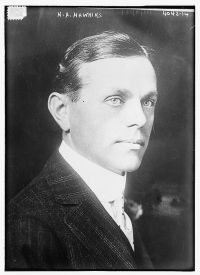 Norval A. Hawkins,
Certain Success
Norval A. Hawkins,
Certain Success
“ Tense jaw muscles, whether large or small, denote the characteristic of persistence. But loose, flabby cheek muscles do not necessarily prove the habit of over-eating, or of sensuality. They may mean that the man who has them does not habitually allow his feelings to show in his face. When the muscles of facial expression are flabby they prove only that they are slightly used. Therefore when you encounter a man with loose cheeks read his characteristics from other muscle-structure signs, and from his actions. ”
 Barry Pain,
General Observations
(1896)
Barry Pain,
General Observations
(1896)
“ For cheek is what gets you on in the world nowadays. Why, if I had the cheek of that bird, I might be the Queen of Sheba. And yet he knew where to draw the line, did William. When I got the cage down, and stood it on the table with the door open, he understood that he'd got to go back, and let me catch him and put him back without so much as a murmur. ”
Thomas William Lawson, Friday, the Thirteenth: A Novel (1907)
“ The straight, thin-nostriled nose, the broad forehead, the square, full jaw almost as low at the points where they come beneath the ears as at the chin, suggested dignity and high resolve coupled with a power of purpose, rare in woman. ”
Charles Patrick Daly, Popular Science Monthly (1877)
“ Among the men he found an extraordinary growth or enlargement of the cheek-bones under the eyes. It is in the form of horns on each side of the nose, and so long that in some instances the man had to squint violently to see at all. ”
Harry Johnston, Mrs. Warren's Daughter: A Story of the Woman's Movement
“ Your cheek—" (lifting her hand and stroking it, while David tried hard not to wince) "Your cheek's as soft and smooth as it was then, as any young girl's. Wherever you've been, the world has not treated you very bad. No one would have dreamt you'd been all the way to South Africa to them Wild Boars. But some men wear wonderful well. ”
 Jeffery Farnol,
Black Bartlemy's Treasure
Jeffery Farnol,
Black Bartlemy's Treasure
“ Often my fingers must go to feel my smooth cheeks and chin, and she, catching me, must needs laugh and vow a smooth face suited me well, and that I should be handsome were my nose another shape and my eyes a different colour. ”
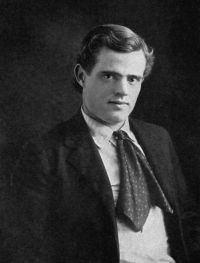 Jack London,
The Sea-Wolf
(1904)
Jack London,
The Sea-Wolf
(1904)
“ The jaw, the chin, the brow rising to a goodly height and swelling heavily above the eyes,—these, while strong in themselves, unusually strong, seemed to speak an immense vigor or virility of spirit that lay behind and beyond and out of sight. ”
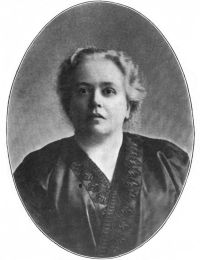
“ Cheekbones have a strange, unnatural effect when they appear in childish faces. There was a child in a rusty double perambulator that had been a stylish baby-carriage only a little while ago, whose wizened face and shrunken hands were pitiable to see. ”
 A. Mary F. Robinson,
The End of the Middle Ages: Essays and Questions in History
A. Mary F. Robinson,
The End of the Middle Ages: Essays and Questions in History
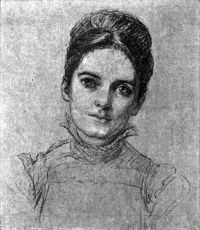
“ Under this severe coiffure we discern a serious gentle placid face—long narrow eyes, a high forehead, a full mouth with pretty pursed lips; a face too closely following the mediæval ideal for it to impress us very strongly as a likeness. ”
The Yellow Book, An Illustrated Quarterly…
“ Too long has the face been degraded from its rank as a thing of beauty to a mere vulgar index of character or emotion. We had come to troubling ourselves, not with its charm of colour and line, but with such questions as whether the lips were sensuous, the eyes full of sadness, the nose indicative of determination. I have no quarrel with physiognomy. For my own part, I believe in it. But it has tended to degrade the face æsthetically, in such wise as the study of cheirosophy has tended to degrade the hand. And the use of cosmetics, the masking of the face, will change this. ”
 Thomas Hardy,
Tess of the d'Urbervilles
(1891)
Thomas Hardy,
Tess of the d'Urbervilles
(1891)
“ She remained mute, not knowing that he was smothering his affection for her. She hardly observed that a tear descended slowly upon his cheek, a tear so large that it magnified the pores of the skin over which it rolled, like the object lens of a microscope. ”
 James Joyce,
A Portrait of the Artist as a Young Man
(1916)
James Joyce,
A Portrait of the Artist as a Young Man
(1916)
“ What did that mean, to kiss? You put your face up like that to say goodnight and then his mother put her face down. That was to kiss. His mother put her lips on his cheek; her lips were soft and they wetted his cheek; and they made a tiny little noise: kiss. Why did people do that with their two faces? ”
 Mayne Reid,
The man-eaters and other odd people
(1860)
Mayne Reid,
The man-eaters and other odd people
(1860)
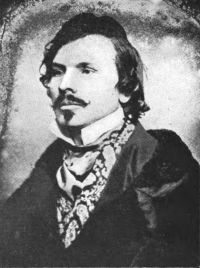
“ This prominence of the cheeks gives to their nose the appearance of being low and flat; and individuals are often seen with such high cheeks, that a ruler laid from one to the other would not touch the bridge of the nose between them! ”
Ruth Ashmore, Side Talks with Girls (1895)
“ Wrinkles upon the face are very often the result of bad passions. The mouth, my dear girl, draws down at the corners from malice; the eyes grow small by the lids coming together when one is possessed of a cunning curiosity; the chin doubles itself from gluttony, and the cheeks incline to fold over when one allows one's self to grow cross and to speak with shrill, high notes. The strain that results from speaking loudly causes the muscles of the throat to over-develop, and makes it look stringy and unfeminine. ”
 Leo Tolstoy,
The Complete Works of Lyof N. Tolstoï
(1899)
Leo Tolstoy,
The Complete Works of Lyof N. Tolstoï
(1899)
“ I became conscious that he was setting the tusks of his upper jaw into my forehead, under the hair, and those of his lower jaw in the flesh under my eyes; he shut his teeth together and began to crush me. Like knives they cut into my head. ”
C. Stansfeld Hicks, The Boy's Own Book of Indoor Games and Recreations
“ He will notice that the jaws need never be moved, and that though the lips must be in action at times, the effect is neutralised by dexterously turning the side face to the spectators on those occasions. ”
 Anton Chekhov,
Best Russian Short Stories
(1917)
Anton Chekhov,
Best Russian Short Stories
(1917)
“ Looking at her full, rosy cheeks, at her soft white neck with the black mole, and at the good naïve smile that always played on her face when something pleasant was said, the men would think, "Not so bad," and would smile too ”
 Fyodor Dostoyevsky,
The Idiot
(1874)
Fyodor Dostoyevsky,
The Idiot
(1874)
“ One of them was a young fellow of about twenty-seven, not tall, with black curling hair, and small, grey, fiery eyes. His nose was broad and flat, and he had high cheek bones; his thin lips were constantly compressed into an impudent, ironical—it might almost be called a malicious—smile; but his forehead was high and well formed, and atoned for a good deal of the ugliness of the lower part of his face. ”
Jack London,
Martin Eden
(1909)
“ They were the lips of a fighter and of a lover. They could taste the sweetness of life with relish, and they could put the sweetness aside and command life. The chin and jaw, strong and just hinting of square aggressiveness, helped the lips to command life. Strength balanced sensuousness and had upon it a tonic effect, compelling him to love beauty that was healthy and making him vibrate to sensations that were wholesome. ”
Grace Livingston Hill, Exit Betty
“ She had often contemplated cutting her own, only that her mother had begged her not to, and she realized that her hair was straight as a die and would never submit to being tortured into that alluring wave over the ear and out toward the cheekbone. ”
 Letitia Elizabeth Landon,
The Golden Violet
(1827)
Letitia Elizabeth Landon,
The Golden Violet
(1827)
“ Beautiful weakness! oh, if weak, That woman's heart should tinge her cheek! 'T is sad to change it for the strength That heart and cheek must know at length. ”
 Jerome K. Jerome,
Idle Ideas in 1905
Jerome K. Jerome,
Idle Ideas in 1905
“ The professor would also suggest a little less cheekbone. Cheekbones are being worn low this season.Will the lady have a dimpled chin, or does she fancy the square-cut jaw? Maybe the square-cut jaw and the firm, sweet mouth are more suitable for the married woman. They go well enough with the baby and the tea-urn, and the strong, proud man in the background. For the unmarried girl the dimpled chin and the rosebud mouth are, perhaps, on the whole safer. Some gentlemen are so nervous of that firm, square jaw. For the present, at all events, let us keep to the rosebud and the dimple. ”
 Ernest Hemingway,
The Sun Also Rises
(1926)
Ernest Hemingway,
The Sun Also Rises
(1926)
“ He looked at his face carefully in the glass, put a big dab of lather on each cheek-bone. “It’s an honest face. It’s a face any woman would be safe with.”“She’d never seen it.”“She should have. All women should see it. It’s a face that ought to be thrown on every screen in the country. Every woman ought to be given a copy of this face as she leaves the altar. Mothers should tell their daughters about this face. ”
Mayne Reid,
The Hunters' Feast: Conversations Around the Camp Fire
“ Once or twice I fancied that I observed a look of still stranger, still wilder expression, when the black ring forms around the eye—when the muscles twitch and quiver along gaunt, famished jaws—when men gaze guilty-like at each other. ”
Related terms
Authors who wrote about “turning the other cheek”
John Dos PassosFanny FernMrs. Alex. McVeigh MillerLetitia Elizabeth LandonGerald Stanley LeeJedediah M. GrantVariousSir William Howard RussellEllis Parker ButlerT. F. Thiselton-DyerWilliam A. AlcottFrank ParsonsRobert ListonJudith CladelEdna FerberJuanita Helm FloydMajor RichardsonHenry T. FinckBernard CapesIrene Elliott Benson