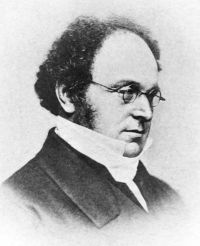
 William Arnold Anthony,
Elementary Text-book of Physics
(1897)
“ We are almost constantly obliged, in physical science, to measure the quantities with which we deal. We measure a quantity when we compare it with some standard of the same kind. A simple number expresses the result of the comparison. If we adopt arbitrary units of length, time, and mass (or quantity of matter) , we can express the measure of all other quantities in terms of these so-called fundamental units. A unit of any other quantity, thus expressed, is called a derived unit. ”