Velocity ratio

Definition and stakes

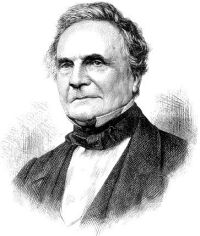
William J. M. Rankine & William E. Dalby,  1911 Encyclopædia Britannica, Volume 17… (1911)

“ Velocity Ratio of Components of Motion.—As the distance between any two points in a rigid body is invariable, the projections of their velocities upon the line joining them must be equal. Hence it follows that, if A in fig. 90 be a point in a rigid body CD, rotating round the fixed axis F, the component of the velocity of A in any direction AP parallel to the plane of rotation is equal to the total velocity of the point m, found by letting fall Fm perpendicular to AP ”
Source: Wikisource

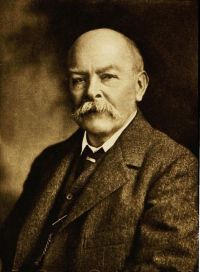
Portrait of Joshua Rose Joshua Rose,  Modern Machine-Shop Practice, Volumes I and II

“ The angular velocity of each is therefore the number of degrees of angle that it moves through in a certain portion of a revolution, or during the period that the other wheel of the pair makes a certain portion of a revolution, while the velocity ratio is the proportion existing between the velocity of one wheel and that of the other; hence if the diameter of one only of the wheels be changed, its angular velocity will be changed and the velocity ratio of the pair will be changed. ”
Source: Gutenberg

Frederick William Lanchester,  Aerodynamics, constituting the first volume of a complete work on aerial flight… (1906)

“ If, when the velocity V increases, we suppose that the layer of fluid affected to any given degree becomes thinner, and vice versa, it is clear that the viscous forces will rise in a greater ratio than directly as V, for the velocity gradient will be steeper, also the inertia forces will be less, for the mass of fluid to be set in motion will be less. It is, therefore, evident that we may suppose the thickness of the affected strata varies with the velocity in the degree necessary to preserve a balance between the viscous and inertia forces. ”
Source: Wikisource

Get perspective with Kwize: daily news enlightened by great literature