“ They wander round with pencils and jot down thoughts that come here and there at what are called moments of inspiration. The poets dream over their subjects, catch fleeting thoughts that, vague at first, sing themselves into musical expression. ”
Verbal inspiration
Definition and stakes
The theme of “verbal inspiration” has been addressed by authors such as James J. Walsh, A. I. Kuprin, Arlo Bates, Kuno Francke and Francis Thompson. It is often associated with terms like emotion, imagination, poet, poetry and thought.
Quotes about “verbal inspiration”
 A. I. Kuprin,
Yama [The Pit], a Novel in Three Parts
A. I. Kuprin,
Yama [The Pit], a Novel in Three Parts
“ But add to that the most terrible thing, that every time I have come to feel a genuine inspiration, I tormentingly feel on the spot the consciousness that I’m pretending and grimacing before people ... ”
Rita, The Mystery of a Turkish Bath
“ They say to you, oh Poet, ‘Perfect those gifts of your higher nature—yet be not of them vainglorious, since, humanly speaking, they are not yours, but lent for a purpose, and the brief space of earth-life.’ Look upon every beautiful thought, every gift of expression, as the direction of One who has dowered you with the possibility of opening other eyes to the beauty, and other minds to the understanding of such expression. ”
 Arlo Bates,
Talks on Teaching Literature
Arlo Bates,
Talks on Teaching Literature
“ The line of distinction between this and the less tangible ideas which are conveyed by form, by melody, by suggestion,—the ideas, in short, which are the secret of the inspirational effect of a work,—cannot be sharply drawn. Many of the tangible ideas will have been obvious in the reading of which the recognized purpose has been mere delight and inspiration ”
 Albert J. Beveridge,
The Young Man and the World
Albert J. Beveridge,
The Young Man and the World
“ Imagination, reason, and that peculiar human quality in speech which defies analysis as much as the perfume of the rose, but which touches the heart and reaches the mind, are blended in each of these utterances in perfect proportion. ”
 Kuno Francke,
../../
(1913)
Kuno Francke,
../../
(1913)
“ He mistook the responsive excitement produced by the ideas and visions of others for authentic inspiration, the vivacity of a sociable and conversational gift for the creative force of genius, and the immobility of obvious and established conventional judgments for an extraordinary soundness and incisiveness of fundamental analysis. ”
 Francis Thompson,
The Hound of Heaven
Francis Thompson,
The Hound of Heaven
“ The neologisms and archaic words employed in the poem seem to be a legitimate and instinctive effort of the poet's inspiration to soar above the limitations of time and to liberate itself from the transient accretions of a living, and therefore constantly changing, mode of speech. ”
 Ralph Waldo Emerson,
The Conduct of Life — Beauty
(1860)
Ralph Waldo Emerson,
The Conduct of Life — Beauty
(1860)
“ And, in chosen men and women, I find somewhat in form, speech, and manners, which is not of their person and family, but of a humane, catholic, and spiritual character, and we love them as the sky. They have a largeness of suggestion, and their face and manners carry a certain grandeur, like time and justice.The feat of the imagination is in showing the convertibility of every thing into every other thing. ”
Jane Campbell, Florence Earle Coates (1895)
“ There remain, however, poetic springs deep in human consciousness; and though thought and sentiment may be intelligently expressed in prose, it is the welding of thought to rhythm, the union of the pleasures of intellect and of sense which appeal most strongly to our perception of the beautiful. ”
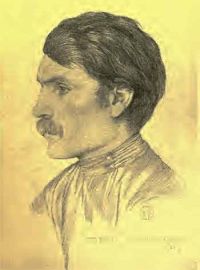 Stephen Graham,
The Way of Martha and the Way of Mary
Stephen Graham,
The Way of Martha and the Way of Mary
“ And when we find words continually adding themselves to our vocabulary and our culture, we know ourselves increasing in the knowledge of ourselves and of the beauty and passion which lie latent in our souls. ”
 Agnes Repplier,
Compromises
(1904)
Agnes Repplier,
Compromises
(1904)
“ When the impetus of a profound and powerful emotion, the mighty will of a great event finds expression in literature,—or at least in letters,—the writer’s mind speeds like a greyhound along the track of public sentiment. ”
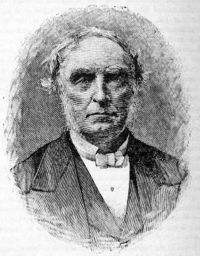 James Legge,
Sacred Books of the East
(1879)
James Legge,
Sacred Books of the East
(1879)
“ Thought cherished in the mind becomes earnest; then expressed in words, it becomes poetry. The feelings move inwardly, and are embodied in words. When words are insufficient for them, recourse is had to sighs and exclamations. ”
Jane Campbell, Florence Earle Coates (1895)
“ When the world was young, when men were untrammeled by the conventionalities that come of age, knowledge and experience, speech became instinctively poetic in its endeavor to express feelings, hopes, desires and passions, and necessarily borrowed its imagery from the varying phenomena of nature. ”
 Walter Alexander Raleigh,
Six Essays on Johnson
(1910)
Walter Alexander Raleigh,
Six Essays on Johnson
(1910)
“ When it becomes necessary, as a guarantee of sincerity and knowledge, to exhibit in full all that is implied in a general statement, he reverses his favourite method, and permits his imagination to expatiate on his material with all the visionary activity of poetry. ”
Carl Gustav Jung, Psychology of the Unconscious… (1916)
“ The importance of this instinct upon human life is clearly revealed by the great place given to it under the name of love in art, literature, poetry, romance and all beauty from the beginning of recorded time. ”
Edwin E. Slosson, Major Prophets of To-Day
“ First, verbal beauty, then the contemplation and passionate depiction of what really exists around us and in ourselves, that is to say, nature and feeling, and, finally, enveloping the entire work and creating its own atmosphere, the idea which the poet has of the unknown in which float the beings and things he evokes, of the mystery which dominates them and judges them and presides over their destinies. ”
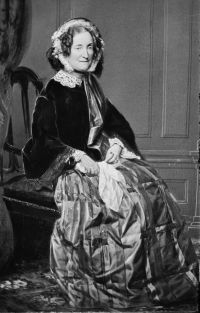 Lydia Sigourney,
Moral Pieces in Prose and Verse
(1815)
Lydia Sigourney,
Moral Pieces in Prose and Verse
(1815)
“ It is in the writings of these illustrious characters that we find originality of thought, justice of sentiment, and force of reasoning, occasionally elevating our conceptions, convincing our judgments, and softening our feelings. Many more examples might be adduced of those who prefer the exercise of composition to that of conversation, and who, in silently meditating upon some rational subject, and in recording the spontaneous flow of ideas and reflections, have felt a silent satisfaction, and an enlargement of mind, never found among the restraints, or the gaieties of society. ”
Various, Blackwood's Edinburgh Magazine…
“ A fine skill in apprehending the secret relations of Thought with Thought—relations along which the mind moves with creative power, to find out for its own use, and for the use of all minds to come, some hitherto uncreated expression of an idea—an image—a sentiment—a passion! ”
William Hazlitt, The Collected Works of William Hazlitt…
“ But it adopts the language of imagination, mimics her voice and gestures, conforms to her style by a continued profusion of figure and personification, and is full of that eloquence which consists in telling your mind freely, and which carries the hearer along with it, because you never seem to doubt for a moment of his sympathy, or that he does not take as great an interest in the question as you do. ”
 Ben Jonson,
Discoveries Made Upon Men and Matter and Some Poems
Ben Jonson,
Discoveries Made Upon Men and Matter and Some Poems
“ It springs out of the most retired and inmost parts of us, and is the image of the parent of it, the mind. No glass renders a man’s form or likeness so true as his speech. Nay, it is likened to a man; and as we consider feature and composition in a man, so words in language; in the greatness, aptness, sound structure, and harmony of it. ”
 William Graham Sumner,
Earth-Hunger and Other Essays
(1913)
William Graham Sumner,
Earth-Hunger and Other Essays
(1913)
“ Poetry and other forms of the fine arts express sentiments, states of mind, and emotional reactions on experience. As new stimuli they affect the imagination and produce new states of thought and emotion. ”
 Joseph Conrad,
Notes on My Books — Preface
Joseph Conrad,
Notes on My Books — Preface
“ Fiction—if it at all aspires to be art—appeals to temperament. And in truth it must be, like painting, like music, like all art, the appeal of one temperament to all the other innumerable temperaments whose subtle and resistless power endows passing events with their true meaning, and creates the moral, the emotional atmosphere of the place and time. ”
 Elizabeth Robins Pennell,
Mary Wollstonecraft
Elizabeth Robins Pennell,
Mary Wollstonecraft
“ These emotions, more or less strong, appear to me to be the distinctive characteristics of genius, the foundation of taste, and of that exquisite relish for the beauties of nature, of which the common herd of eaters and drinkers and child-begetters certainly have no idea. You will smile at an observation that has just occurred to me: I consider those minds as the most strong and original whose imagination acts as the stimulus to their senses. ”
 Walter Pater,
Appreciations, with an Essay on Style
Walter Pater,
Appreciations, with an Essay on Style
“ What are the qualities in things and persons which he values, the impression and sense of which he can convey to others, in an extraordinary way? An intimate consciousness of the expression of natural things, which weighs, listens, penetrates, where the earlier mind passed roughly by, is a large element in the complexion of modern poetry. It has been remarked as a fact in mental history again and again. It reveals itself in many forms; but is strongest and most attractive in what is strongest and most attractive in modern literature. ”
Lewis E. Gates, Three studies in literature (1899)
“ Moreover, the poet’s style is itself in general the product of the same personality which determines his image of life, and must therefore be, like his image of life, delicately striated with the markings of his play of thought and feeling and fancy. ”
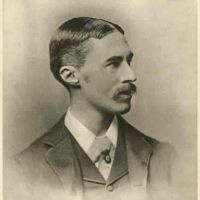 A. E. Housman,
A Shropshire Lad
A. E. Housman,
A Shropshire Lad
“ With a broader and deeper background of experience and environment, which by some divine special privilege belongs to the poetic imagination, it is easier to set apart and contrast these opposing words and sympathies in a poet ”

“ In the great ones the style is the outcome of the subject. Each emotion has its own form of expression. The language of passion is intense; of pleasure jocund, easy, abundant; of content calm, of happiness strong but restrained; of love warm, tender. The language of artificial feeling is artificial; there is no mistaking insincerity when a writer is not sincere, and the language of true feeling is equally unmistakable. ”
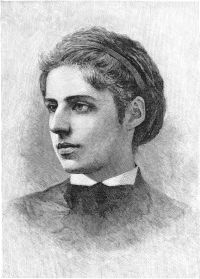 Emma Lazarus,
The Poems of Emma Lazarus, Volume 1
Emma Lazarus,
The Poems of Emma Lazarus, Volume 1
“ While sounding no absolutely new note in the world, she yet makes us aware of a talent of unusual distinction, and a highly endowed nature,—a sort of tact of sentiment and expression, an instinct of the true and beautiful, and that quick intuition which is like second-sight in its sensitiveness to apprehend and respond to external stimulus. ”
Thomas Sheridan, A Discourse Being Introductory to his Course of Lectures on Elocution and the English Language…
“ In proportion to the exertion of the powers of the intellect, or the imagination, the various emotions of the mind, the different degrees of sensibility, and all the feelings of the heart; they will find, upon searching for them, that in the human frame there are tones, looks, and gestures of such efficacy, as not only to make all these obvious, but to transfuse all those operations, energies, and emotions into others: without which, indeed, the mere communication of ideas would be attended with but little delight. ”
Alfred M. Williams, Studies in Folk-Song and Popular Poetry
“ At the same time this very imperfection of speech, and the struggle of primitive thought to express itself in language sometimes creates, as it were by accident, the very flower of strength and vividness in picturesque description, and the interpretation of emotion as the most skillful art has been unable to do. ”
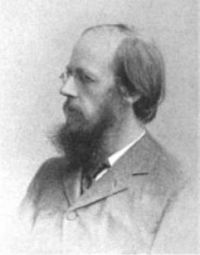 C. H. Herford,
Shakespeare's treatment of love & marriage…
(1921)
C. H. Herford,
Shakespeare's treatment of love & marriage…
(1921)
“ How is the gift of imaginative creation affected by the presence in the same mind of one or other of the spiritual energies which have a different, even an alien, perhaps incompatible, aim or goal; or simply by a bias of ingrained ethical habitudes or ideals? What terms does poetry make with philosophy, or religion, or patriotism, or politics, or love, when one of these is urgent, also, in the mind of a poet? ”
 Annie Payson Call,
Power Through Repose
Annie Payson Call,
Power Through Repose
“ Deep study and care are necessary for the best development of these faculties; but the nerves must be left free to be guided to the true expression,—neither allowed to vibrate to the ecstatic delight of the impressions, or in mistaken sympathy with them, but kept clear as conductors of all the heart can feel and the mind understand in the character or poem to be interpreted. ”
W. W. Greg, Pastoral Poetry & Pastoral Drama
“ Rather is its importance to be sought in the fact that the form is the expression of instincts and impulses deep-rooted in the nature of humanity, which, while affecting the whole course of literature, at times evince themselves most clearly and articulately here ”
 Fanny Kemble,
Records of a Girlhood
Fanny Kemble,
Records of a Girlhood
“ It is surprising (talking of E——) how instantaneously, and by what subtle, indescribable means, certain qualities of individual natures make themselves felt—refinement, imagination, poetical sensibility. People's voices, looks, and gestures betray these so unconsciously; and I think more by the manner, a great deal, than the matter of their speech. Refinement, particularly, is a wonderfully subtle, penetrating element; nothing is so positive in its effect, and nothing so completely escapes analysis and defies description. ”
 Carleton Noyes,
The Harvard Classics Vol. 51
(1914)
Carleton Noyes,
The Harvard Classics Vol. 51
(1914)
“ He marshals the fragments of experience into a harmony with which we may link up our own broken efforts; disclosing the inner meaning of our blind purposes, he brings them into a unity of direction and achievement. So he reveals us to ourselves. As the poet interprets it for us, the big scheme of things is seen to be more beautiful and more intelligible. ”
Mrs. Chapone, Letters on the Improvement of the Mind…
“ Would you be of the number of those blessed, "who are pure in heart," you must hate and avoid every thing, both in books and in conversation, that conveys impure ideas, however neatly clothed in decent language, or recommended to your taste by pretended refinements, and tender sentiments—by elegance of style, or force of wit and genius. ”
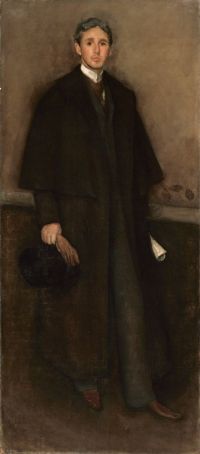 Arthur Jerome Eddy,
Cubists and Post-Impressionism
Arthur Jerome Eddy,
Cubists and Post-Impressionism
“ In order that the inner element which at first exists only as an emotion, may develop into work, the second element—the outer is used as the embodiment. Therefore emotion is always seeking means of expression, seeking a material form, a form that can stir the senses. ”
 Margaret Fuller,
Woman in the Nineteenth Century
Margaret Fuller,
Woman in the Nineteenth Century
“ It is with just that hope that we welcome everything that tends to strengthen the fibre and develop the nature on more sides. When the intellect and affections are in harmony; when intellectual consciousness is calm and deep; inspiration will not be confounded with fancy. ”
 Arthur Christopher Benson,
Memoirs of Arthur Hamilton, B. A. of Trinity College…
Arthur Christopher Benson,
Memoirs of Arthur Hamilton, B. A. of Trinity College…
“ But there is a temperament called the Reflective, which works slowly, and with little apparent result. The very gift of expression is a practical gift: with the gift of expression the reflective man becomes a writer, a poet, an artist ”
Richard Hurd, The works of Richard Hurd, volume 1…
“ To draw after the life, in any given conjuncture, the poet must recollect (which may easily be done by consulting with his own conscious experience) that peculiar disposition of mind, into which the speaker is, of necessity, carried by the circumstances of his situation. And the sentiments, which give the image of this peculiar disposition, are the genuine lineaments of the character intended. ”
Ralcy Husted Bell, The Mystery of Words (1924)
“ He becomes conscious for a moment of some old creative power that has lain dormant. His understanding quickens: wisdom stirs in his brain and blossoms from his lips. New ideas, fresh imagery, new-born concepts and emotions must find suitable signs to represent them in the objective world, since the word itself must remain forever subjective. ”
Laura Fry Kready, A Study of Fairy Tales (1916)
“ It requires that an emotional harmony be secured by a selection and arrangement of the melody of words and of the emotional associations which, together with the meanings, are tied up in words. It demands that words have the power of perfect adaptation to the thought and feeling they express, that words have both the power of denotation and of connotation. It appeals to the aesthetic sense of the reader or listener, it gives to form beauty and charm. Personality is the influence of the author, the charm of individuality, and suggests the character of the writer. ”
Various, The Little Review, December 1914…
“ Latterly two voices have come to me, one affirming that I was right in my prejudice that all durable verse should have content as well as form, should have meaning as well as sound—though in closest union with the sound,—that, in short, the poet should be a thinker as well as a craftsman; an emotional thinker, of course, if that term be permitted, but not a mere clairaudient wielder of words. And then I heard a voice which bid me forget all that and list to Long breaths, in a green and yellow din. ”
“ But along with delicacy of diction, force and felicity of expression, pregnancy of phrase and pliancy of language, what knowledge there is of men—the passions that sway, the impulses that prompt, the motives that move them to action. Clearness of vision and accuracy of observation are evidenced in their vividness of imagery; naturalness and truthfulness—the first essential of all good writing—in their{62} convincing sincerity of sentiment. ”