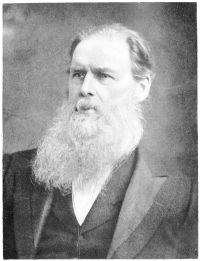
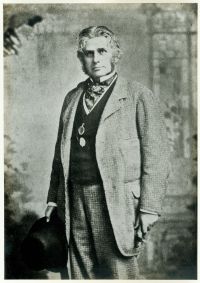
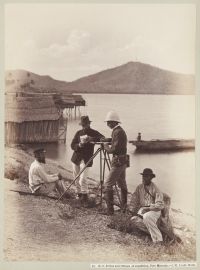
 Henry Ogg Forbes,
A Hand-book to the Primates — Extinct Anthropoidea
(1894)
Henry Ogg Forbes,
A Hand-book to the Primates — Extinct Anthropoidea
(1894)
“ As these fossil human remains are now admitted to be of the Palæolithic age of the Pleistocene period, they give some idea of "the rate of evolution of the human species, and indicate that it has not taken place at a much faster or slower pace than that of other Mammalia. And if that is so, we are warranted in the supposition that the genus Homo, if not the species which the courtesy or the irony of naturalists has dubbed sapiens, was represented in Pliocene or even Miocene times.... There is no reason to suppose that the genus Homo was confined to Europe in the Pleistocene age ”