Confrontation Clause

Definition and stakes

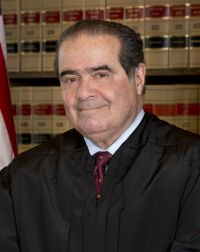
Clarence Thomas,  White v. Illinois — Opinion of the Court

“ The United States, as amicus curiae, has suggested that the Confrontation Clause should apply only to those persons who provide in-court testimony or the functional equivalent, such as affidavits, depositions, or confessions that are made in contemplation of legal proceedings. This interpretation is in some ways more consistent with the text and history of the Clause than our current jurisprudence, and it is largely consistent with our cases. ”
Source: Wikisource

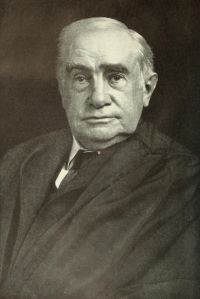
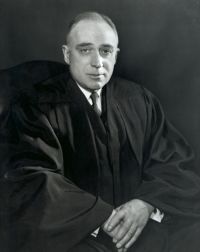
Portrait of John Marshall Harlan II John Marshall Harlan II,  California v. Green — Concurrence

“ As the Court's opinion suggests, the Confrontation Clause comes to us on faded parchment. History seems to give us very little insight into the intended scope of the Sixth Amendment Confrontation Clause. Commentators have been prone to slide too easily from confrontation to cross-examination.
Against this amorphous backdrop I reach two conclusions. First, the Confrontation Clause of the Sixth Amendment reaches no farther than to require the prosecution to produce and available witness whose declarations it seeks to use in a criminal trial.
”
Source: Wikisource

Portrait of John Marshall Harlan II John Marshall Harlan II,  California v. Green — Concurrence

“ Notwithstanding language that appears to equate the Confrontation Clause with a right to cross-examine, and, by implication, exclude hearsay, the early holdings and dicta can, I think, only be harmonized by viewing the confrontation guarantee as being confined to an availability rule, one that requires the production of a witness when he is available to testify. ”
Source: Wikisource

Get perspective with Kwize: daily news enlightened by great literature