Epsom salt

Definition and stakes

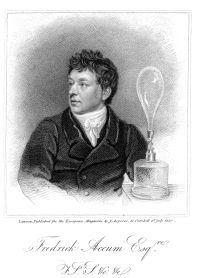
Portrait of John Ayrton Paris John Ayrton Paris,  Pharmacologia

“ Epsom salt, as it commonly occurs, contains muriate of magnesia, which disposes it to deliquesce, but lately this salt has appeared in the market in a state of great purity and beauty; the mode of purification is founded upon the well known chemical law, that a saturated solution of one salt is still capable of dissolving another; in the present instance, therefore, the impure crystals are washed in a saturated solution of the same sulphate, which, although unable to act upon its kindred salt, can dissolve with facility the muriate, and any other saline contamination. ”

Source: Gutenberg

Portrait of John Ayrton Paris John Ayrton Paris,  Pharmacologia

“ I confess, however, that I am induced to regard this process as rather chemically ingenious than as medicinally useful, for the usual saline impurities of Epsom salt are not only harmless, but capable of increasing its purgative powers; the double refined sulphate is certainly less efficient as a cathartic. The presence of the muriate may be at once detected by dropping upon the suspected sample some sulphuric acid, by which the disengagement of muriatic acid vapour will be produced. ”
Source: Gutenberg

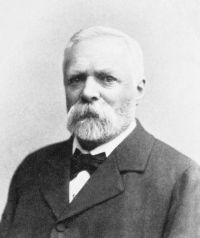
Thomas Henry,  Experiments and Observations on the Following Subjects

“ To the first assertion I shall only reply, that every person at all conversant in chemistry knows that Magnesia earth is the same, from whatever substance it can be separated in a pure state; that the factitious Epsom salt yields it in as great a degree of purity as the salt of the Epsom water, and that Dr. Alston assures us, the artificial salt "by various and repeated experiments, made in France as well as in Britain, is demonstrated to be every way as good as, yea to be the very same with, the genuine made of the Epsom waters." ”
Source: Gutenberg

Get perspective with Kwize: daily news enlightened by great literature