“ Ireland, whose head is ever turned over her shoulder, looking to the past, has, in her folk song, at least, reason and justification for her preoccupation with what has been in her music, rather than with what is, or is to come. It is difficult to reconcile the eternal beauty of traditional Irish melody with the lack of musical interest and feeling that distinguishes the mass of modern Irish life. ”
Irish traditional music
Definition and stakes
The theme of “Irish traditional music” has been addressed by authors such as P. W. Joyce, Sir Charles Gavan Duffy, Hugh Graham, traditional and Thomas Davis. It is often associated with terms like Ireland, people, poetry, ballad and harp.
Quotes about “Irish traditional music”
Douglas Hyde, A Literary History of Ireland, from Earliest Times to the Present Day
“ An almost universal acquaintance with a traditional literature was a leading trait amongst the Irish down to the last century, when every barony and almost every townland still possessed its poet and reciter, and song, recitation, music, and oratory were the recognised amusements of nearly the whole population. ”
 George William Russell,
Imaginations and Reveries
“ The harp strings quiver for the harp-player alone, and he who can utter his passion through the violin is silent before an unfamiliar instrument. That is why the Irish have rarely been deeply stirred by English literature, though it is one of the great literatures of the world. Our history was different and the evolutionary product was a peculiarity of character, and the strings of our being vibrate most in ecstasy when the music evokes ancestral moods or embodies emotions akin to these. I am not going to argue the comparative worth of the Gaelic and English tradition. ”
American-Irish Historical Society, The journal of the American-Irish Historical Society…
“ This is probably due in great measure to the fact that most of the immigrant Irish brought with them the rich, rare brogue of their fatherland, and the others the cultivated voice of the educated Irishman, both full of music and “sweet as the dying note of a broken harp string”—a music, whose soft, pervasive tones have added an indescribable charm to the spoken word that the stern hills of New England rarely knew, but which in time they have felt the touch of. ”
Douglas Hyde, A Literary History of Ireland, from Earliest Times to the Present Day
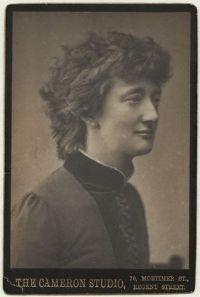
“ This is to my mind perhaps the sweetest creation of all Irish literature, the real glory of the modern Irish nation, and of the Scottish Highlands, this is the truest note of the enchanting Celtic siren, and he who has once heard it and remains deaf to its charm can have little heart for song or soul for music. The Gaelic poetry of the last two centuries both in Ireland and in the Highlands is probably the most sensuous attempt to convey music in words, ever made by man. ”
 Alice Stopford Green,
Irish Nationality
“ A slight inequality in a village field in Meath still after a hundred and fifty years recalls to Irish peasants the site of the house where he was born, and at his death English and Irish, Protestant and Catholic, gathered in an encampment of tents to do honour to his name. The magic of Irish music seems even to have stirred in the landlords' parliament some dim sense of a national boast. An English nobleman coming to the parliament with a Welsh harper claimed that in all Ireland no such music could be heard. ”
Hugh Graham, The Early Irish Monastic Schools
“ Music constituted an important element in Irish culture both in pagan and in Christian times. Hectateus, the great geographer quoted by Diodorus, is the first who mentions the name Celt and he describes the Celts of Ireland as singing songs in praise of Apollo and playing melodiously on the harp (c. 500 B.C.) . [415] Native Irish literature abounds in reference to music and musicians who were always spoken of in terms of the highest respect. Everywhere through these ancient records we find evidence that the Irish people both high and low were passionately fond of music. ”
 William Carleton,
The Ned M'Keown Stories
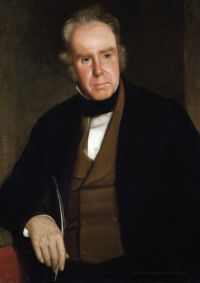
“ The Irish, however, are naturally a refined people; but by this I mean the refinement which appreciates and cherishes whatever there is in nature, as manifested through the influence of the softer arts of music and poetry. The effect of music upon the Irish heart I ought to know well, and no man need tell me that a barbarous or cruel people ever possessed national music that was beautiful and pathetic. The music of any nation is the manifestation of its general feeling, and not that which creates it ”
American-Irish Historical Society, The journal of the American-Irish Historical Society…
“ We do not lack for solo artists of merit and skill, but in choral music we have not done all we could. In Ireland a modern school of composers is doing work of which we know little here. The mending of this should be a first step in the Irish musical renaissance. If we find poets to write the books and lyrics, and musicians to compose the vibrant measures to fit them, we must have singers to interpret them and instrumentalists to give them the breadth and depth of the full artistic inspiration. ”
M. F. Mansfield, Romantic Ireland; volume 2/2
“ Of the passionate attachment of the Irish for music, little need be said, as this is one of the national characteristics which has been at all times most strongly marked, and is still most widely appreciated, the harp being universally held as a national emblem of Ireland. Even in the prechristian period that we are here reviewing, music was an institution and a power in Erin. ”
Various, The International Monthly, Volume 5…
“ The Irish Melodies, too—exquisite as is their word-music—fanciful as is their conception—delightful as is their playfulness, and touching as is their pathos—even the Irish Melodies, we believe are declining in popular estimation. The reasons are obvious. In the first place, the Irish Melodies are not particularly Irish; they have grace, sparkling fancy, delicious feeling; but they are too fine-spun to do the work-a-day duty of popular songs. ”
P. S. O'Hegarty, Sinn Fein: An Illumination
“ And the language brought with it old ideas, old values, old traditions. There is in the very sound of Irish music a quality which wipes out at once the whole of the nineteenth century and brings one face to face with the days when Ireland had an individuality and a proud civilisation: the roots of the language are away back in the very golden age of Irish civilisation; [Pg 11] and the enthusiast who began with the language has been irresistibly impelled to a quest which embraces many things besides, industries, games, government—everything which concerns a Nation. ”
The art of music, Vol. 05 (of 14… (1915)
“ The long drawn cadences are hard to render honestly; in their excess of feeling they are apt to sound insincere. They lack the clear-cut statement which makes the Scotch songs so unfailingly true to the highest demands of art. Yet the folk-song of Ireland is a product of which any nation might be proud. And, on the whole, the folk-music of the British Isles is their worthiest contribution to musical literature. In former ages these islands were not inferior to any country in Europe in musical vigor. ”
Joseph Robinette Biden, Proclamation 10151 - Irish-American Heritage Month… (2021)
“ We owe a debt of gratitude to the Irish-American inventors and entrepreneurs who helped define America as the land of opportunity. Irish-American writers pollinated America’s literary landscape with their love of language and storytelling, while Irish lyricism has brought poetry, art, music, and dance to nourish our hearts and souls. ”
Barlow Cumberland, History of the Union Jack and Flags of the Empire
“ The minstrelsy of the Irish harper has held sway and been cherished through all the ages by the Irish people, whose temperament may have been affected, or else has been most touchingly expressed, by its strange and mystic cadences. The sweet pathos of these ancient melodies has given tone and inspiration to most of the Irish songs, markedly to those of the sweet singer Moore, whose music has installed in affectionate memory, "The harp that once through Tara's halls The soul of music shed." ”
Thomas Davis, Thomas Davis, selections from his prose and poetry
“ Yet Banim, and Griffin, and Furlong, Lover and Ferguson, Drennan and Callanan, have written ballads and songs as true to Ireland as ever MacNeill's or Conyngham's were to Scotland; and firmly do we hope to see with every second lad in Ireland a volume of honest, noble, Irish ballads, as well thumbed as a Lowland Burns or a French Beranger, and sweetly shall yet come to us from every milking-field and harvest-home songs not too proudly joined to the sweetest music in the world. ”
 Lady Morgan,
The Wild Irish Girl: A National Tale
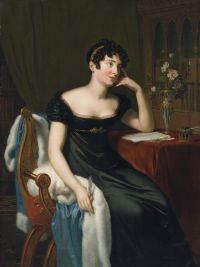
“ A thousand times the dream of short slumbers gives her to my arms as I last beheld her. A thousand times I am awakened from a heavy unrefreshing sleep by the fancied sound of her harp and voice. There was one old Irish air she used to sing like an angel, and in the idiom of her national music sighed out certain passages with a heart-breaking thrill, that used to rend my very soul! Well, this song I cannot send from my memory; it breathes around me, it dies upon my ear, and in the weakness of emotion I weep—weep like a child. ”
 P. W. Joyce,
A Reading Book in Irish History
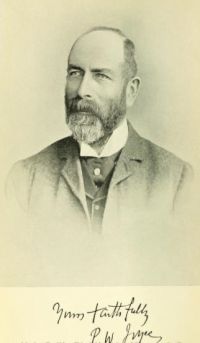
“ In our oldest manuscript books, music is continually mentioned: and musicians are spoken of with respect and admiration. [Pg 209] The two chief instruments used in Ireland were the harp and the bagpipe. The harp was the favourite with the higher classes, many of whom played it as an accomplishment, as people now play the piano. The professional Irish harpers were more skilful, and could play better, than those of any other country: so that for hundreds of years it was the custom for the musicians of Great Britain to visit Ireland in order to finish their musical education ”
Various, The Irish Penny Journal, Vol. 1 No…
“ Music and dancing being in fact as dependent the one on the other as cause and effect, it requires little argument to prove that the Irish, who are so sensitively alive to the one, should in a very high degree excel at the other; and accordingly it is so.Nobody, unless one who has seen and also felt it, can conceive the incredible, nay, the inexplicable exhilaration of the heart, which a dance communicates to the peasantry of Ireland. ”
Thomas Davis, Thomas Davis, selections from his prose and poetry
“ And now, reader, if these kaleidoscope glimpses we have given you have made you doubt between a summer in Ireland and one abroad, give your country "the benefit of the doubt," as the lawyers say, and boat on our lake or dive into our glens and ruins, wonder at the basalt coast of Antrim, and soften your heart between the banks of the Blackwater. IRISH MUSIC AND POETRY. No enemy speaks slightingly of Irish Music, and no friend need fear to boast of it. It is without a rival. ”
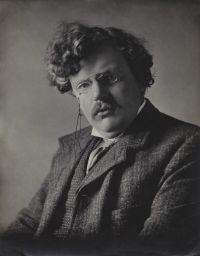 Gilbert Keith Chesterton,
Irish Impressions
(1919)
“ The shortest way of stating the truth is to say that poetry plays the part of music. It is in every sense of the phrase a social function. A poetical evening is as natural as a musical evening; and being as natural it becomes what is called artificial. As in some circles "Do you play?" is rather "Don't you play?" these Irish circles would be surprised because a man did not recite rather than because he did. A hostile critic, especially an Irish critic, might possibly say that the Irish are poetical because they are not sufficiently musical. ”
“ During these early years of the century, my sister and I, with a solid backing from our various relations, instituted a choral class in the village of Castle Townshend. It flourished for several years; we discovered no phenomenal genius, but we did undoubtedly find a great deal of genuine musical feeling. It is worth mentioning that, in our experience, the gift of untrained Irish singers is rhythm. ”
Sir Michael McDonnell, Ireland and the Home Rule Movement
“ The temperance work done by the Gaelic League in providing occupation of a pleasant nature and social intercourse of a harmless kind is one of its chief titles to distinction, for in this aspect it has encouraged the preservation of Irish songs, music, dances, and games. ”
Various, The Catholic World, Vol. 26, October…
“ It is through them alone that the voice of the Irish people of their day can be heard. All other forms of the expression of the oppressed race have perished. In the music and poetry of Ireland is made manifest, so that the dullest ear cannot mistake it, the sorrow of a nation in bondage, tinging all mirth, all hope, and all love with an indefinable cadence of melancholy as plainly as in the real outbursts of lamentation and despairing cries of woe. ”
Augustus J. Thébaud, The Irish Race in the Past and the Present
“ As long as the nation retained its autonomy, the harp was a universal instrument among the inhabitants of Erin. It was found in every house; it was heard wherever you met a few people gathered together. Studied so universally, so completely and perfectly, it gave Irish music in the middle ages a superiority over that of all other nations. It is Cambrensis who remarks that "the attention of these people to musical instruments is worthy of praise, in which their skill is, beyond comparison, superior to any other people ”
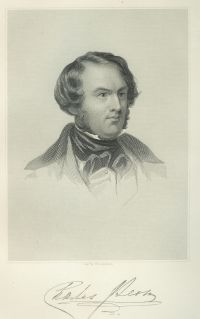 Charles James Lever,
Nuts and Nutcrackers
“ If we wished a set of Irish quadrilles, how many good and suitable airs had we not ready at our hands? Is not our national music proverbially rich, and in the very character of music that would suit us? ”
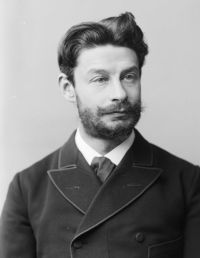 Georg Brandes,
Main Currents in Nineteenth Century Literature - 4…
“ Nor is there a single simile in the beautiful little song which, in spite of its brevity, has for Ireland all the significance of a national epic—the simple song of the lovely young girl who, though adorned with precious jewels and with a beauty still more alluring, went without fear from one end of Ireland to the other, knowing that Erin's sons, "though they love woman and golden store," love honour and virtue more. ("Rich and rare were the gems she wore.") Of the man who wrote such a song Byron might safely assert: "Moore's Irish Melodies will go down to posterity with their music ”
Sir Charles Gavan Duffy, The Revival of Irish Literature
“ Not only has the national instrument, the harp—which efforts are now being made to revive in the Highlands—become extinct, but even the Irish pipes are threatened with the same fate. In place of [Pg 155] the pipers and fiddlers who, even twenty years ago, were comparatively common, we are now in many places menaced by the German band and the barrel organ. Something should be done to keep the native pipes and the native airs amongst us still. If Ireland loses her music she loses what is, after her Gaelic language and literature, her most valuable and most characteristic possession. ”
Hugh Graham, The Early Irish Monastic Schools
“ Figures of men playing the harp are common on the stone crosses seen at Graig, Ullard, [Pg 151] Clonmacnoise, Durrow and Monasterboice, as also on the shrines of ancient reliquaries. [425] It appears from several authorities that the practice of playing on the harp as an accompaniment to the voice was common in Ireland as early as the fifth or sixth century. [426] During the long period when learning flourished Irish professors and teachers of music would seem to have been quite as much in request as teachers of literature and philosophy. ”
Norman Moore, Dictionary of National Biography… (1895)
“ Numerous current stories of her adventures are unsupported by records. An old tune, known to all Irish fiddlers and pipers, is called after her, and is printed in Bunting's 'Ancient Music of Ireland.' In the south of Ireland it was regarded as a tune proper to the catholic interest, as is shown in Gerald Griffin's [q. v.] ”
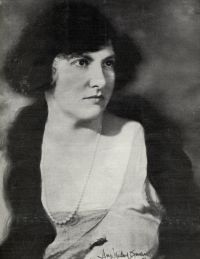 Marion Bauer,
How music grew
(1925)
“ Irish Folk Songs No people in the world have more fancy and imagination, a keener sense of humor, are more fun-loving and more superstitious than the Irish. All these qualities come out in their vast treasure of folk music, which is considered the most beautiful and the most varied of all the music that has come from peasant folk. ”
Lady Morgan,
The Wild Irish Girl: A National Tale
“ And if the peculiar favour of the god of Poetry and Song may be esteemed a sufficient proof, it is certain that our claims are not weak. For surely no nation under heaven was ever more enthusiastically attached to poetry and music than the Irish. ”
Various, The Irish Penny Journal, Vol. 1 No…
“ It is a work which assuredly will never die. To its venerable Editor, Ireland owes a deep feeling of gratitude, as the zealous and enthusiastic collector and preserver of her music in all its characteristic beauty ”
Thomas Davis, Thomas Davis, selections from his prose and poetry
“ Not that we were without composers, but those we have do not compose Irish-like music, nor for Ireland. Their rewards are from a foreign public—their fame, we fear, will suffer from alienage. Balfe is very sweet, and Rooke very emphatic, but not one passion or association in Ireland's heart would answer to their songs. ”
Related terms
Authors who wrote about “Irish traditional music”
P. W. JoyceSir Charles Gavan DuffyHugh GrahamtraditionalThomas DavisDouglas Hyde Lady GregoryLady MorganMarion BauerAugustus J. Thébaud
 Stephen Lucius Gwynn
 Martin RossKuno Meyer
 Thomas D'Arcy McGee
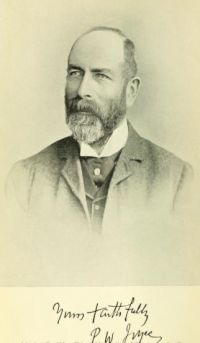 Patrick Weston JoyceWilliam Ridgeway, Edmund C. Quiggin and William J. GruffyddEoghan Rua Ó Súilleabháin
 James Joyce
 W. S. B. MathewsAlice Stopford Green
