Ur of the Chaldees

Definition and stakes

Delphian Society The World's Progress, Vol. 01…

The Old Testament, in its late written traditions, records that the ancestors of the Hebrews emigrated from Ur of the Chaldees, an ancient city, even in the days of Abraham, of southern Babylonia and a principal seat [Pg 194] of the worship of the moon-god, Sin. But of the great family of the Semites—the Arabians, Babylonians, Assyrians, Canaanites, Aramaeans, Syrians, etc., little was known a century ago. Practically all scholarly interest in this group until the middle of the nineteenth century was confined to the literature and civilization of the Arabs since the Mohammedan era.
Source: Gutenberg

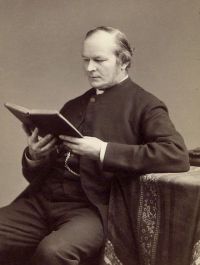
Portrait of George Rawlinson George Rawlinson The Seven Great Monarchies Of The Ancient Eastern World…

The illuminated part of the moon’s disk is always turned directly towards the horizon, a position but rarely seen in nature.
The chief Chaldaean temple to the moon-god was at Ur or Hur (Mugheir) , a city which probably derived its name from him, and which was under his special protection. He had also shrines at Babylon and Borsippa, and likewise at Calah and Dur-Sargina (Khorsabad) . Few deities appear to have been worshipped with such constancy by the Chaldaean kings. His great temple at Ur was begun by Urukh, and finished by his son Ilgi—the two most ancient of all the monarchs.
Source: Gutenberg

Anonymous The Bible, King James version, Book 23…

Chaldees' excellency, shall be as when God overthrew Sodom and
Gomorrah.
23:013:020 It shall never be inhabited, neither shall it be dwelt in from
generation to generation: neither shall the Arabian pitch tent
there; neither shall the shepherds make their fold there.
23:013:021 But wild beasts of the desert shall lie there; and their
houses shall be full of doleful creatures
Source: Gutenberg

Get perspective with Kwize: daily news enlightened by great literature