Electric potential

Definition and stakes

W. H. McCormick,  Electricity (1915)

“ This electric pressure is called “potential,” and electricity tends to flow from a conductor of higher to one of lower potential. When we say that a place is so many feet above or below sea-level we are using the level of the sea as a zero level, and in estimating electric potential we take the potential of the earth’s surface as zero; and we regard a positively electrified body as one at a positive or relatively high potential, and a negatively electrified body as one at a negative or relatively low potential. ”

Source: Gutenberg

Portrait of Edmund Taylor Whittaker Edmund Taylor Whittaker,  A History of the Theories of Aether and Electricity (1910)

“ An abrupt fall of electric potential at an interface between two media, such as the mercury and the solution in the present case, requires that there should be a field of electric force, of considerable intensity, within a thin stratum at the interface: and this must owe its existence to the presence of electric charges. Since there is no electric field outside the thin stratum, there must be as much vitreous as resinous electricity present ”
Source: Wikisource

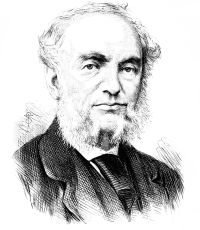
Portrait of James Clerk Maxwell James Clerk Maxwell,  A Treatise on Electricity and Magnetism (1873)

“ In the phenomenon called the electric current the constant passage of electricity through the medium tends to restore the state of polarization as fast as the conductivity of the medium allows it to decay. Thus the external agency which maintains the current is always doing work in restoring the polarization of the medium, which is continually becoming relaxed, and the potential energy of this polarization is continually becoming transformed into heat, so that the final result of the energy expended in maintaining the current is to raise the temperature of the conductor. ”
Source: Wikisource

Get perspective with Kwize: daily news enlightened by great literature