Electrical conduction

Definition and stakes

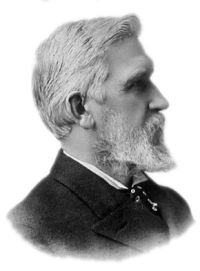
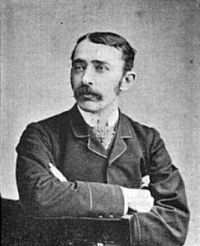
Portrait of T. O'Conor Sloane T. O'Conor Sloane,  The Standard Electrical Dictionary

“ In use either the prime conductor or cushions are connected by a chain
or otherwise with the earth. Assume it to be the cushions. As the
machine is worked by turning the plate, the glass and cushion being in
contact develop opposite electricities. The glass is charged with
positive electricity, and as it turns carries it off and as it reaches
the prime conductor by induction and conduction robs it of its negative
electricity. Meanwhile the cushions negatively excited deliver their
charge to the earth. The action thus goes on, the prime conductor being
charged with positive electricity.
”
Source: Gutenberg

Various,  Appletons' Popular Science Monthly…

“ It is open to the objection, however, that it in a measure legalizes the conveyance of electricity on conductors other than those designed for the purpose. In larger towns, with more than one power house and with car lines radiating from and circumscribing the business center, the attachment of conducting wires entails a ceaseless disturbance of the electrical equilibrium, curing the evil in spots and developing new danger points. ”
Source: Gutenberg

Alton D. Adams,  Electric Transmission of Water Power

“ A number of rather long transmissions is carried out in Europe with continuous, constant current, and in such systems the line voltage varies directly with the load. As the loss of power in an electrical conductor depends entirely on its ohms of resistance, which are constant at any given temperature, and on the amperes of current passing through it, the line loss in a constant-current system does not change during the period of operation, no matter how great may be its changes of load. ”
Source: Gutenberg

Get perspective with Kwize: daily news enlightened by great literature