“ I feel good. Now a stoic ice shines in me. It makes me laugh this ruby rope grinding in my body. Rope without end, like a spiral descending from evil... bloody and left-handed rope formed by a thousand daggers in support. ”
Fly (rope)
Definition and stakes
The theme of “fly (rope)” has been addressed by authors such as Homer J. Dana, W. H. Smyth, Harold E. Cloke, Albert Frederick Mummery and Thomas Baines. It is often associated with terms like wing, rigging, flight, bird and water.
Quotes about “fly (rope)”
 Cleveland Moffett,
Careers of Danger and Daring
“ Three guy-ropes hold the balloon steady like legs of an enormous tripod, and straight down from the netting a fourth rope hangs free. Now, imagine swinging on a rope twelve hundred feet long! They do that often for tests of flying-machines or aëroplanes—swing off the housetop, and sail away in a long, slow curve, just clearing the ground, and land on top of a windmill at the far side of the grounds. ”
Homer Bezalee Hulbert, The passing of Korea (1906)
“ The impact of one coming down throws the other up into the air some three or four feet. A rope is drawn above their heads like a clothes-line, and to this they cling as they go up in the air, in order to insure their equilibrium. ”
Mountain Craft (1920)
“ The last ten feet are the danger, for the short, swinging loose end may at any second jam or catch round the taut rope in its dance. To break any slight friction or hitch, and give the end of the rope a springing release from its belay, these last few feet should be rushed with a sharp continuous pull by two or more of the party, who must then look out for their heads! ”
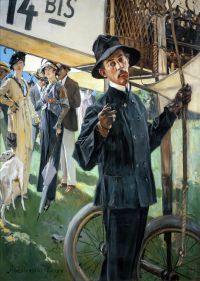 Alberto Santos-Dumont,
My Airships
(1904)
“ Like all human devices, however, the guide rope, along with its advantages, has its inconveniences. Its rubbing along the uneven surfaces of the ground—over fields and meadows, hills and valleys, roads and houses, hedges and telegraph wires—gives violent shocks to the balloon. Or it may happen that the guide rope, rapidly unravelling the snarl in which it has twisted itself, catches hold of some asperity of the surface or winds itself around the trunk or branches of a tree. ”
 George Manville Fenn,
Charge! A Story of Briton and Boer
“ Here is one: to catch hold of a rope after jumping to it is wonderfully easy, and in our young days the sensation of swinging to and fro in a sort of bird-like flight through the air is delightful—that is to say, if the ground is so near that we can drop on our feet at any moment; there is no thought of danger as we feel perfect confidence in our power to hold on. ”
 John Ayrton Paris,
Philosophy in Sport Made Science in Earnest
“ This very same expedient is frequently practised by ourselves; if we slip or stumble with one foot, we naturally extend the opposite arm, making the same use of it as the rope-dancer does of his pole. Many birds, also, by means of their flexible necks, vary the position of their centre of gravity in the same manner. When they sleep, they turn it towards the back, and place it under the wing, in order to lay the greatest weight on the point above the feet. ”
The Independent, The Independent/Volume 58/Issue 2948 (1905)
“ Again, and again the guide rope, dangling 100 yards below our basket, touched earth; and soon even the basket began to graze the tops of trees. What is called “guide roping” thus began for me. M. Machuron and I each held a sack of ballast, and when some special obstacle rose in our path—a tree or house—one of us would throw out a few handfuls of sand, to make the balloon leap up and pass over it. More than half the guide rope dragged behind us, and so we scudded comparatively close to earth at a wonderfully even altitude. ”
Sven Anders Hedin, Trans-Himalaya: Discoveries and Adventurers in Tibet…
“ The free end of the rope forms a noose above the ring of fibres, which tightens when the animal first attempts to lift his leg and holds down the funnel of ribs. The more the poor animal jumps about, the faster is the hold of the twisted snare. ”
Mountain Craft (1920)
“ On traverses or zigzags, unless we can reach a very good turning or anchor step from which to pull in the rope of the man following, we do better to divide our stance between two steps. Our feet are then well planted to resist a pull coming diagonally or from straight behind us. On a traverse, if we are facing forward, standing either on one or two steps, it is best not to turn and watch the man following, which will prejudice our balance, but to trust to the feel of the rope to tell us what is happening. The rope on ice with its smooth movement is even a surer telegraph than on rock. ”
Harold E. Cloke, The Gunner's Examiner
“ CORDAGE, BLOCKS, TACKLE, GINS, SHEARS, ETC.Q. Define yarn, strands, jaws of rope, short- and long-jawed rope, guys, spun-yarn, marlin, standing rigging, running rigging, and a bight.A. Yarn are called threads of hemp or other fibrous material which compose a rope.Strand is a number of yarns twisted together.Jaws of rope are the interstices between the strands of rope.Short-jawed rope is a rope tightly laid up together.Long-jawed rope is a rope loosely laid up together. [89] Guys are stationary ropes to hold spars, such as pry-poles, shears, etc., from falling. ”
 Ambrose Bierce,
The Collected Works of Ambrose Bierce
(1909)
“ With such energy was that strong man cannonading himself through the air that at each extremity of his increasing arc his body, standing in the swing, was almost horizontal. Should he once pass above the level of the rope's attachment he would be lost; the rope would slacken and he would fall vertically to a point as far below as he had gone above, and then the sudden tension of the rope would wrest it from his hands. ”
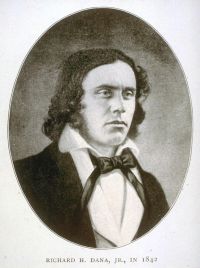 Richard Henry Dana,
Two Years Before the Mast — Chapter XXIV
“ Having nothing on but shirt, trowsers, and hat, the common sea-rig of warm weather, I had no stripping to do, and began my descent, by taking hold of the rope in each hand, and slipping down, sometimes with hands and feet round the rope, and sometimes breasting off with one hand and foot against the precipice, and holding on to the rope with the other. ”
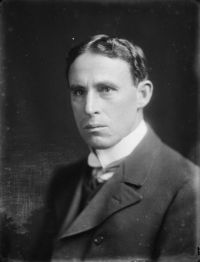 Malcolm Ross,
A climber in New Zealand
(1914)
“ The strain of the rope round one’s waist, threatening to effect a complete change in one’s internal anatomy, a vague clawing at air with one’s hands and an equally vague searching for foot-hold with the nether limbs as you dangle in space at the end of a forty-foot rope with precipices and snow slopes of over a thousand feet below, have a chastening influence on the most seasoned mountaineer, and, however exhilarating the experience may be, it is always with feelings of supreme satisfaction, and almost of devout thankfulness, that he once more comes to close grips with mother earth. ”
Mountain Craft (1920)
“ On all smooth snow and ice slopes, unless we are moving short-roped over safe and fairly even glacier, the rope-lengths between us should be allowed to ‘travel’ lightly on the surface. This lightens the draw of a heavy rope carried on the waist or hand, and avoids the strain upon the balance. Too much travelling rope is a drag; too little tightens on us like a brake. The hand must get to know by feel when there is just enough down to let it travel lightly and freely. ”
Mountain Craft (1920)
“ If there is no corner to help, we must lean the whole weight of our body upon the rope where it runs out to us round the belay on our axe; so crushing the racing rope into the snow and reducing the final tug upon the driven axe shaft. ”
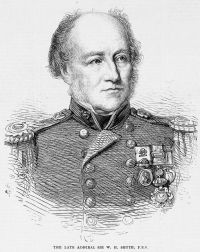 W. H. Smyth,
The Sailor's Word-Book
“ HAWSER-LAID ROPE. Is rope made in the usual way, being three or four strands of yarns laid up right-handed, or with the sun; it is used for small running rigging, as well as for standing rigging, shrouds, &c.; in the latter case it is generally tarred to keep out rain. It is supposed that this style of rope is stronger in proportion to the number of yarns than cable or water-laid rope, which is more tightly twisted, each strand being a small rope. ”
Mountain Craft (1920)
“ If we have fair room to balance, we play the rope [Pg 222] entirely free with our arms and the spring of our body, using only an anchor to the rock if we need it. If we have not room, and especially if we are protecting a leader, whose fall would jerk us off most positions of free balance, we put the rope over the point and play it round with both hands, ready to grip and spring it upon our arms if a jerk comes. Or we pass the active rope round our forearm or over the thigh or across the shoulder, on its way to the belay-point. ”
“ A native lad seizes hold of the cord, and, after swinging to and fro quite leisurely, all at once sends himself fifty or sixty feet from the water, rushing through the air like a rocket. I doubt whether any of our rope-dancers would attempt the feat. ”
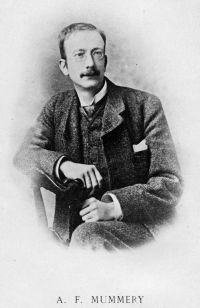 Albert Frederick Mummery,
My Climbs in the Alps and Caucasus
(1895)
“ Arrived at this point, where the ropes will have cut deep into the snow, the engulfed man has only to rest his whole weight on the rope round his waist, and he can then jerk the other rope free from the snow, and get fresh hold higher up, and, little by little, extricate himself. ”
 Edward Carpenter,
From Adam's Peak to Elephanta
(1892)
“ He just puts a noose of rope round his two feet to enable him to grasp the stem better with his soles, clasps his hands round the trunk, brings his knees up to his ears, and shoots up like a frog swimming! ”
 Johann David Wyss,
The Swiss Family Robinson - 1851
(1851)
“ If they wish to capture an animal, they hurl one of the stones at it with singular address. By the peculiar art with which the ball is thrown, the rope makes a turn or two round the neck of the animal, which remains entangled, without the power of escaping. ”
Edward S. Ellis, The Jungle Fugitives — Throwing the Riata
“ A steer jumping along changes his position constantly as regards you. If you throw at his head high up the chances are that it will be away down when your rope reaches him, and you will overthrow. Now, if you pick out a foot you must reckon so that that foot will be off the ground when your rope reaches him. The noose does not travel like a bullet, and this element of time is most important."Of even more importance is it that the distances are gauged correctly. You remember I spoke about holding the coils lightly in two or three fingers. ”
Robert Wood Williamson, The Mafulu: Mountain People of British New Guinea
“ Boys, and men also, play at tug-of-war, using long canes for ropes; and boys and girls have swings, constructed either by looping two flexible rope-like tree stems together at the bottom, or with a single rope, with a loop at the bottom, in which to place their feet. ”
Robert Folkestone Williams, Lady Eureka; or, The Mystery: A Prophecy of the Future…
“ They immediately threw a thick rope across the chasm, which was made fast to a neighbouring tree—another rope was fastened within a foot of it—over these, two strong hoops were sent across, connected with each other, and affixed to a strong rope, and by resting the body within these, and holding the ropes by the arms, each individual of the party was dragged in safety to the other side of the rock. ”
The story of rope (1916)
“ Binder twine is always given what is known as a right-hand twist, but rope yarns must, for certain kinds of rope, be given a left-hand twist. This is accomplished75 by reversing the direction of the capstans. The flyer carries four grooved wheels—two for the right, the others for the left-hand yarn—and by these the yarn is guided from the capstans to the revolving bobbin.The spinning room, with its hundreds of flyers, each running in the neighborhood of 1,500 revolutions a minute, speaks eloquently of the years’ changes. ”
Various, Harper's New Monthly Magazine, No…
“ This rope will act as a drag on the balloon, when, from any of the causes we have referred to, it tends to rise, for, in that case, it will draw up a portion of the rope, and, by thus adding to its weight, will be impeded in its upward course; and, on the other hand, when, from opposite causes, it tends to descend, it will, during every foot of its descent, have its weight, and consequently its descending tendency, diminished, by throwing on the earth the labor of supporting an additional portion of the rope. ”
 George Bird Grinnell,
Jack the Young Cowboy: An Eastern Boy's Experiance on a Western Round-up
“ Often the man who was holding the end of the rope, seeing a horse about to push under, would slacken the rope until it was under the pony's nose, and then, giving the rope a quick jerk, it would spring up and hit the horse, making him throw up his head. ”
Mountain Craft (1920)
“ The rope is passed round the shaft and rests on the snow, so that in case of a slip we get the friction of the snow into which it cuts to help us. At a turning step on a zag the rope is put round the shaft in the reverse direction. This driving of the axe and the looping of the rope men should execute when the feet are at rest on the holds, and not, as many do, while they are taking the step. It is often very difficult for tired men to continue for hours the regular thrust of the axe and the careful anchor of the rope at each pace. ”
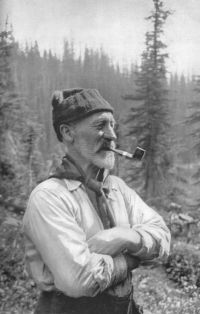 Arthur Oliver Wheeler,
The Selkirk Mountains
(1912)
“ Crossing a steep snow or ice-couloir where it is necessary to cut steps, let the leader go the full length of the rope himself. Those-behind can hold the rope securely. Never attempt a dangerous place without at least one good anchorage within the length of the rope. ”
 Nehemiah Adams,
Under the mizzen mast: A voyage round the world
(1873)
“ Moves all nature to gladness and mirth.” I cannot forget the simple pleasure which this meditation on a rope gave me, carrying me back to youthful days in my native place, and to the ropewalks there, the swift spindles, the horse in the cellar turning the wheel, the spinners, each with a bunch of hemp around him hitching it to the spindle, then walking backwards, paying out the hemp through his hands with judicious care, the rope all the time growing lengthwise, down the walk. ”
David W. Bone, The Brassbounder: A Tale of the Sea
“ A coil of rope hurtling from a height comes rattling to the rail, to be secured to its own particular belaying-pin. Out of a seeming chaos comes order. Every rope has its name and its place and its purpose; and though we have 'sodjers' among us, before Arran is astern we are ready to take to the wind. Off Pladda we set staysails and steer to the westward, and, when the wind allows, hoist topsails and crowd the canvas on her. The short November day has run its course when we cast off the tow-rope. As we pass the standing tug, all her hands are hauling the hawser aboard. ”
Various, Harper's Young People, March 22…
“ The running rigging consists of the ropes used in handling the yards and sails, and every rope has a distinguishing name. Halyards are ropes used to hoist yards and sails. Braces are ropes used to swing the yards round by. ”
 Alfred C. Haddon,
Head-hunters
(1901)
“ The main object of tying the rope round the creature’s tail is to prevent it from raising its nostrils above the level of the water by bearing down upon the rope during the animal’s ascent. In time these manœuvres are successful, and death by drowning results. ”
Clarence Young, The Motor Boys Overland; Or, A Long Trip for Fun and Fortune
“ He hurried over to a little clump of trees and came back with a short section of a round limb.“This will be a roller for the rope to pass over, just like a pulley,” he announced. Then he proceeded to put his plan in operation. Lying down on his face, he held the log in position, the rope passing over it. ”
Reuben Percy and Sholto Percy, The Percy Anecdotes (1820)
“ A common rope is stretched upon two pair of crossed spars, about twenty feet distant, and four- PASTIME. 101 teen feet from the ground. A man piies six water- pots upon his head, and thus accoutred, ascends the rope by means of the spars, or of a sloping cord on the outside of them; the rope is not quite tight, but left with a slack of about three feet; he then, with a balance pole in his hand, walks backward and forward, and swings the rope to its extent without letting a single pot fall. ”
W. H. Smyth,
The Sailor's Word-Book
“ To fasten a rope when it has been sufficiently hauled upon, by twining it several times round a cleat, belaying pin, or kevel, without hitching or seizing; this is chiefly applied to the running rigging, which needs to be so secured that it may be quickly let go in case of a squall or change of wind; there being several other expressions used for securing large ropes, as bitting, making fast, stoppering, &c.—Belay there, stop! that is enough!—Belay that yarn, we have had enough of it. Stand fast, secure all, when a hawser has been sufficiently hauled. ”
Richard Ferris, How It Flies; or, The Conquest of the Air
“ The longer the part of the trail-rope that is dragging on the ground the less weight the balloon is carrying. And at night, when it is impossible to tell the direction in which one is travelling in any other way, the line of the trailing rope will show the direction from which the wind is blowing, and hence the drift of the balloon. ”
Related terms
Authors who wrote about “fly (rope)”
Homer J. DanaW. H. SmythHarold E. ClokeAlbert Frederick MummeryThomas BainesThe IndependentAlberto Santos-DumontA. J. KenealyGeorge Manville FennRichard Henry Dana Francis GaltonMalcolm RossWilliam MartinGeorge Bird GrinnellVariousArthur Oliver WheelerSven Anders HedinSir William Edward Parry
 James Bell PettigrewCleveland Moffett
W. H. SmythHarold E. ClokeAlbert Frederick MummeryThomas BainesThe IndependentAlberto Santos-DumontA. J. KenealyGeorge Manville FennRichard Henry DanaFrancis GaltonMalcolm RossWilliam MartinGeorge Bird GrinnellVariousArthur Oliver WheelerSven Anders HedinSir William Edward ParryJames Bell PettigrewCleveland Moffett