Hydrogen atom

Definition and stakes

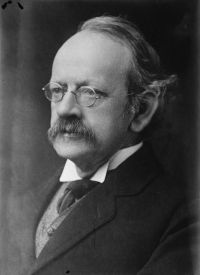
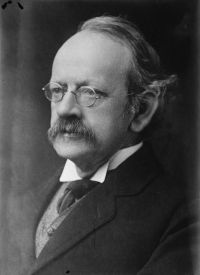
Portrait of J. J. Thomson J. J. Thomson,  Romanes Lecture: The Atomic Theory (1914)

“ The hydrogen atom, minus its electron, is the simplest atom we can conceive; it is much simpler than the normal hydrogen atom, with its electron intact, and essentially different from it. The investigation of its properties is a matter of very great interest. The comparison of the spectrum of a hydrogen atom which has lost its electron with that of one which has not, is a matter of very great importance ”
Source: Wikisource

Portrait of J. J. Thomson J. J. Thomson,  Romanes Lecture: The Atomic Theory (1914)

“ Looked at from this point of view, the hydrogen atom is a very simple structure, in fact the simplest that could be built up of electrons and positive electricity; so that if the atoms of all elements are made up of these constituents there is no room for the existence of an atom lighter than hydrogen, such as that which has sometimes been suspected to exist in the sun's corona. The properties of hydrogen are well known and show no very exceptional simplicity ”
Source: Wikisource

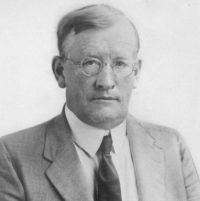
Edward Huntington Williams,  A History of Science — Volume 4

“ Each hydrogen atom has satisfied its own affinity by clutching the oxygen atom; and the oxygen atom has both its bonds satisfied by clutching back at the two hydrogen atoms. Therefore the trio, linked in this close bond, have no tendency to reach out for any other companion, nor, indeed, any power to hold another should it thrust itself upon them. They form a "stable" compound, which under all ordinary circumstances will retain its identity as a molecule of water, even though the physical mass of which it is a part changes its condition from a solid to a gas from ice to vapor. ”
Source: Gutenberg

Get perspective with Kwize: daily news enlightened by great literature