“ It dominates physics under the name of the theory of kinetic energy. The minds of men in our own time are so strongly impregnated with this idea that most scientists of ordinary culture get no glimpse of the world of phenomena but by means of this conception. And yet it is only an hypothesis. But it is so simple, so intuitive, and appears to be so thoroughly verified by experiment, that we have ceased to recognize its arbitrary and unnecessarily contingent character. Many physicists from this standpoint consider the kinetic theory as an imperishable monument. ”
Kinetic theory
Definition and stakes
The kinetic theory of gases is a foundational model that explains macroscopic properties such as pressure and temperature through the microscopic movement of particles. Originating in antiquity with Lucretius’s ideas of atomic collisions and later formalized by Bernoulli, Clausius, and Maxwell, it describes gases as consisting of rapidly moving molecules whose interactions determine thermodynamic behavior. Authors like A.
Dastre highlighted its significance in physics, portraying energy as a universal concept rooted in motion, while Robert Andrews Millikan characterized matter as composed of perpetually moving molecules. Although its scope has been debated, the theory connects microscopic and macroscopic scales, influencing thermodynamics and energetics. Its legacy lies in converting abstract phenomena into quantifiable, dynamic interactions.
Quotes about “kinetic theory”
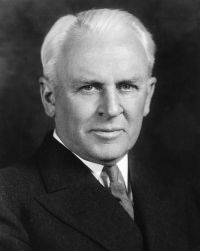 Robert Andrews Millikan,
Popular Science Monthly
(1912)
Robert Andrews Millikan,
Popular Science Monthly
(1912)
“ The kinetic theory, then, when divorced from all non-essentials, is merely the assertion that everything in this world of ours is in a state of restless, ceaseless, seething motion, that all matter is composed of minute parts called molecules which are eternally pounding and jostling against one another. ”
Samuel Tolver Preston, Application of the Kinetic Theory of Gases to Gravitation (1877)
“ The kinetic theory gets over this difficulty in a most complete manner, by allowing gravity to take place within a conformable range, without extending it to indefinite distances and thereby involving conditions of instability. ”
William Bower Taylor, Kinetic Theories of Gravitation… (1876)
“ Here all kinetic theory fails: and there is then something in the world beside " inertia and motion." Until some rational analysis be discovered, we must accept the fact (in the language of Sir John Herschel) as an "ultimate phenomenon." And as we find that the molecules of all material substance resist compression with a force proportional in some high ratio thereto, we can only conceive that they are separated by an interval through which this repellant resistance is exercised. ”
“ Besides, a whole school of contemporary physicists (Ostwald of Leipzig, Mach of Vienna) is beginning to cast some doubt on the utility of the kinetic hypothesis in the future of physics itself, and is inclined to propose to substitute for it the theory of energetics. We shall see, in every case, that this other conception, as universal as the kinetic theory, the theory of Energy, causes a vivid light to penetrate into the depths of the most difficult problems in physiology. ”
“ Kinetic Theory.—We shall lay aside for a moment this serious problem relative to the limits of the world of conscious thought and of the world of life. It is on the other side, on the frontiers of living and inanimate nature, that the mechanical view triumphs. It has furnished a universal conception agreeing with [Pg 40] phenomena of every kind—viz., the kinetic theory, which ascribes everything in nature to the movements of particles, molecules, or atoms. ”
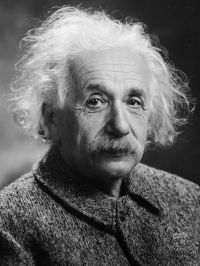 Albert Einstein,
Dialog about Objections against the Theory of Relativity
Albert Einstein,
Dialog about Objections against the Theory of Relativity
“ Nobody doubts the "reality" of kinetic energy, otherwise the very reality of energy would have to be denied. But it is clear that the kinetic energy of a body is dependent on the state of motion of the coordinate system, with a suitable choice of the latter one can arrange for the kinetic energy of the continuous motion of a body to assume a given positive value or the value of zero. In the special case where all the masses have a velocity in the same direction and of the same magnitude, a suitable choice of coordinate system can adjust the collective kinetic energy to zero. ”
William Bower Taylor, Kinetic Theories of Gravitation… (1876)
“ Omitting then any further consideration of the statical method of explaining gravitation by pressure, we find that kinetic systems are essentially of two classes, the hypotheses of emissions or corpuscles, and the hypotheses of fluid undulations. It is proposed to show that no form of either hypothesis can satisfy the two Newtonian conditions of a scientific theory — verity and sufficiency. ”
“ It makes of the different forms of energy something more than varieties which are equivalent to one another. It makes of them one and the same thing. It blends into one the modalities of energy and mechanical energy. For the experimental idea of equivalence, the kinetic theory substitutes the arbitrary idea of the equality, the blending, and the fundamental homogeneity of phenomena. This no doubt is how the founders of energetics, Helmholtz, Clausius, and Lord Kelvin understood things. ”
Samuel Tolver Preston, The Bearing of the Kinetic Theory of Gravitation on the Phenomena of "Cohesion" and "Chemical Action… (1877)
“ For it is a known fact that the resistance opposed by a medium constituted according to the kinetic theory to the passage of bodies through it diminishes as the normal velocity of the particles of the medium increases. The high normal velocity of the particles of the aether, proved by the velocity of light, therefore necessarily renders the resistance inappreciable, and the medium itself impalpable and undetected by the senses. ”
Samuel Tolver Preston, The Bearing of the Kinetic Theory of Gravitation on the Phenomena of "Cohesion" and "Chemical Action… (1877)
“ Whatever may be said of the above deductions, it is at least so far certain that the conditions investigated, and based upon experimental facts, are competent to produce these fundamental movements of approach and recession in the case of molecules, and to do so in the simplest manner, the constitution of media according to the kinetic theory being admittedly the simplest conceivable. To look therefore to other conditions than the simplest would be to imply that the same results are brought about by a superfluity of mechanism. This superfluity is known not to be the characteristic of nature ”
International Congress of Arts and Science…
“ The gross mechanical conception of nature which prevailed in the earlier part of the eighteenth century has long since been abandoned, as quite inadequate to our experience with her facts, forces, and laws. The kinetic view, which began with Huygens, Euler, and Ampère, and which was so amplified by Lord Kelvin and Clerk-Maxwell in England, and by Helmholtz and others in Germany, on account of its success in explaining the phenomena of light, of gases, etc., very naturally led to the attempt to develop a kinetic theory, a doctrine of energetics, which should explain all phenomena. ”
William Bower Taylor, Kinetic Theories of Gravitation… (1876)
“ In defining atoms as centers of pressure, they are thus no less distinguished on the one hand from centers of force than from the little hard bodies of the ordinary theories; for such centers of force are just as absolute and self-existent in the ordinary conception of them as those little bodies ; and in a scientific theory there can (except as temporary conveniences) be no absolute existences, entities. Hence (mechanical) force, or the cause of motion, is conceived not as an entity but as a condition, — the condition namely of a difference of pressure ”
William Bower Taylor, Kinetic Theories of Gravitation… (1876)
“ Commencing with the generalization that " a mechanical force, or the cause of a mechanical motion, we know to be in general the condition of a difference of pressure," he infers, "hence it appears that if a general mechanical theory is possible, the ultimate property of matter must be conceived to be a mutual repulsion of its parts, and the indubitable Newtonian law of universal attraction be deduced herefrom, under the actual conditions of the world. ”
William Bower Taylor, Kinetic Theories of Gravitation… (1876)
“ But if force be a virtue resident in the particle, it must at its origin be either attractive or repulsive, and it seems impossible to conceive how by emanation to a distance it can change its quality. This difficulty, as will be shown, is not encountered in a theory of molecular forces which deduces their laws from the dynamical action of an elastic medium. ”
William Bower Taylor, Kinetic Theories of Gravitation… (1876)
“ This is the fundamental conception (not hypothesis) of the theory.... Now in a system of atoms as above defined, let the centers be of equal mass and at equal distances; there will be no difference of pressure on any one center, no moving force will be developed, and the conditions of equilibrium will be satisfied. ”
William Bower Taylor, Kinetic Theories of Gravitation… (1876)
“ Our principles do not therefore corroborate Newton's third law of motion, respecting the equality of action and reaction in attracting forces; for by our theory, a body might by the agency of the fluid medium, be impelled toward another, without any reciprocal action ; which is by no means surprising if we consider attraction not to be an inherent or essential property of matter, but merely the action of a third body. ”
William Bower Taylor, Kinetic Theories of Gravitation… (1876)
“ Mathematical Theory of Attractive Forces," based on the assumption " that all substances consist of minute spherical atoms of different but constant magnitudes, and of the same intrinsic inertia; and that the dynamical relations and movements of different substances, and of their constituent atoms, are determined by the pressures of the aether against the surfaces of the atoms, together with the reaction of the atoms against such pressure by reason of the constancy of their form and magnitudes. ”
William Bower Taylor, Kinetic Theories of Gravitation… (1876)
“ At the very outset we have the objection urged against the theory that it implies the absurdity of action at a distance. Now the mere facts of gravitation imply no such thing. That A and B placed at a distance should tend toward each other does not imply action at a distance. A moves by virtue of a force, but it does not follow that this force is at a distance from A. But if we assert that A and B 'attract' each other, then we imply action at a distance ”
Samuel Tolver Preston, The Bearing of the Kinetic Theory of Gravitation on the Phenomena of "Cohesion" and "Chemical Action… (1877)
“ When two masses (or molecules) are gradually approached towards each other, instead of the tendency to approach gradually increasing up to a maximum ( as we should expect from the theory) , they begin to repel at a certain distance, and very considerable force is in general required to overcome this first repulsion, when the masses then unite into one. Thus two freshly cut pieces of lead may be made to unite with some pressure, also glass, or various metals, with more or less pressure. ”
William Bower Taylor, Kinetic Theories of Gravitation… (1876)
“ But it never was demonstrated or proved by any one that the bodies attract each other. The thing which has been demonstrated is that B tends toward A; but the theory does not rest here ; it goes on to account for this tendency by referring it to a hypothetical cause, viz, to the ' attraction' of A. This however is a mere hypothesis, and no way essential to the theory. All that the theory requires is that it be demonstrated that A tends to move toward B. It is not necessary that we should go beyond this, and attempt to explain the cause of this tendency. ”
William Bower Taylor, Kinetic Theories of Gravitation… (1876)
“ It is a matter of demonstration that a theory of molecular forces cannot be constructed on the hypothesis that the forces vary according to some law of the distance from individual material particles, unless the law be such that the force changes sign with the distance so as to become attractive after being repulsive. ”
Samuel Tolver Preston, Application of the Kinetic Theory of Gases to Gravitation (1877)
“ It should be observed that this self-adjustment of their motion by the particles is not a mere result of chance, but a rigid adjustment of such a character that, if the uniformity of the motion were artificially disturbed, the particles when left to themselves would immediately correct the irregularity. The above length of free path, though great in one sense, becomes small and suitable for a gas pervading the vast range of the visible universe. ”
Gilbert Newton Lewis, A revision of the Fundamental Laws of Matter and Energy (1908)
“ The plausibility of our fundamental assumption which led directly to equation (15) has been greatly increased by the agreement, between this equation and Kaufmann's results, and also perhaps by the similarity between this equation and those deduced from electromagnetic theory. But the simplest as well as the strongest evidence of the correctness of our point of view comes from a consideration of the non-Newtonian equation for kinetic energy. ”
William Bower Taylor, Kinetic Theories of Gravitation… (1876)
“ This theory of cohesion is then set forth at some length, the fundamental assumption being that there are two classes of dynamic monads occupying the universe, the one in a state of relative repose, exhibiting the various phenomena of attraction, and commonly called the ponderable elements, and the other class entirely free or independent, (improperly called imponderable elements,) actuated with extreme velocities of translation, of rotation, and of vibration, continually traversing the systems of ponderable monads in all directions. ”
Paul Langevin, On the theory of brownian motion
“ The theorem of the equipartition of the kinetic energy between the various degrees of freedom of a system in thermal equilibrium requires that a particle suspended in any kind of liquid possesses, in the direction x, an average kinetic energy RT/2N equal to that of a gas molecule of any sort, in a given direction, at the same temperature. ”
Various, Popular Science Monthly (1882)
“ I then attempt to show that, if to these premises we add the assumption of the atomic constitution of matter, the mechanical theory necessarily involves four distinct propositions, relating severally to the equality, inertia, and inelasticity of the atoms or ultimate molecules and the essentially kinetic character of what is now universally termed energy. ”
Various, Popular Science Monthly (1895)
“ About half of the volume is devoted to the kinetics of a particle, and the remainder is given to the study of the kinetics of a rigid body and a brief discussion of the fundamental principles of the kinetics of a system. In the discussion of the motion of a particle (impact, rectilinear motion) such fundamental ideas as momentum, impulse, kinetic energy, force, work, potential energy, and power are gradually introduced and illustrated in an elementary way. ”
William Bower Taylor, Kinetic Theories of Gravitation… (1876)
“ Thus as we have already seen that kinetic energy involves the unit of mass and the square of the linear unit directly, together with the square of the time unit inversely, the same must be the case with potential energy ; and it seems very singular that potential energy should thus essentially involve the unit of time, if it do not ultimately depend in some way on energy of motion. ”
William Bower Taylor, Kinetic Theories of Gravitation… (1876)
“ An abstract system of kinematics, under any geometrical arrangement or conception, is indeed quite irreconcilable with the actual system of dynamics found in nature and subject to our observation. All gases would under the operation of the first law of motion, tend to infinite and equable diffusion ”
Gilbert Newton Lewis, The Principle of Relativity, and Non-Newtonian Mechanics (1909)
“ From the standpoint of the principle of relativity, one of the most interesting quantities in mechanics is the so-called kinetic energy, which is the increase in energy attributed to a body when it is set in motion with respect to an arbitrarily chosen point of rest. ”
William Bower Taylor, Kinetic Theories of Gravitation… (1876)
“ Matter possessing only inertia and motion (whose product is momentum) would very speedily arrive at a state of stable and inert equilibrium, without having ever exhibited a single phenomenon of force, and without the possibility of any dynamic potential. ”
Gilbert Newton Lewis, The Principle of Relativity, and Non-Newtonian Mechanics (1909)
“ If our ideas possess a certain degree of artificiality, this is also true of others which have long since been adopted into mechanics. The apparent change in rate of a moving clock, and the apparent change in length and mass of a moving body, are completely analogous to that apparent change in energy of a body in motion, which we have long been accustomed to call its kinetic energy. ”
 Thomas Henry Huxley,
The Advance of Science in the Last Half-Century
Thomas Henry Huxley,
The Advance of Science in the Last Half-Century
“ Suppose now that it receives an impulse, it will begin to move with a velocity inversely proportional to its mass, on the one hand, and directly proportional to the strength of the impulse, on the other, and will possess kinetic energy, in virtue of which it will not only continue to move for ever if unimpeded, but if it impinges on another such particle, it will impart more or less of its motion, to the latter. Let it be conceived that the particle acquires a tendency to move, and that nevertheless it does not move. ”
William Bower Taylor, Kinetic Theories of Gravitation… (1876)
“ Whereas the main business of natural philosophy is to argue from phenomena without feigning hypotheses, and to deduce causes from effects, till we come to the very first cause, which certainly is not mechanical." [8] It has already been noticed that elasticity has proved a stumblingblock to every kinetic hypothesis. A system of molecular physics without this property would represent a chaos ; but a chaos destitute of energy. As Lam6 has well observed in his admirable treatise on the subject, " The role of Elasticity in nature is as important as that of Gravitation!" ”
Related terms
Authors who wrote about “kinetic theory”
William Bower TaylorSamuel Tolver PrestonAlbert EinsteinRichard Glazebrook Arthur Eddington
 Bertrand RussellAndrew Gray
 A. E. Taylor
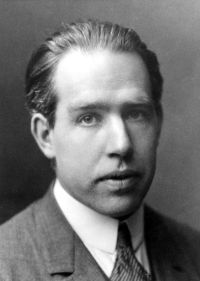 Niels BohrWilliam George HooperGilbert Newton LewisHelge Holst
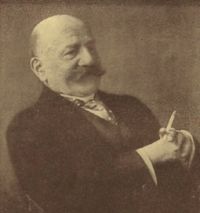 Alexander Moszkowski
 Fleeming JenkinRobert Andrews Millikan
 John Stuart Mill
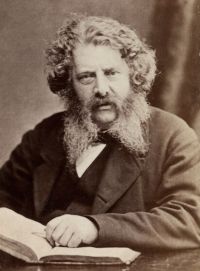 William John Macquorn Rankine
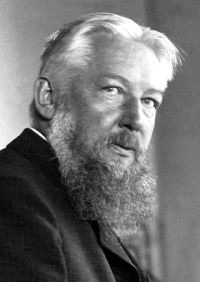 Wilhelm Ostwald
 James Clerk MaxwellA. Dastre
Albert EinsteinRichard GlazebrookArthur EddingtonBertrand RussellAndrew GrayA. E. TaylorNiels BohrWilliam George HooperGilbert Newton LewisHelge HolstAlexander MoszkowskiFleeming JenkinRobert Andrews MillikanJohn Stuart MillWilliam John Macquorn RankineWilhelm OstwaldJames Clerk MaxwellA. Dastre