Ludicrousness

Definition and stakes

William James,  Psychology: Briefer Course

“ When you beg them to imagine away every feeling of laughter and of tendency to laugh from their consciousness of the ludicrousness of an object, and then to tell you what the feeling of its ludicrousness would be like, whether it be anything more than the perception that the object belongs to the class 'funny,' they persist in replying that the thing proposed is a physical impossibility, and that they always must laugh if they see a funny object. ”
Source: Gutenberg

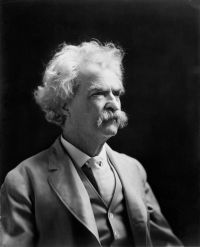
Portrait of Bret Harte Bret Harte,  A Ship of '49 — Chapter 1 (1885)

“ It was a figure so extraordinary that even in the strange masquerade of that early civilisation it was remarkable; a figure with whom father and daughter were already familiar without abatement of wonder—the figure of a rejuvenated old man, padded, powdered, dyed, and painted to the verge of caricature, but without a single suggestion of ludicrousness or humour. A face so artificial that it seemed almost a mask, but, like a mask, more pathetic than amusing. ”
Source: Wikisource

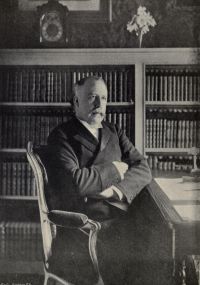
Portrait of James Sully James Sully,  An Essay on Laughter: Its Forms…

“ The foregoing considerations seem to show clearly that the realm of the ludicrous is not a closed and clearly bounded territory, as the theorists for the most part assume it to be. Our enjoyment of its amusing sights connects itself with, and indeed absorbs into itself, tendencies which we may observe in the laughter of children and uncivilised adults. And, if so, the fact seems to require us to go back upon those primitive tendencies in order to see how far the connection {145} holds, that is to say, how far the effects of the ludicrous can be regarded as due to the play of those tendencies. ”
Source: Gutenberg

Get perspective with Kwize: daily news enlightened by great literature