Nasal cavity

Definition and stakes

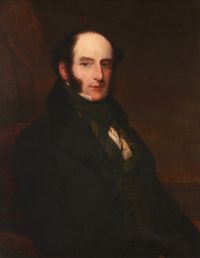
Frederick Gymer Parsons and Harriette Lombard Hennessy,  1911 Encyclopædia Britannica (1911)

“ The “inferior meatus” is below the inferior turbinated bone, and, when that is lifted up, the valvular opening of the nasal duct (see Eye) is seen. In front of the inferior meatus there is a depression just above the nostril which is lined with skin instead of mucous membrane and from which short hairs grow; this is called the “vestibule.” The roof of the nose is very narrow, and here the olfactory nerves pass in through the cribriform plate. The floor is a good deal wider so that a coronal section through each nasal cavity has roughly the appearance of a right-angled triangle. ”
Source: Wikisource

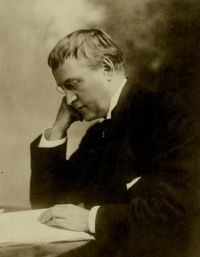
Portrait of Henry T. Finck Henry T. Finck,  Romantic Love and Personal Beauty

“ Further, it is of great importance to bear in mind “that the resonance of the nasal cavity also plays a part in the formation of non-nasal articulate sounds,” appearing here as a mere reinforcement of the resonance of the cavity of the mouth, and free from the nasal twang. Indeed, paradoxical as it may seem, an infallible way to make our speech sound “nasal” is to keep the air out of the nose by clasping it tightly; whereas if the nasal passage remains open the nasal twang is replaced by an agreeable resonance. What could more forcibly illustrate the importance of a well-developed nose? ”
Source: Gutenberg

Katherine Jewell Everts,  Vocal Expression: A Class-book of Voice Training and Interpretation

“ First, you must realize that so-called "talking through the nose" is not talking through the nose at all, but rather failure to do so—that is, instead of letting the tone flood into the nasal cavity, to be reinforced there by striking against the walls of the cavity, which act as sounding-boards for the tone confined within that cavity, we shut off the cavity, and refuse the tone its natural reinforcement. It takes on, as a result, a thin, unresonant quality which we call nasal, although it is thin and unpleasing because it lacks true nasal resonance. ”
Source: Gutenberg

Get perspective with Kwize: daily news enlightened by great literature