 George Henry Lewes,
The Principles of Success in Literature
George Henry Lewes,
The Principles of Success in Literature
“ Personal experience is the basis of all real Literature. ”
George Henry Lewes,
The Principles of Success in Literature
“ Personal experience is the basis of all real Literature. ”
William James, The Will to Believe and Other Essays in Popular Philosophy… (1897)
“ The only form of thing that we directly encounter, the only experience that we concretely have, is our own personal life. The only complete category of our thinking, our professors of philosophy tell us, is the category of personality, every other category being one of the abstract elements of that. ”
 John Stuart Mill,
On Liberty
(1869)
John Stuart Mill,
On Liberty
(1869)
“ there are many truths of which the full meaning cannot be realized, until personal experience has brought it home. ”
Henry K. Rowe, Society: Its Origin and Development
“ Desires and Interests.—These complexes of thinking, feeling, and willing make up the conscious desires and interests that mould the individual life. Through the processes of attention to the stimuli that act upon human nature, discrimination between them, association of [346] impressions and ideas that come from present and past experience, and deliberate judgments of value, the mind moves to action for the satisfaction of personal desires and interests. ”
 Alfred H. Lloyd,
The will to doubt
Alfred H. Lloyd,
The will to doubt
“ In our recent dismission of the value of the essential defects of experience, and particularly when we came to associate social character with the habit of contradiction, a contrast of the personal and the social was very plainly implied, and some special attention to this contrast, I feel sure, will help us to comprehend more fully what was said at the time, and will be of great advantage also to our general purpose. ”
“ Another token of the higher life, which indeed is implied in the former, is the habit of taking what is called an objective or Impersonal View of our personal relations. This is especially important as helpful to self-control. ”
 Josiah Royce,
The Conception of God
(1897)
Josiah Royce,
The Conception of God
(1897)
“ First, in so far as I am a social being, I take my fellow’s experience to be as live and real an experience as is mine. In appealing to the consensus of other men’s experiences, I am so far appealing to what I regard as a real experience other than my own momentary experience, and not as a merely possible experience. ”
Henry James, Views and Reviews
“ You must also be serious. You must forget yourself in your ideas. Your personal qualities—the vigour of your temperament, the manly independence of your nature, the tenderness of your heart—these facts are impertinent. ”
 Arthur Christopher Benson,
From a College Window
Arthur Christopher Benson,
From a College Window
“ I am going to take the world into my confidence, and say, if I can, what I think and feel about the little bit of experience which I call my life, which seems to me such a strange and often so bewildering a thing. ”
Arthur William Robinson, God and the World: A Survey of Thought
“ But the psychologist has yet more to tell us about the nature of personality. Although helped to distinctiveness of self-conscious expression by means of its experience of the struggle under present material conditions, it is not the whole of it that can be thus expressed. ”
Aleph Bey, That Eurasian (1895)
“ What affects me more than all, is what relates to myself, for it has always been a habit of mine to bring everything to a personal test, to weigh it upon my own scales. These questions I have often asked, “Why was I created as I was, in a condition where I had to come in contact with vice in my earliest years? ”
 Pierre-Simon Laplace,
A Philosophical Essay on Probabilities
(1902)
Pierre-Simon Laplace,
A Philosophical Essay on Probabilities
(1902)
“ For this a great accuracy of mind, a delicate judgment, and a great experience in affairs is necessary; it is necessary to know how to guard one's self against prejudices, illusions of fear or hope, and erroneous ideas, ideas of fortune and happiness, with which the majority of people feed their self-love. ”
Herbert David Croly, The Promise of American Life
“ Its object is or should be to prepare him both in his will and in his intelligence to make a thoroughly illuminating use of his experience in life. His experience,—as a man of business, a husband, a father, a citizen, a friend,—has been made real to him, not merely by the zest with which he has sought it and the sincerity with which he has accepted it, but by the disinterested intelligence which he has brought to its understanding. ”
Harriet E. Paine, Girls and Women
“ All I can say is, that the longer I live the more I am convinced that it is personal character which most helps the world forward, and I think our hearty allegiance to the truth which we clearly see will in the end teach us new truth. ”
John Stuart Mill,
Autobiography
“ My course of study had led me to believe, that all mental and moral feelings and qualities, whether of a good or of a bad kind, were the results of association; that we love one thing, and hate another, take pleasure in one sort of action or contemplation, and pain in another sort, through the clinging of pleasurable or painful ideas to those things, from the effect of education or of experience. ”
 Karl Hilty,
The steps of life: further essays on happiness
(1907)
Karl Hilty,
The steps of life: further essays on happiness
(1907)
“ Rather, we must content ourselves with a certain number of the results of experience; some of these we will try, later on, to set before the reader.The real secret of knowing human nature lies in possessing a pure heart innocent of self-conceit; such people gradually acquire a keenness of vision that pierces all the outer wrappings. ”
 F. H. Bradley,
Appearance and Reality — Chapter III
(1893)
F. H. Bradley,
Appearance and Reality — Chapter III
(1893)
“ The reader who has followed and has grasped the principle of this chapter, will have little need to spend his time upon those which succeed it. He will have seen that our experience, where relational, is not true ”
Josiah Royce,
The World and the Individual, Second Series
(1901)
“ Our whole argument in our transition to the Fourth Conception of Being illustrated how it is of the very nature of our human experience of our Internal Meaning to point beyond what is presented, for the sake of defining the very fulfilment which our presented meanings demand, and without which they have neither truth nor Being. ”
“ We shall analyse that complication of mental qualities which form what, in common life, we call personal merit: We shall consider every attribute of the mind, which renders a man an object either of esteem and affection, or of hatred and contempt ”
Josiah Royce,
The World and the Individual, First Series
(1899)
“ In fact, how should any one individual Being present himself, in this external experience of yours, or of all men taken together, in such wise as to show not only that he is of this or this aspect, but that no other is like him in the whole realm of Being. ”
Josiah Royce,
The World and the Individual, Second Series
(1901)
“ In observing these connections, so far as they fall within our own range of experience, we there find somehow our own rational Will better expressed, or embodied, than it would be without this idea, and thereby we better win our own inner clearness. ”
Josiah Royce,
The World and the Individual, First Series
(1899)
“ And, finally, our experience, whether internal or external, never shows us what we, above all, regard as the Real, namely, the Individual fact. Hence, in consulting experience, we are simply seeking aid in the undertaking to give our ideas a certain positive determination, to this content and no other. But never, in our human process of experience, do we reach that determination. It is for us the object of love and of hope, of desire and of will, of faith and of work, but never of present finding. ”
 Arlo Bates,
Talks on the study of literature
Arlo Bates,
Talks on the study of literature
“ We approve of advice, and we act according to experience. Often when we have decided upon one course of life or action, the inner self which is the concrete result of our temperament and our experiences goes quietly forward in a path entirely different. ”
Henry Churchill King, Theology and the Social Consciousness
“ The recognition by {18} psychology of respect for personality as one of the three or four most fundamental conditions—if not the most essential of all—of happiness, of character, and of influence, is explicit confirmation of the truth of this element of the social consciousness. ”
Mihai Nadin, The Civilization of Illiteracy
“ The relation between challenges-of satisfying needs or meeting higher and higher expectations-and the emergence of personality is quite intricate. Every practical experience expresses new aspects of the individual. Personality integrates these aspects over time and is projected, together with biological and cultural characteristics, in the never-ending succession of encounters of new situations, and consequently new people. ”
 Hannah Webster Foster,
The Coquette, or, The History of Eliza Wharton
Hannah Webster Foster,
The Coquette, or, The History of Eliza Wharton
“ Self-knowledge, sir, that most important of all sciences, I have yet to learn. Such have been my situations in life, and the natural volatility of my temper, that I have looked but little into my own heart in regard to its future wishes and views. From a scene of constraint and confinement, ill suited to my years and inclination, I have just launched into society. My heart beats high in expectation of its fancied joys. My sanguine imagination paints, in alluring colors, the charms of youth and freedom, regulated by virtue and innocence. ”
 Ethel Puffer Howes,
The Psychology of Beauty
Ethel Puffer Howes,
The Psychology of Beauty
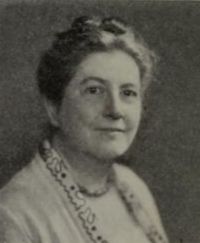
“ The temporary evaporation of the consciousness of one's own Personality is then decidedly not a pathological experience. It seems the condition, indeed, and recognized as such in popular judgment, of the deepest feeling and the highest achievement. ”
 John Dewey,
Human Nature and Conduct: An introduction to social psychology
John Dewey,
Human Nature and Conduct: An introduction to social psychology
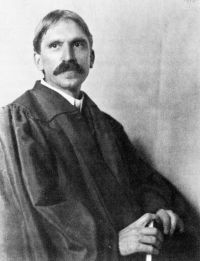
“ It is as impertinent to decry the worth of experience because it is connected with a self as it is fantastic to [pg 293] idealize personality just as personality aside from the question what sort of a person one is. ”
Steven J. Bartlett, When You Don't Know Where to Turn
“ Do you like to talk about personal problem solving, about your feelings, past events, and why you have come to feel as you do? Do you feel a need to acquire an overall sense of understanding of yourself, your family, and how they have influenced you? ”
 Edward B. Hall,
Memoir of Mary L. Ware, Wife of Henry Ware…
Edward B. Hall,
Memoir of Mary L. Ware, Wife of Henry Ware…
“ I have always advocated this, for my own changeful life forced the conviction upon me; and for the same reason, I would advocate free, confidential discussion of inward and spiritual experience. The mere clothing our thoughts and feelings in words sometimes places them in a different position. We take them out of the atmosphere of our own perhaps morbid fears and anxieties, and can therefore see them more clearly. Then, too, we have the advantage of another's observation, and, may-be, experience of the selfsame difficulties, to aid us in our judgment of their true character. ”
 Letitia Elizabeth Landon,
Landoniana
(1832)
Letitia Elizabeth Landon,
Landoniana
(1832)
“ What he said of heads may also be said of experience—there is a large stock on hand; but, somehow or other, nobody's experience ever suits us except our own. ”
William James, The Will to Believe, and Other Essays in Popular Philosophy
“ These documents all relate to real experiences of persons. These experiences have three characters in common: They are capricious, discontinuous, and not easily controlled; they require peculiar persons for their production; their significance seems to be wholly for personal life. Those who preferentially attend to them, and still more those who are individually subject to them, not only easily may find, but are logically bound to find, in them valid arguments for their romantic and personal conception of the world's course. ”
 Georg Wilhelm Friedrich Hegel,
The Philosophy of Fine Art, volume 1…
Georg Wilhelm Friedrich Hegel,
The Philosophy of Fine Art, volume 1…
“ In the end we are invariably driven to concentrate our attention on the purely personal interest, how far, that is to say, he attained success, what was the nature of the obstacles and complications which, in either, through untoward chance or necessity, confronted or distracted his progress. ”
 Erastus Snow,
Journal of Discourses — Volume 17…
Erastus Snow,
Journal of Discourses — Volume 17…
“ If I can be heard I desire to make myself understood, for I have a few reflections to present to the people. I love this people, because I am persuaded that the very great majority of them are seeking after truth. ”
William James, Essays in Radical Empiricism
“ It is by the interest and importance that experiences have for us, by the emotions they excite, and the purposes they subserve, by their affective values, in short, that their consecution in our several conscious streams, as ‘thoughts’ of ours, is mainly ruled. ”
William Hazlitt, The collected works of William Hazlitt… (1902)
“ In order that I may possess a proper personal identity so as to live, breathe, and feel along the whole line of my existence in the same intense and intimate mode, it is absolutely necessary to have some general medium or faculty by which my successive impressions are blended and amalgamated together, and to maintain and support this extraordinary interest. ”
 Randolph Silliman Bourne,
Untimely papers
(1919)
Randolph Silliman Bourne,
Untimely papers
(1919)
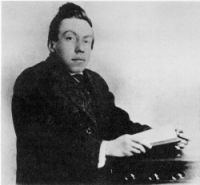
“ Only there is nothing in the outlook that touches in any way the happiness of the individual, the vivifying of the personality, the comprehension of social forces, the flair of art,—in other words, the quality of life. ”
 Marie Curie,
Pierre Curie
(1923)
Marie Curie,
Pierre Curie
(1923)
“ But there may be in a life some general direction, some continuous thread, due to a few dominant ideas and a few strong feelings, that explain the life and are characteristic of a human personality. Of my life, which has not been easy on the whole, I have described the general course and the essential features, and I trust that my story gives an understanding of the state of mind in which I have lived and worked. ”
 Zona Gale,
Peace in Friendship Village
Zona Gale,
Peace in Friendship Village
“ I now feel certain that before we can reach the individualism which we crave—and have tried to claim too soon—we must first know such participation as hers in all conscious life—in all life, conscious or unconscious. ”
John Doughty, The Parable of Creation (1892)
“ While, therefore, in coming into this much to be desired state, our personality is more and more keenly felt, our trust in, and reliance on, the Lord, and our perception of Him as our light, our life, our all, become also more and more inwardly realized. ”
 Mrs. H. Lovett Cameron,
Vera Nevill
Mrs. H. Lovett Cameron,
Vera Nevill
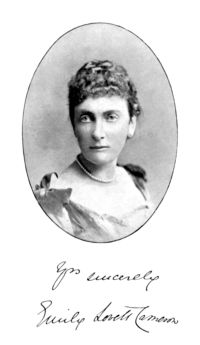
“ Look back upon your own life, and upon the lives of those whose story you have known the most intimately, and see what straws, what nonentities, what absurd trivialities have brought about the most important events of existence. Recollect how, and in what manner, those people whom it would have been well for you never to have known came across you. How those whose influence over you is for good were kept out of your way at the very crisis of your life. ”
 Walter Pater,
The Renaissance: Studies in Art and Poetry
Walter Pater,
The Renaissance: Studies in Art and Poetry
“ Experience, already reduced to a group of impressions, is ringed round for each one of us by that thick wall of personality through which no real voice has ever pierced on its way to us, or from us to that which we can only conjecture to be without. ”
Mervin James Curl, Expository Writing
“ You have the choice of observing the personality through the medium of events, or events through the medium of personality. Of the two, the latter is to be preferred. To understand the personality we heed to know whether it controls and directs events, or merely receives them. Into every life a large measure of chance enters. Does the personality merely receive the events, or does it master chance? ”
Laura A. Knott, Vesper Talks to Girls
“ If you want to know how you can secure for your own life and character those qualities which you most covet, study the lives of those who have these qualities and try to compel them to yield you their secret. ”
William James, Psychology: Briefer Course
“ The Empirical Self or Me.—Between what a man calls me and what he simply calls mine the line is difficult to draw. We feel and act about certain things that are ours very much as we feel and act about ourselves. Our fame, our children, the work of our hands, may be as dear to us as our bodies are, and arouse the same feelings and the same acts of reprisal if attacked. ”
Carleton Eldredge Noyes, The Gate of Appreciation: Studies in the Relation of Art to Life
“ As physical life propagates and thus continues itself, so personality is transmitted in unconscious innumerable ways. The step and carriage of the body, the glance of the eye, the work of our hands, our silences no less than our speech, all express what we are. As everything follows upon what we are, so our responsibility is to be, to be ourselves completely, perfectly. ”
William James, Psychology: Briefer Course
“ Of all these wider, more potential selves, the potential social Me is the most interesting, by reason of certain apparent paradoxes to which it leads in conduct, and by reason of its connection with our moral and religious life. ”
 James Anthony Froude,
Essays in Literature and History
James Anthony Froude,
Essays in Literature and History
“ So far, on the contrary, as we know clearly what we do, as we understand what we are, and direct our conduct not by the passing emotion of the moment, but by a grave, clear, and constant knowledge of what is really good, so far we are said to act—we are ourselves the spring of our own activity—we desire the genuine well-being of our entire nature, and that we can always find, and it never disappoints us when found. ”
Various, Popular Science Monthly (1915)
“ Such portraitures of human peculiarities, gauged by their moral or social desirability as examples to be followed or avoided, form an attractive compendium for the interpretation of men and their ways. Their consideration, ranging from gossip to philosophy, supplies the common touch of nature that makes the world of every time and clime akin, and presents graphically for our psychological contemplation the outward issues of disposition as shaped by opportunity and circumstance. ”